What a mutual fund actually is
A mutual fund is not a product you buy from a bank. It is a trust that pools money, buys securities with it, and issues you units representing your share of the pot. Almost everything people find confusing…
Read it →241 articles
Nothing matches that. Try a shorter phrase, or clear the category filter.
How funds actually work — NAV, costs, categories, risk and the measures that tell you something the star rating does not.

A mutual fund is not a product you buy from a bank. It is a trust that pools money, buys securities with it, and issues you units representing your share of the pot. Almost everything people find confusing…
Read it →
The most expensive misconception in Indian mutual funds is that a fund with a ₹12 NAV is cheaper than one at ₹450. It is not cheaper. It is not dearer. The level carries no information about the fund…
Read it →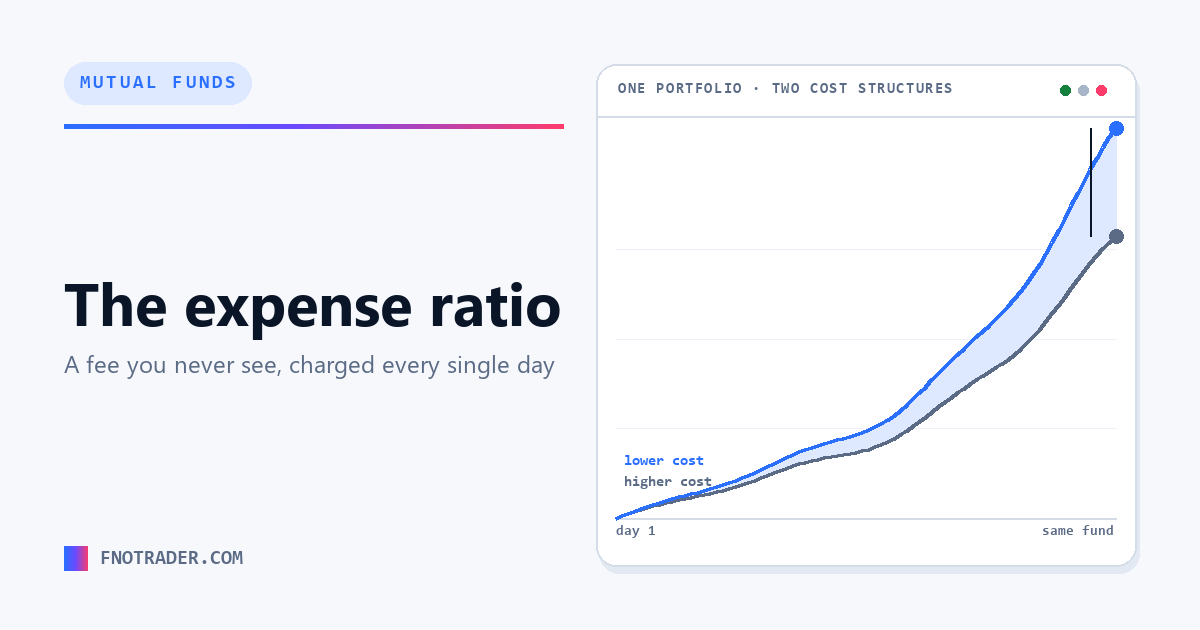
You never receive a bill from a fund house. The fee is taken out of the fund every single day, before the NAV is published — which is precisely why a charge that sounds trivial is the easiest thing about…
Read it →
The two plans hold identical portfolios, run by the same manager, on the same day. The only difference is that one pays a distributor and the other does not. Because that difference is charged every year on…
Read it →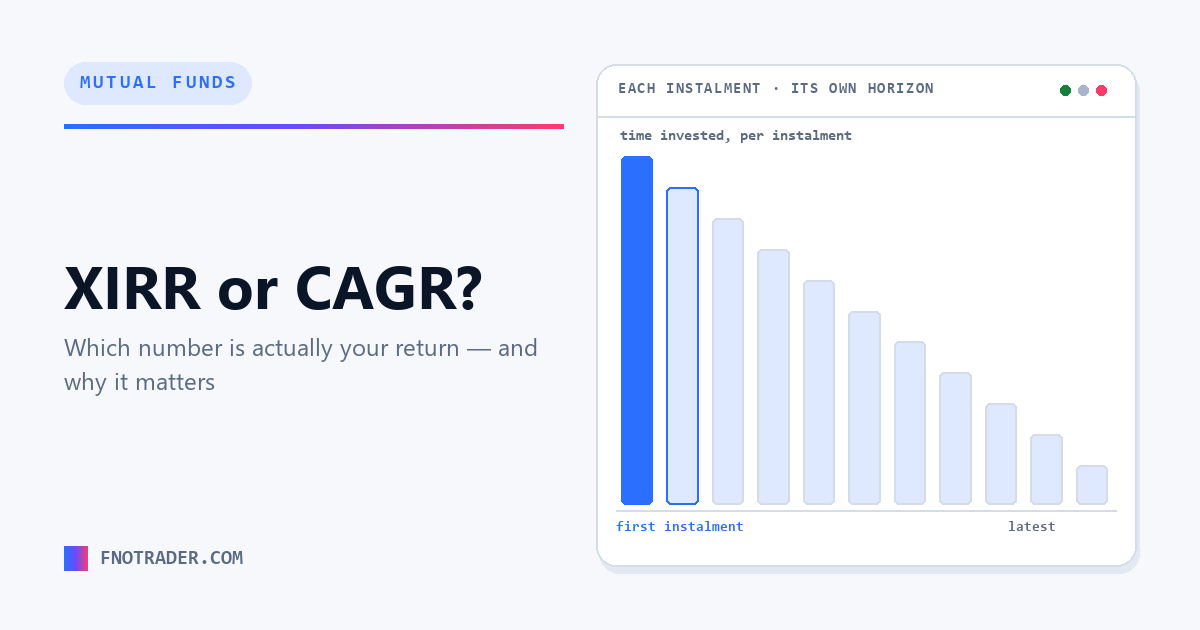
Most SIP return figures quoted in India are computed with the wrong formula, and the error does not average out — it runs in one direction. The fix is not complicated. It is knowing which of three numbers…
Read it →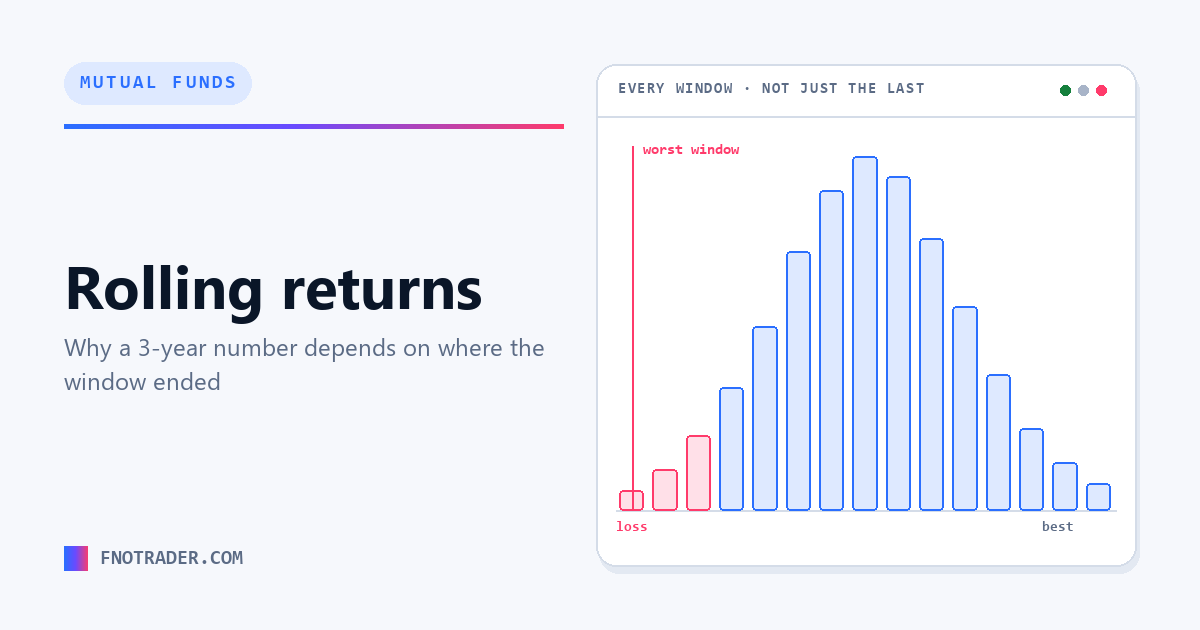
A fund's three-year return tells you as much about when the window ended as about the fund. Move the end date by six months and the same scheme can go from top-quartile to unremarkable, without a single thing…
Read it →
A SIP is not a product. It is an instruction — a standing order to buy a fixed rupee amount of one scheme on one date each month. Nearly every misconception about SIPs dissolves once that is clear, beginning…
Read it →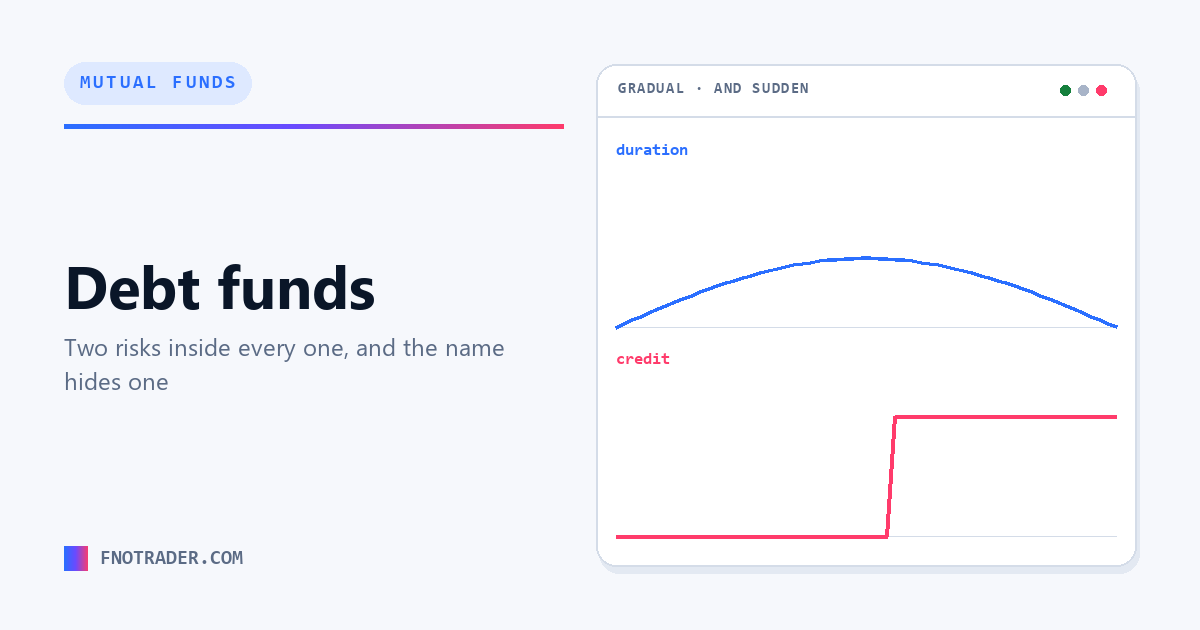
Debt funds are widely treated as the safe half of a portfolio, which is roughly true and dangerously imprecise. They carry two entirely separate risks, and a fund's category name constrains only one of them…
Read it →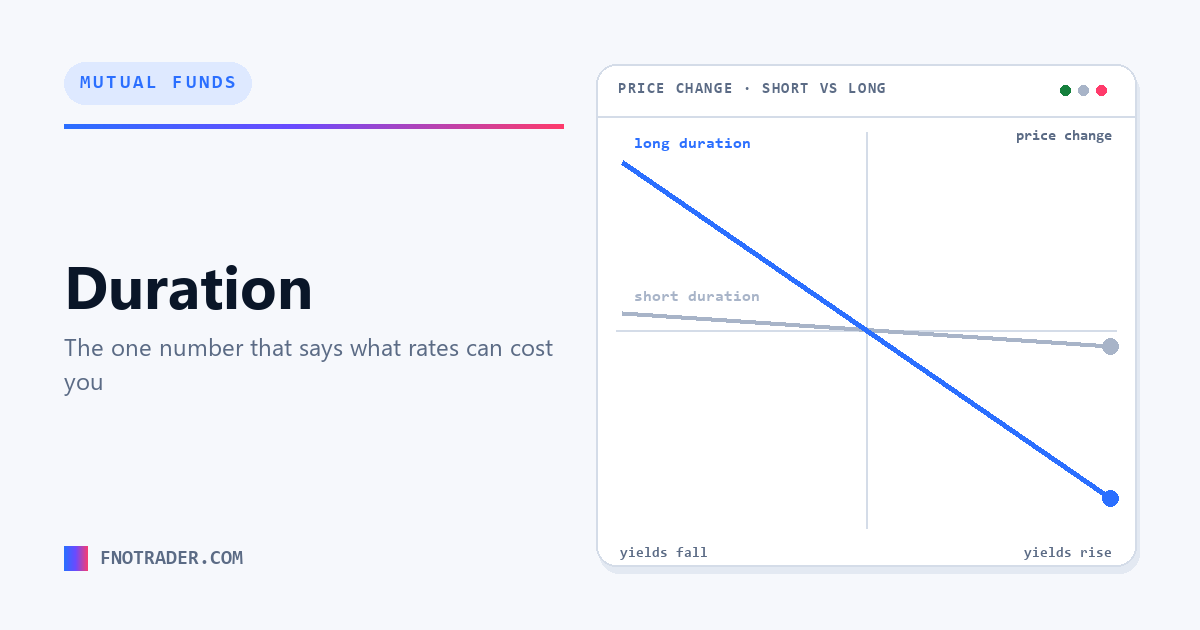
Most debt fund risk can be summarised by a single number that sits in every factsheet and is read by almost nobody. Modified duration is a multiplier: it converts a change in interest rates into the loss or…
Read it →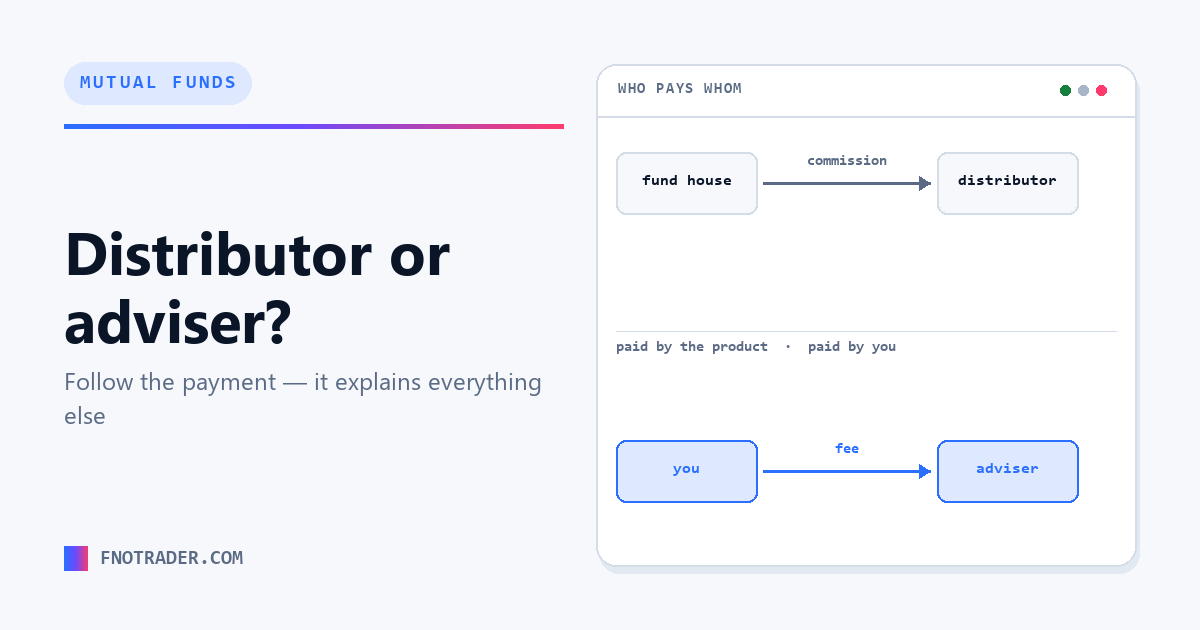
Two people can sit across the same table offering what sounds like the same help, and be in structurally different businesses. One is paid by the fund house whose product you buy. The other is paid by you…
Read it →
A direct plan always costs less than the regular plan of the same scheme, and that part is not in dispute. What is in dispute — and what almost no article addresses honestly — is what you take on in exchange…
Read it →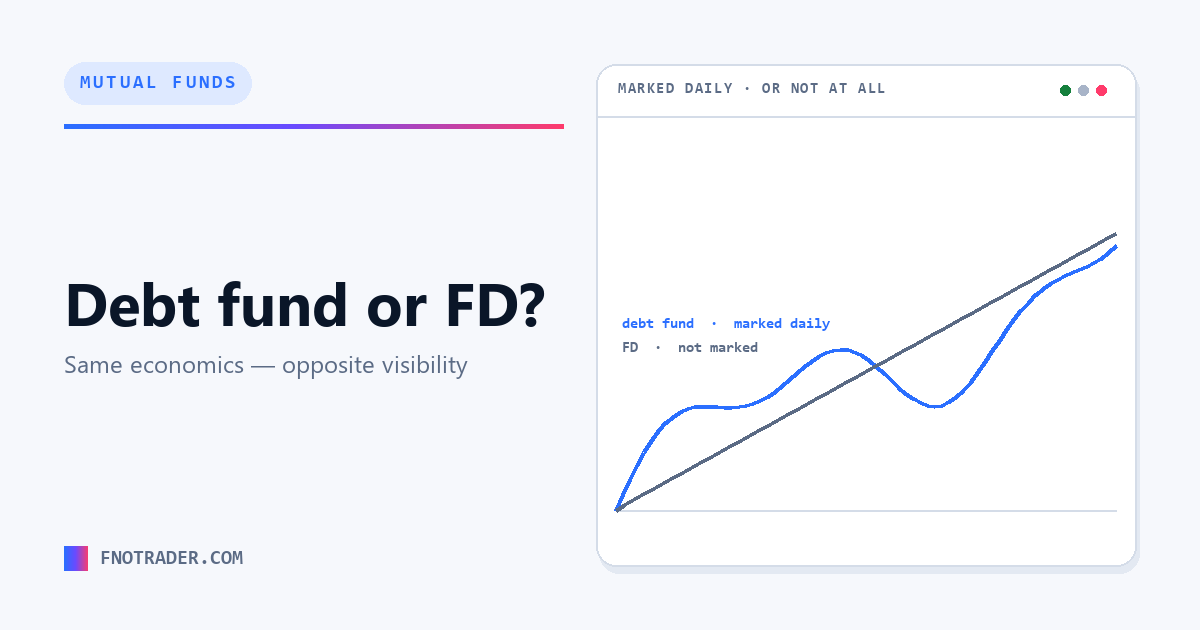
The comparison is usually framed as safe against slightly-less-safe, which misses the interesting part. A fixed deposit and a debt fund are exposed to much the same economics. The difference is that one of…
Read it →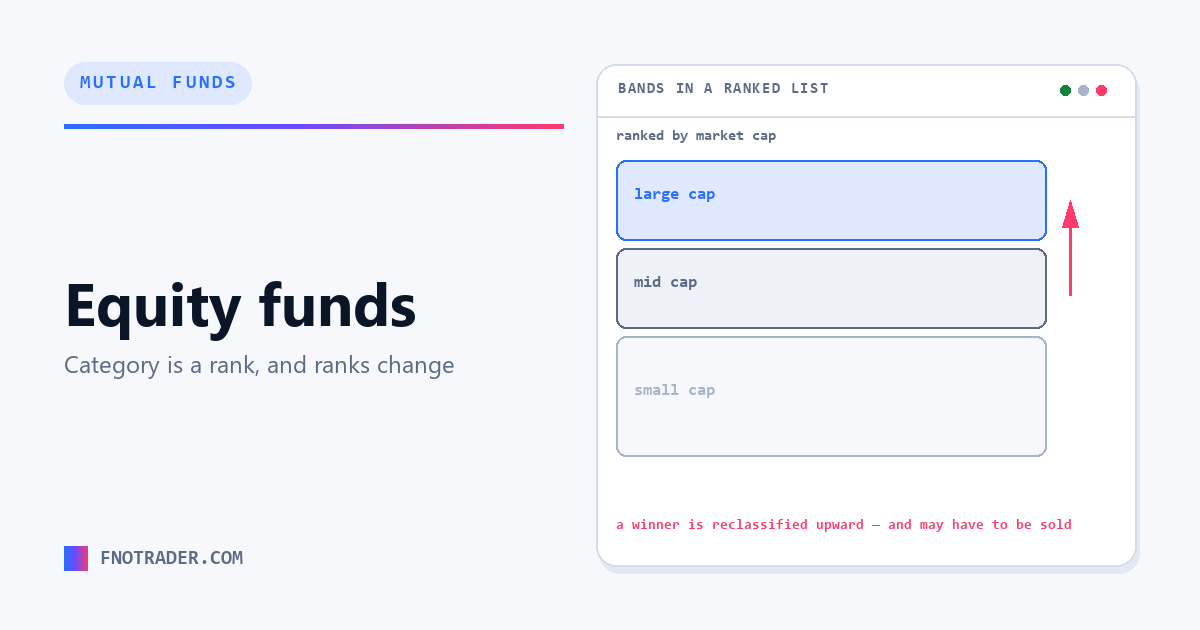
Large cap, mid cap and small cap sound like descriptions of company size. They are not — they are positions in a ranked list that is revised twice a year. Which produces a consequence nobody expects: a fund…
Read it →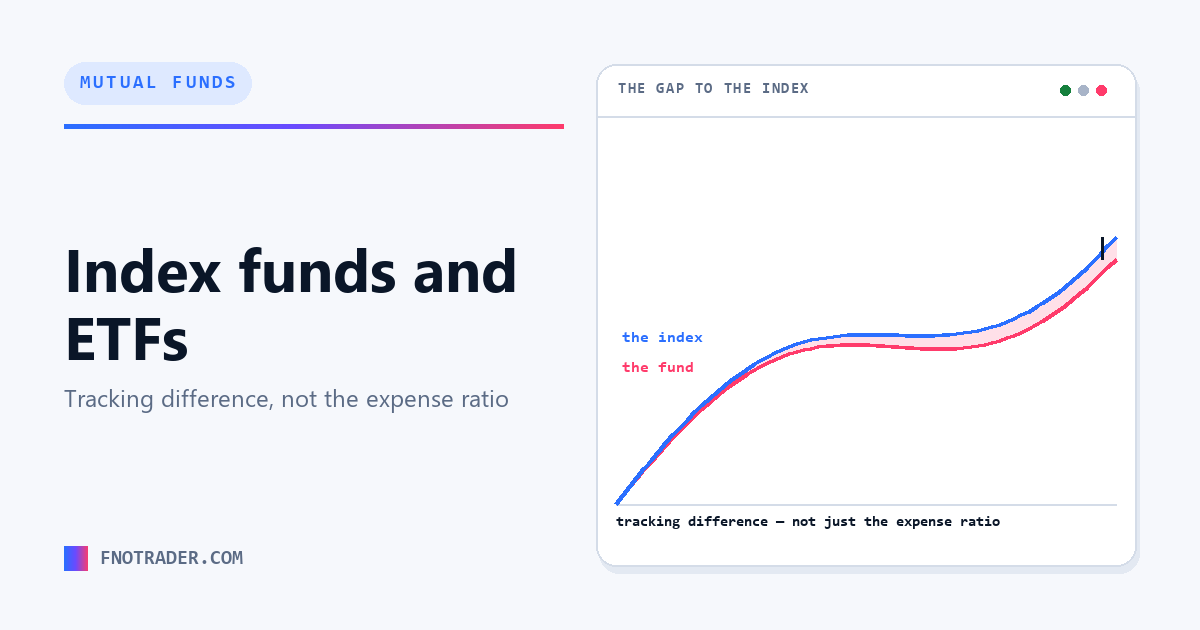
An index fund's job is to deliver the index, so the only thing to judge is how closely it does. That is not the expense ratio — it is a separate published figure that includes the expense ratio and everything…
Read it →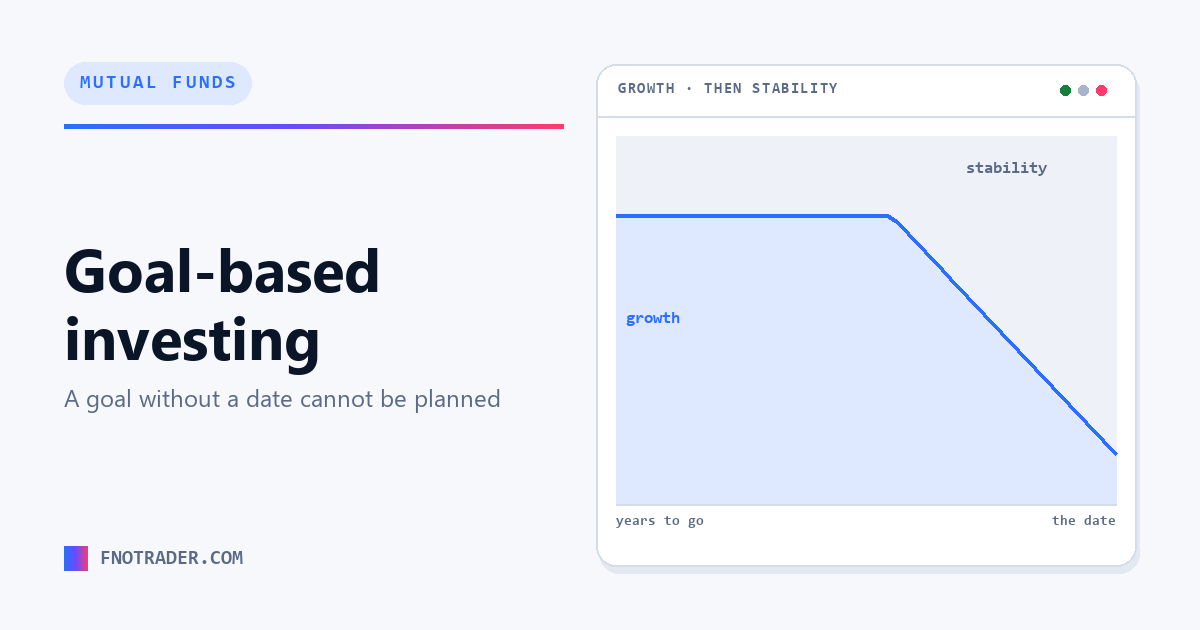
Most investing questions are asked in the wrong order — which fund, then what for. Reversing it resolves nearly all of them, because the date the money is needed determines what it can be held in, and a goal…
Read it →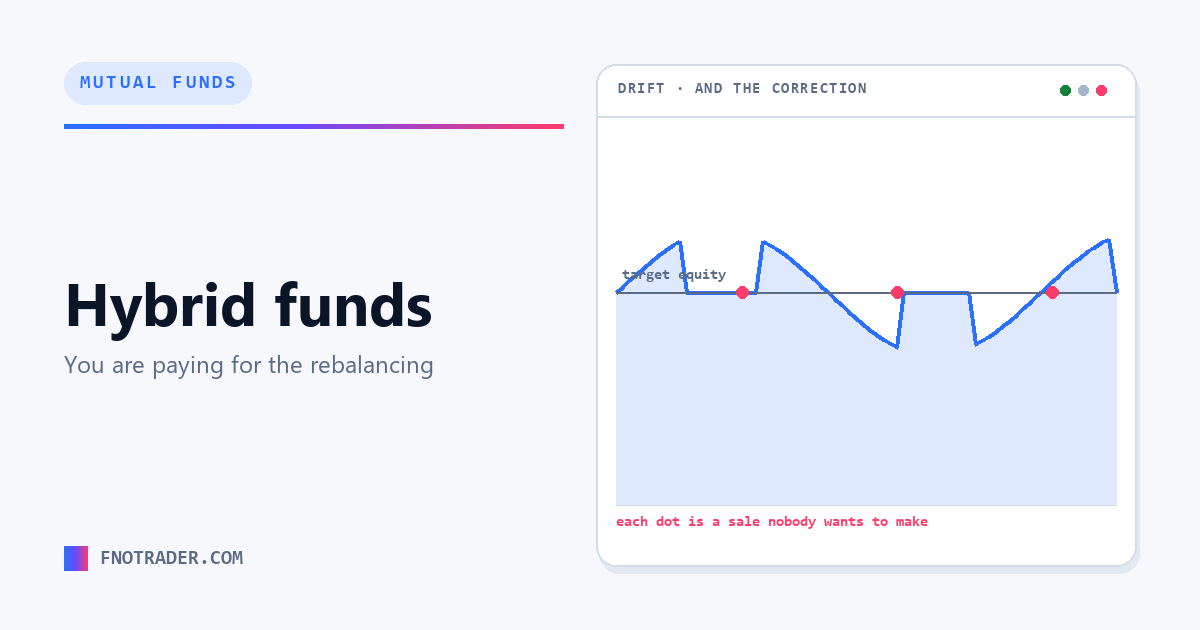
A hybrid fund holds a mix of equity and debt that you could assemble yourself from two funds. What you cannot easily assemble is the part that matters: a rule that sells equity after it has risen and buys…
Read it →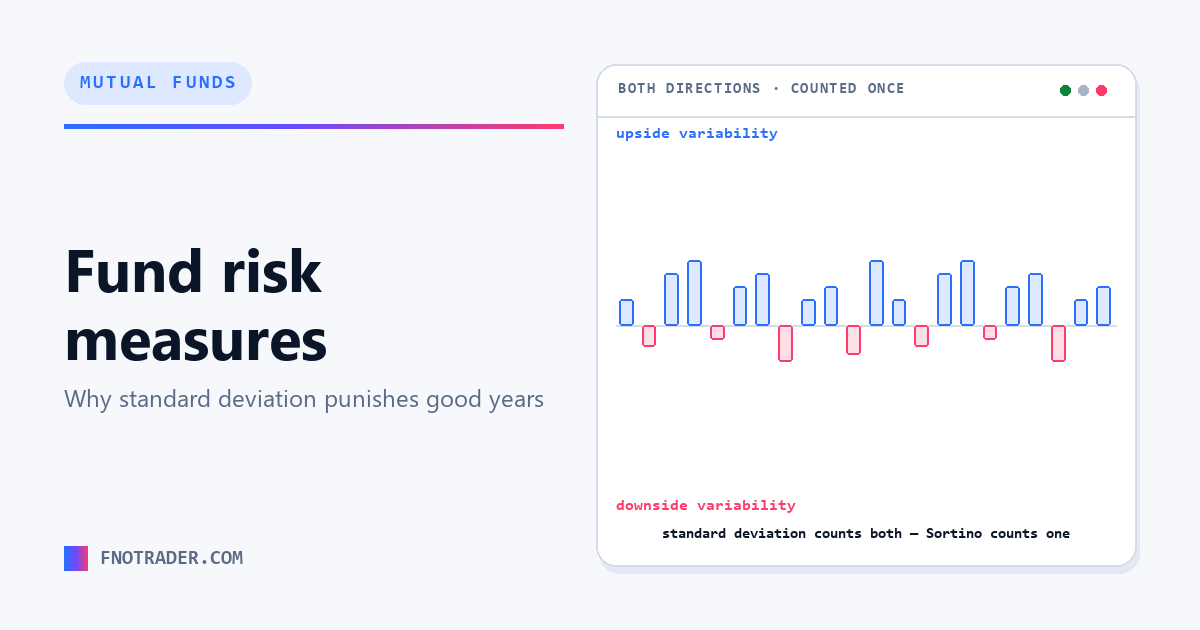
Standard deviation is the standard measure of fund risk, and it treats a surprisingly good month exactly like a surprisingly bad one. No investor has ever done that. Two other measures describe what holding a…
Read it →
These two categories look interchangeable and are not. One lends for a single day and the other for up to three months, which sounds like a trivial difference — until you remember that both of the ways a debt…
Read it →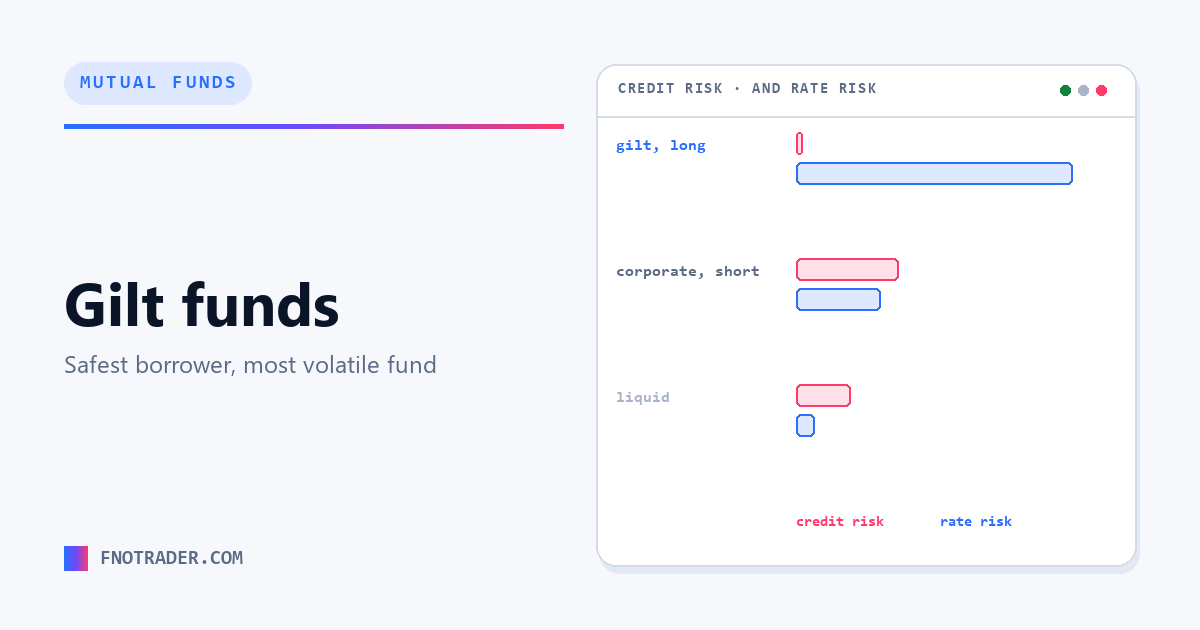
A gilt fund lends only to the government, which removes credit risk almost entirely. It is also frequently the most volatile debt category available — because removing one risk does nothing about the other…
Read it →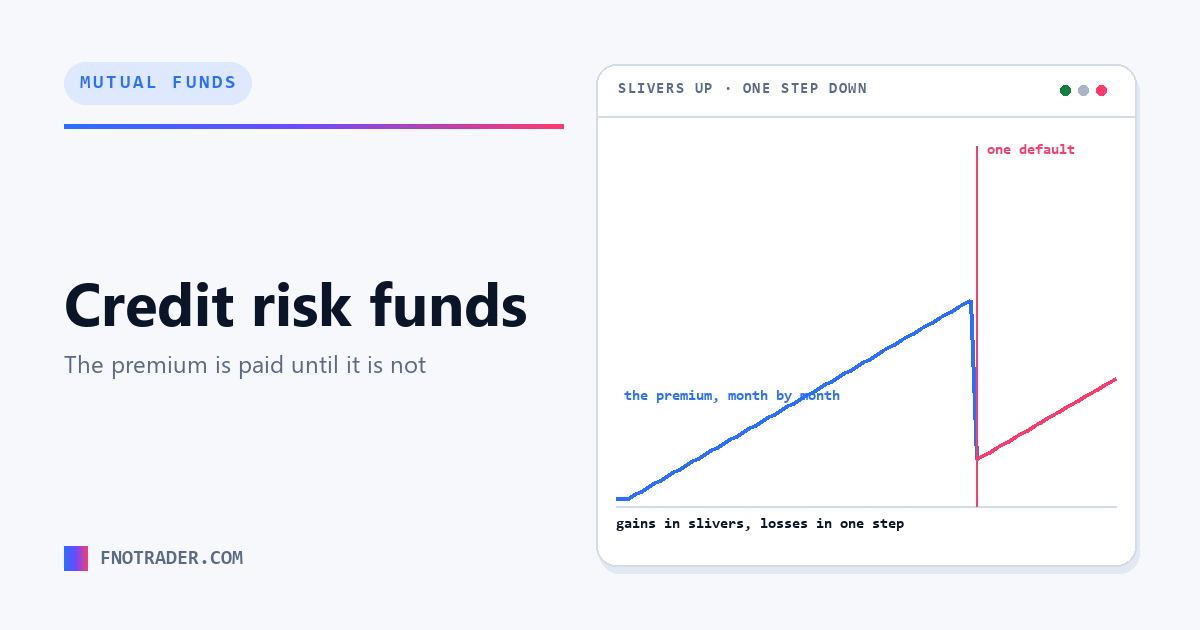
A credit risk fund earns extra yield by lending to weaker borrowers. That premium arrives steadily, month after month, looking like skill — and the losses it compensates for do not arrive steadily at all. They…
Read it →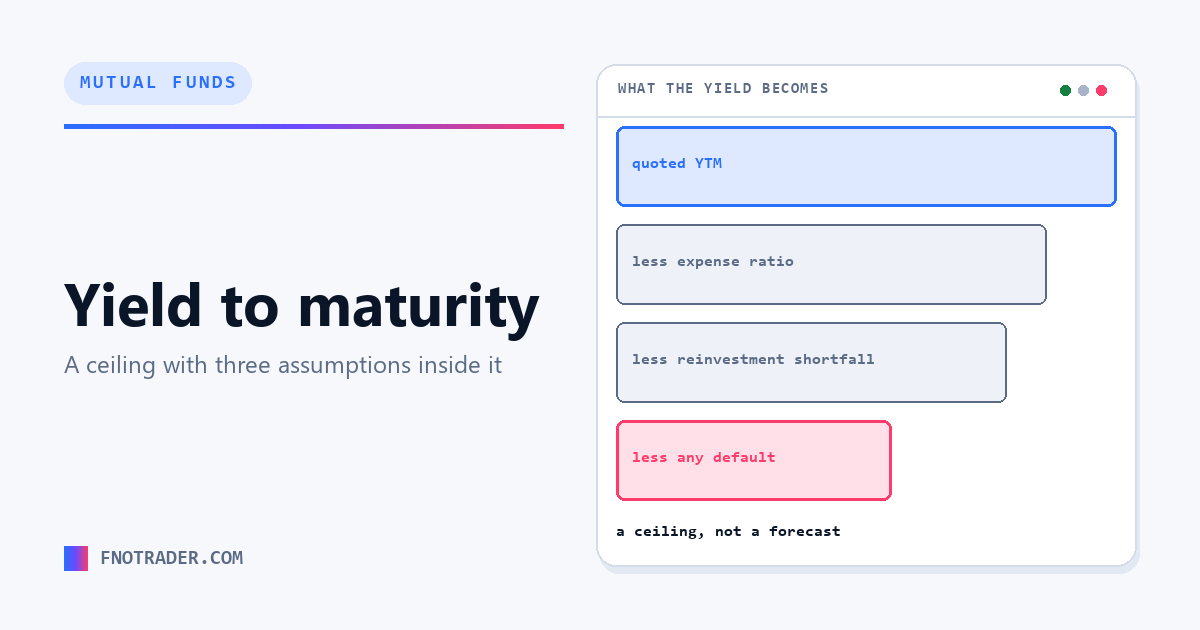
Yield to maturity is the most quoted number on a debt fund factsheet and the most misread. It is not a forecast of your return — it is what the portfolio would produce if nothing went wrong and nothing…
Read it →
Almost every bad debt fund decision starts the same way: with a list sorted by returns. That single act inverts the process, because in this category a higher return is nearly always a description of the risk…
Read it →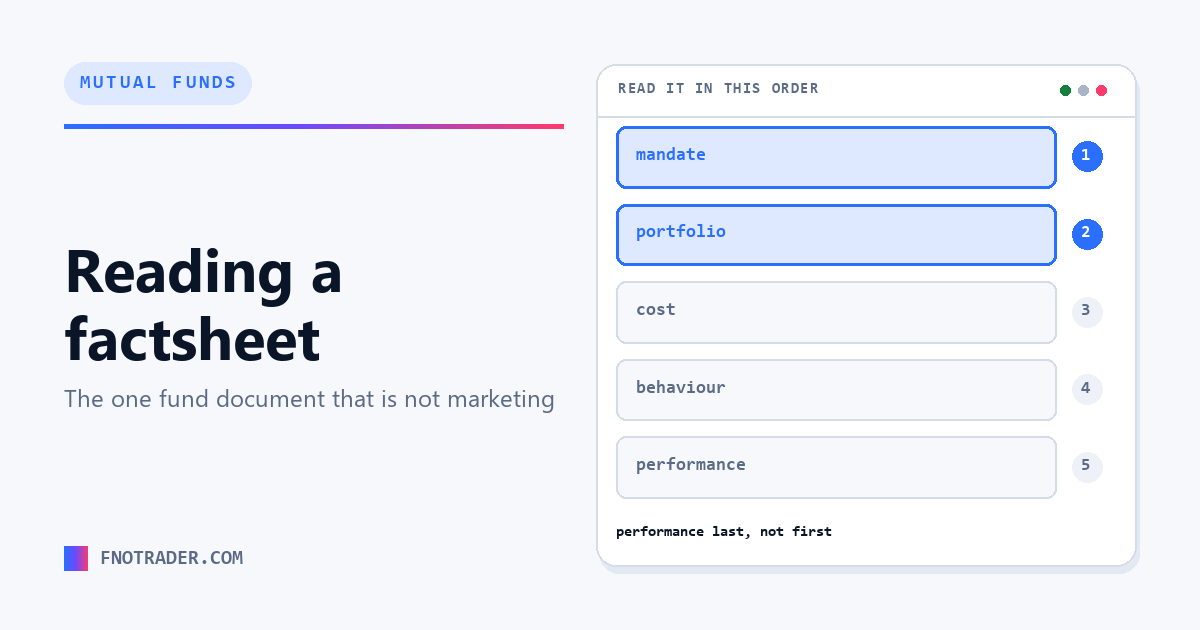
Fund houses publish a great deal of material and almost all of it is designed to persuade. The monthly factsheet is the exception — it compiles the disclosures a fund is required to publish, in a comparable…
Read it →
The instalments made during a fall are the ones that buy the most units, which is the whole arithmetic of rupee-cost averaging. It is also completely useless advice to someone whose income just stopped — and…
Read it →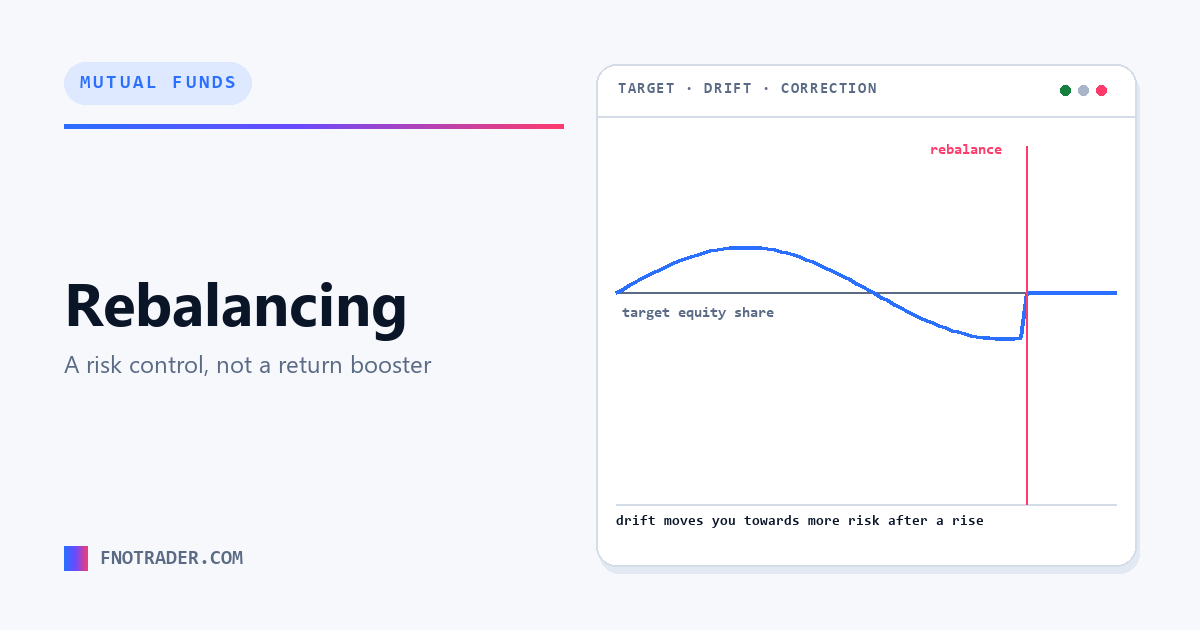
Rebalancing is often sold as a way to buy low and sell high, which oversells it. In a long rising market it costs you return. What it actually does is keep the portfolio at the risk you chose rather than the…
Read it →
A sectoral fund is a concentrated bet in a diversified wrapper. That is not a criticism — bets are allowed. The problem is that buying one commits you to two timing decisions, both yours, and most people who…
Read it →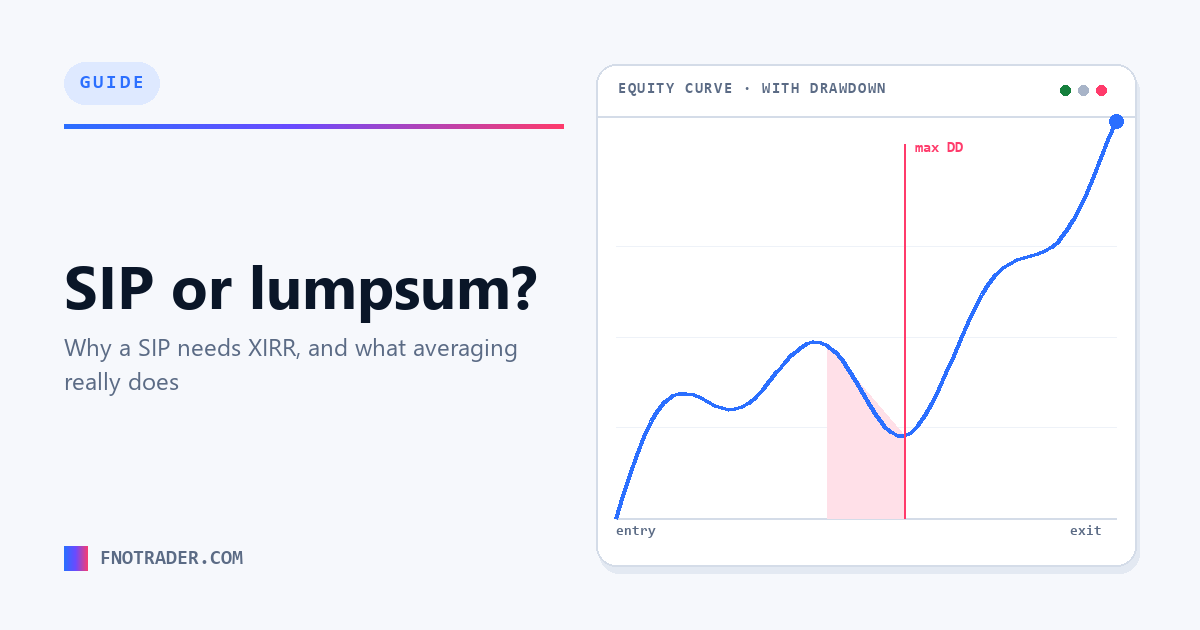
The honest answer is that lumpsum usually wins on paper and SIP usually wins in practice, and the reason has less to do with returns than with the fact that most people do not have a lumpsum — and those who do…
Read it →The foundations: what personal finance actually covers, how money grows, and the ideas everything else is built on.

The gap between what a fund returned and what its investors returned is not a rounding error, and it is not caused by fees. It is caused by when people bought and sold. That gap is the strongest argument for…
Read it →
Personal finance is usually presented as a menu of products to choose from. It is better understood as an order of operations, because most of the damage people do to their finances comes not from picking the…
Read it →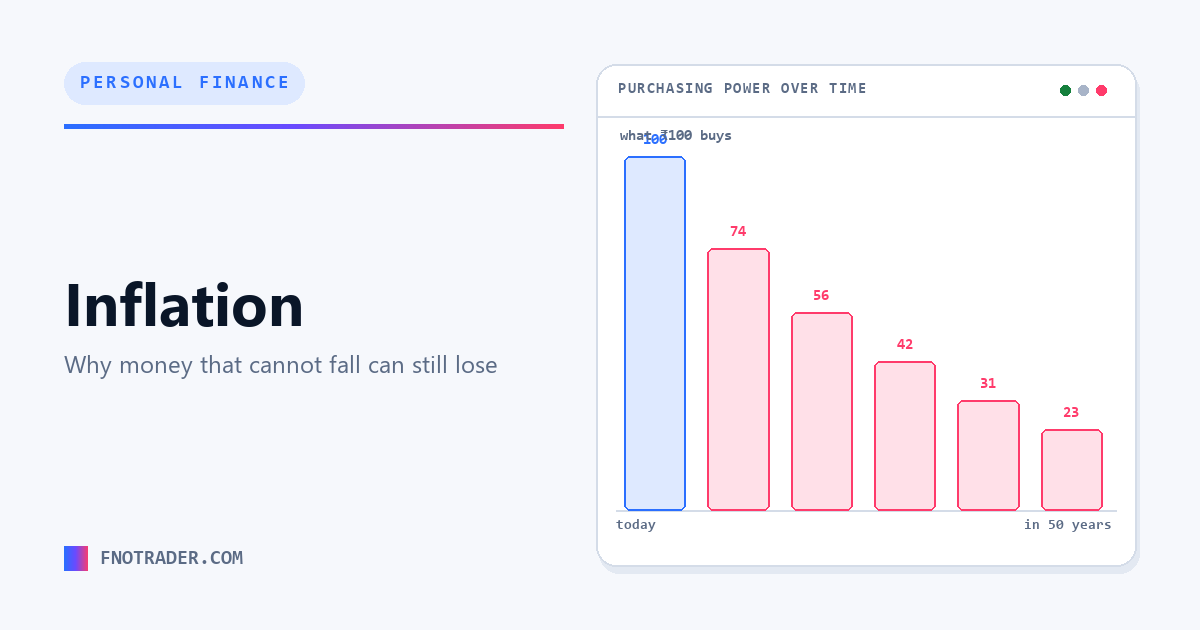
Inflation is not really about prices going up. It is about the value of money going down — and once you hold it that way round, the most uncomfortable conclusion follows immediately: an investment that cannot…
Read it →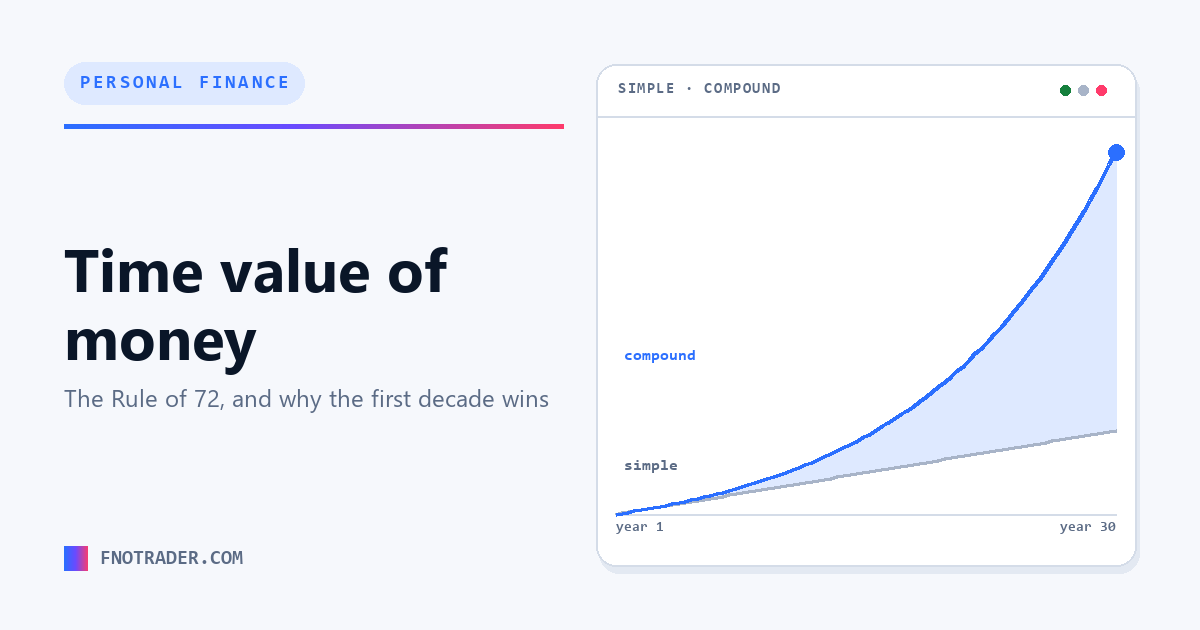
Compounding is described so often that it has stopped meaning anything. The part worth actually understanding is narrower and stranger: the money you invest in your first decade does a wildly disproportionate…
Read it →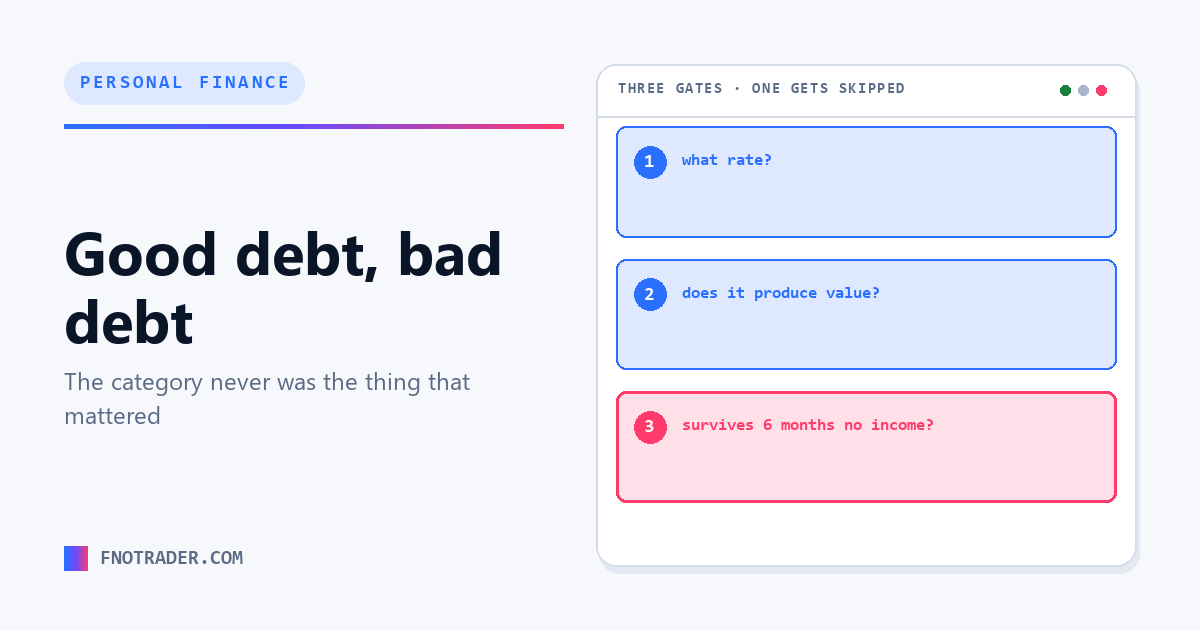
The usual rule is that debt for an appreciating asset is good and debt for consumption is bad. It is tidy, widely repeated, and it will comfortably classify a loan that is about to ruin somebody as good debt…
Read it →
Every budgeting guide asks you to separate needs from wants, and almost nobody can do it, because the question is being asked about the wrong thing. Housing is a need and the flat you chose is partly a want…
Read it →
Net worth is the one financial figure income cannot flatter — it records what you kept rather than what you earned. But the version most people compute counts the home they live in as an asset, which quietly…
Read it →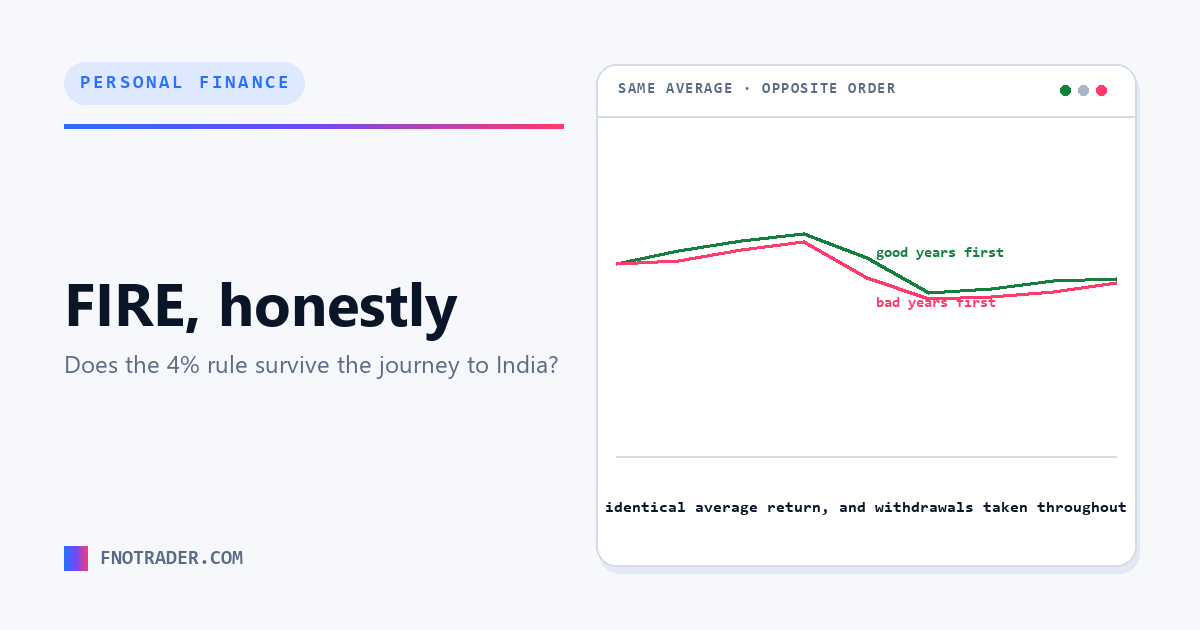
The FIRE movement runs on two figures — save 25 times your annual expenses, withdraw 4% a year — and both were derived from a specific country's market history, inflation and retirement length. They travel…
Read it →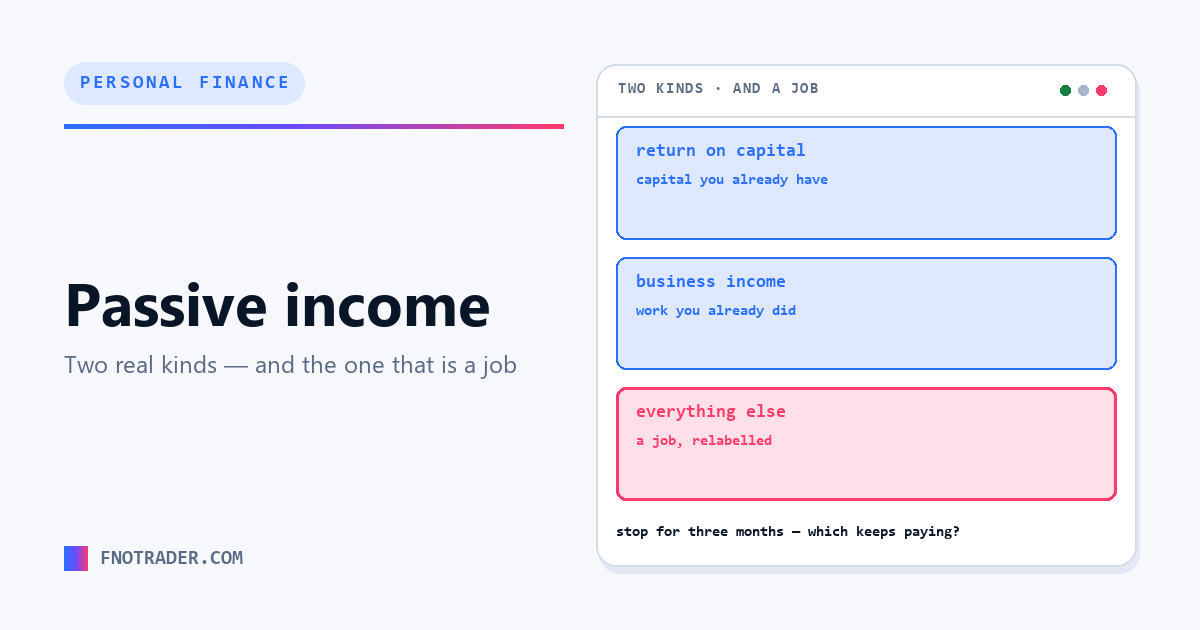
Passive income comes in exactly two forms: a return on capital you already have, or a business you have to build first. There is no third category — and almost everything sold as passive income is the second…
Read it →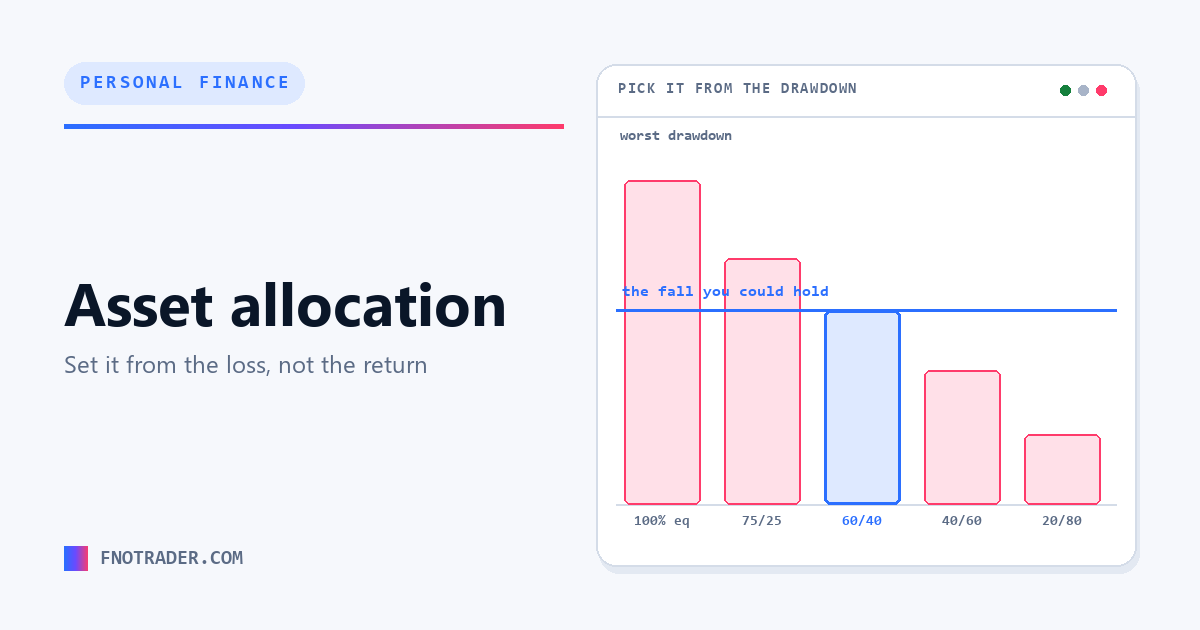
Allocation is the decision that explains most of the difference between portfolios, and it is the one people spend the least time on — partly because it is chosen the wrong way round. The useful question is…
Read it →
The word passive has been stretched to mean easy, which is not what it means. The question that separates the two is whether the money keeps arriving after you stop, and by that test most of what is sold as…
Read it →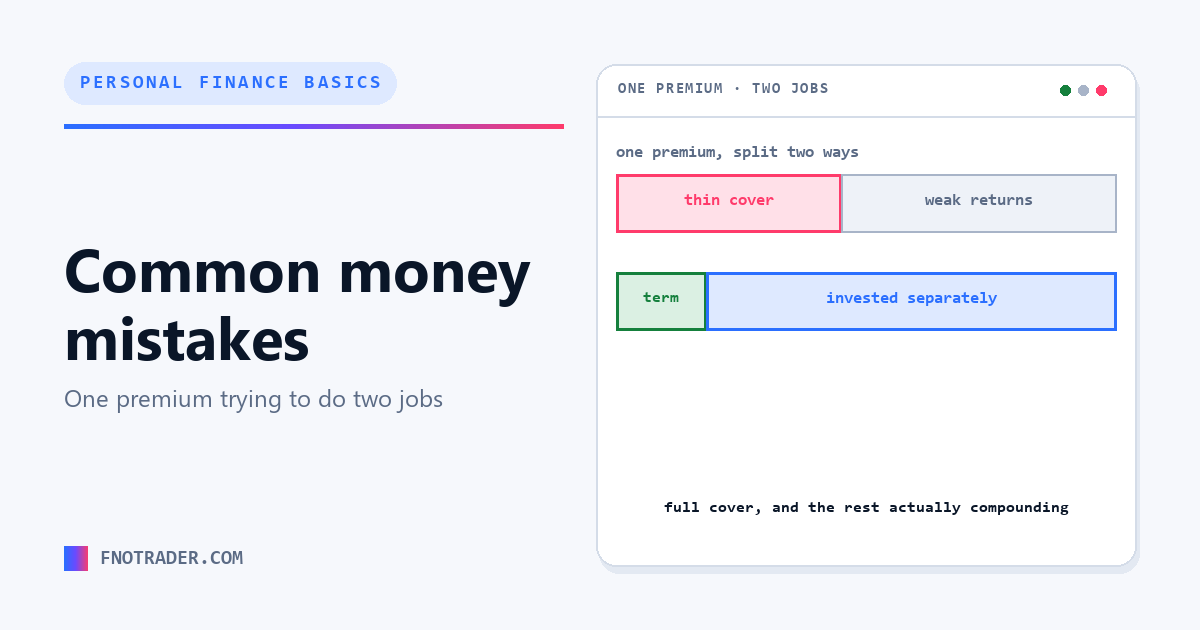
The expensive Indian money mistakes are not the ones people write about, and they share a property that lets them survive for decades: none of them ever prints a negative number. A mutual fund shows red…
Read it →
Most of what is sold as financial planning is product selection with a spreadsheet attached. A plan is something narrower and more useful: a set of decisions made in advance, written down, and dated. Its value…
Read it →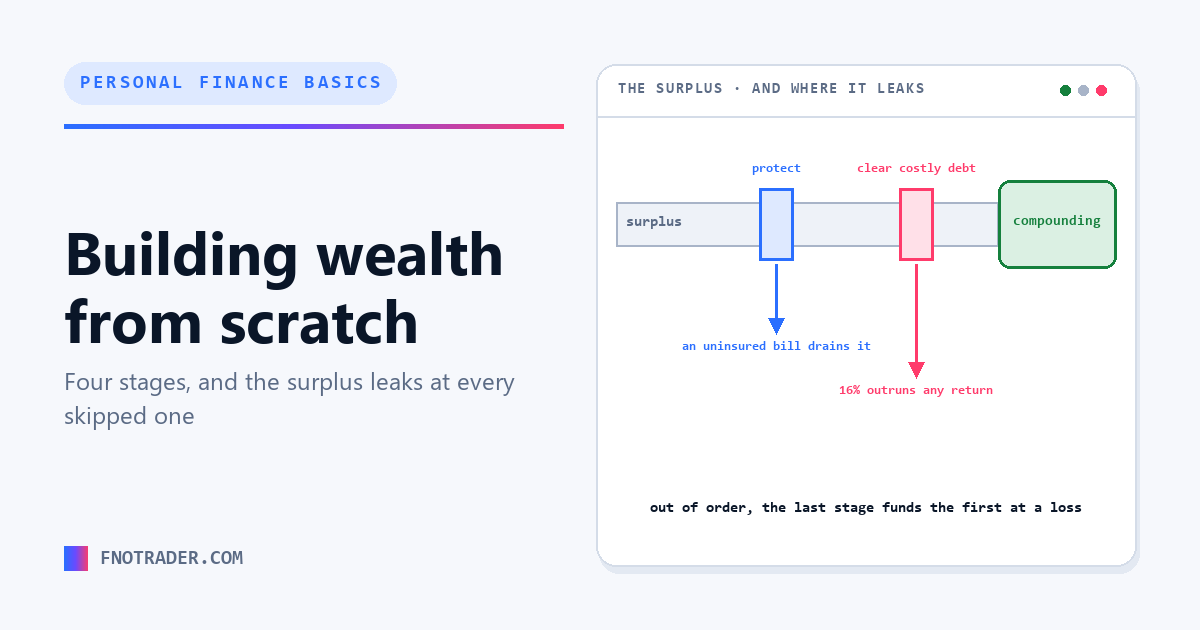
Income minus spending makes a surplus. What follows is not a menu but a sequence: protect the surplus before investing it, since an uninsured hospital bill is paid out of the very money that was funding the…
Read it →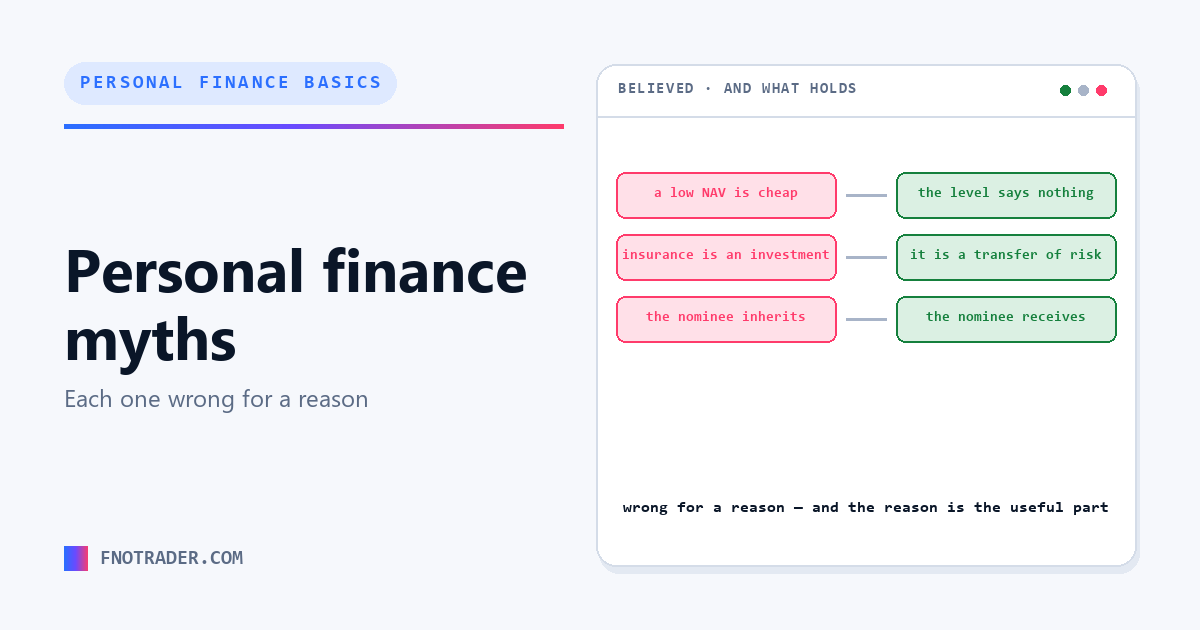
A money myth survives because there is something true inside it. A low NAV really does buy more units; a nominee really does receive the money; a good credit score really does get a loan approved. Each one is…
Read it →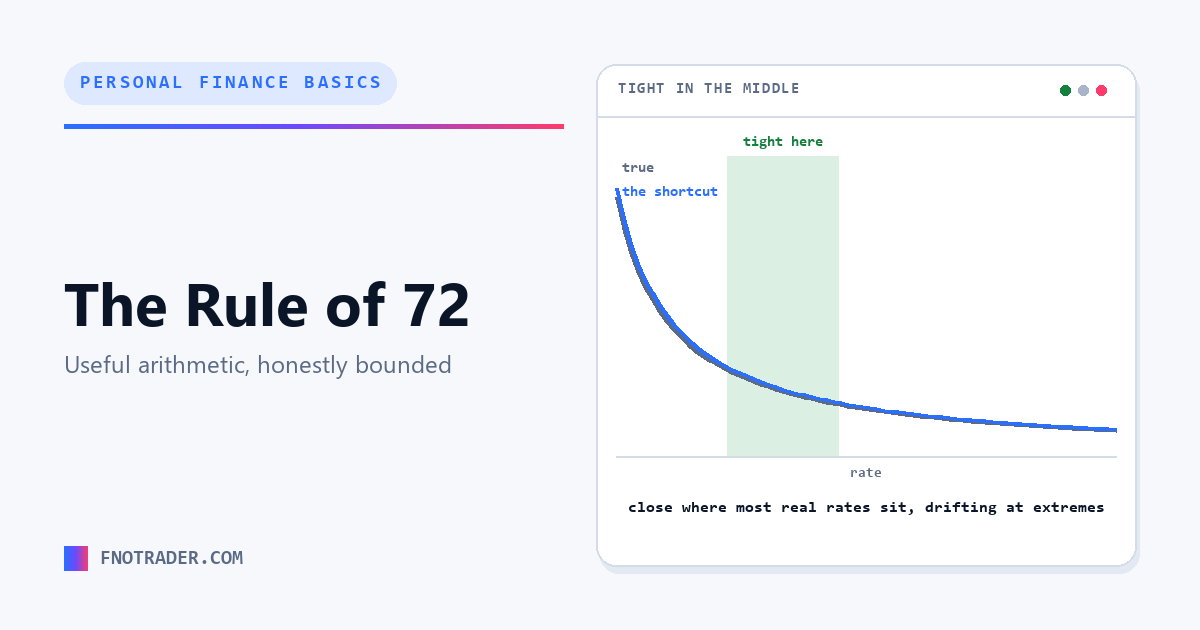
Divide 72 by the annual rate and you get the years it takes to double. That is not a convention somebody chose — it is a logarithm rounded to a number with convenient divisors, which is why it is close to…
Read it →Where the money goes and how to keep more of it — budgets that survive contact with real life, and saving that does not depend on willpower.

Most budgets fail in week three, and not because of willpower. They fail because they were built from what somebody intended to spend rather than from what they actually spend — which means the plan was wrong…
Read it →
The most quoted budgeting rule in the world was designed around a different country's housing costs, tax system and social safety net. Most of it does not survive the journey to an Indian metro — but one part…
Read it →
Every answer to this comes as a percentage, and a percentage cannot know what you are saving for. The number worth finding is derived backwards from what you need and when — and there is a milestone along the…
Read it →
Every other budgeting failure announces itself. This one does not. Spending rises to meet income through a series of individually sensible decisions, none of which feels like a decision — and the result is…
Read it →
The expenses that break household budgets are almost never emergencies. They are premiums, fees and services — entirely foreseeable, known months in advance, and missing from eleven of the twelve months…
Read it →
Almost everyone who starts logging every expense has stopped within six weeks, and concludes they lack discipline. The more useful conclusion is that tracking was never meant to be permanent. It is a…
Read it →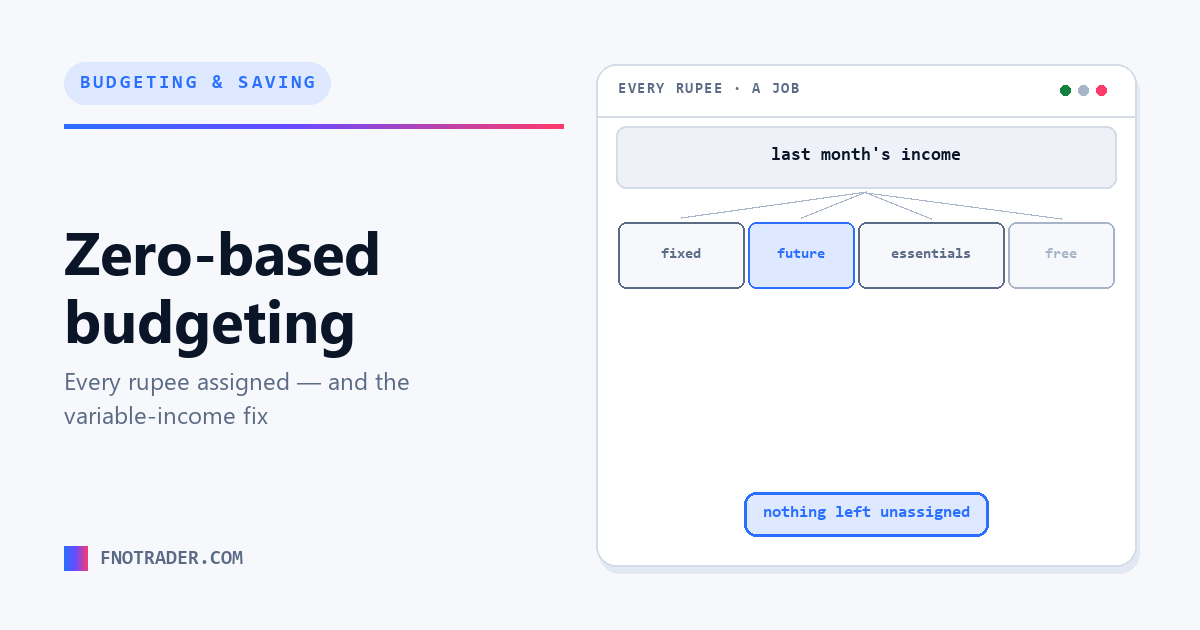
Most budgets describe what you intend to spend and leave the remainder unassigned. Zero-based budgeting assigns every rupee before the month begins — and the version that works for irregular income does…
Read it →
Advice on cutting expenses is overwhelmingly about small daily choices, and the arithmetic does not support it. Twenty small economies require twenty ongoing decisions and produce less than one structural…
Read it →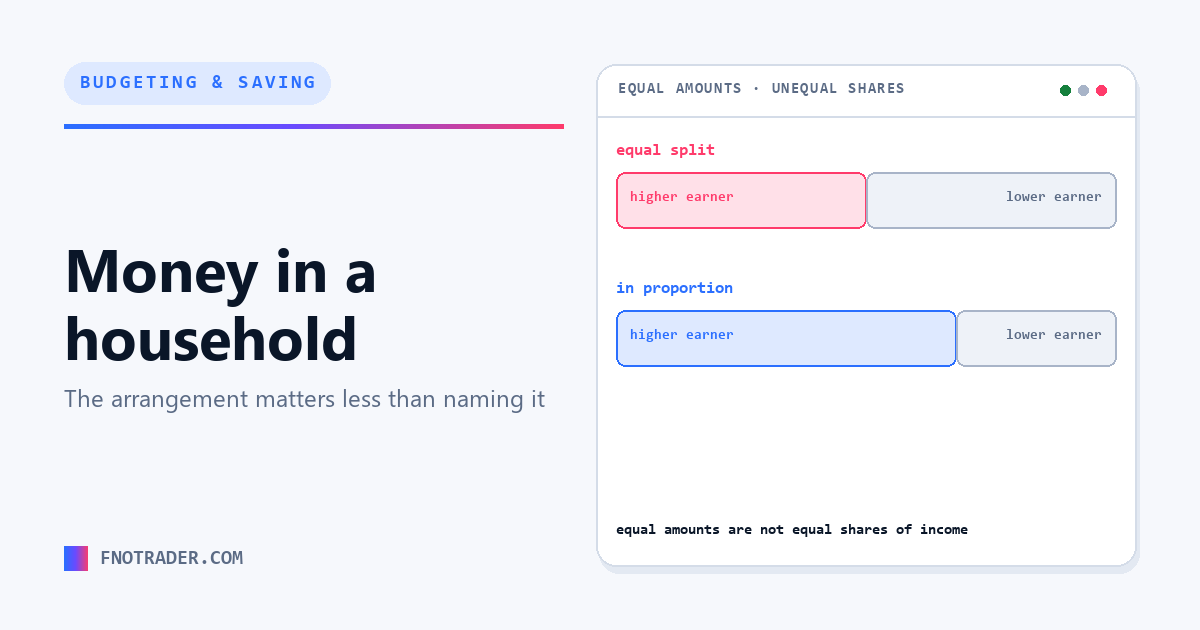
Couples argue about money far more often than they discuss it, and the distinction matters. Most financial conflict in a household is not about the arrangement chosen — it is about an arrangement nobody ever…
Read it →
People starting out spend weeks choosing a fund and minutes deciding how much to save. At this stage that is exactly backwards — almost all of the first lakh comes from what you put in, and almost none of it…
Read it →
Three properties decide where this money sits, and they run in a strict order: it must be reachable in a day or two, it must not be able to shrink below what you put in, and you must be able to get at it while…
Read it →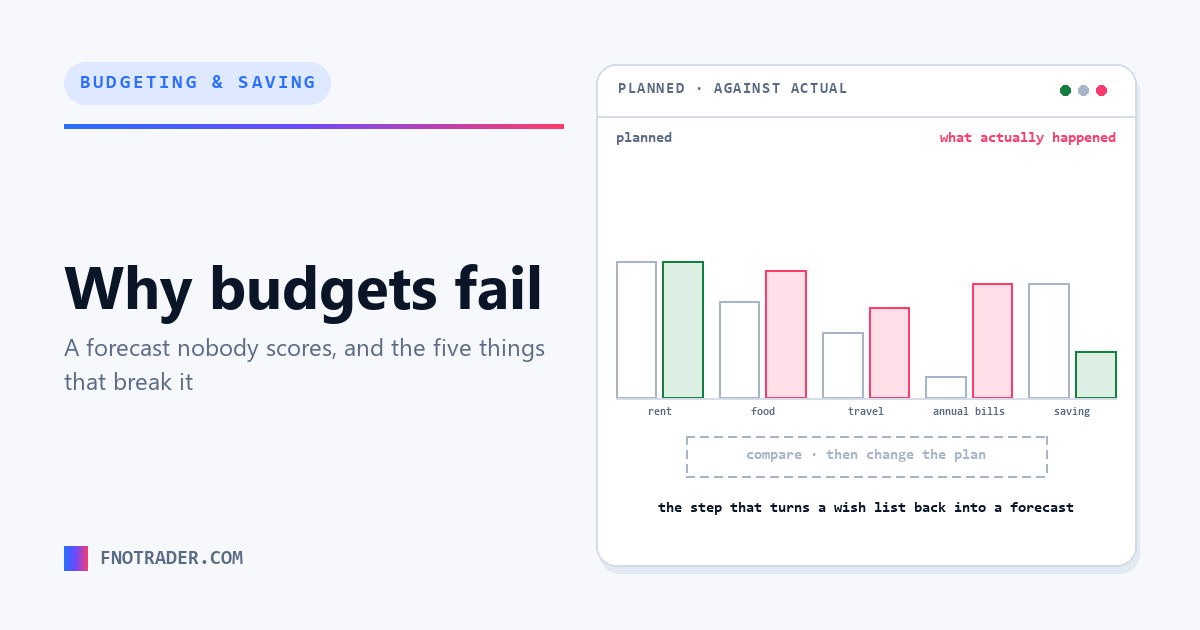
A budget is a forecast. Almost nobody treats it as one — it gets written, then either obeyed or abandoned, but never compared against what actually happened. Five specific mechanisms do most of the damage, and…
Read it →
An envelope of cash enforces a limit without arithmetic, without willpower and without anyone checking a balance — when it is empty, spending stops. Every digital version keeps the categories and loses that. A…
Read it →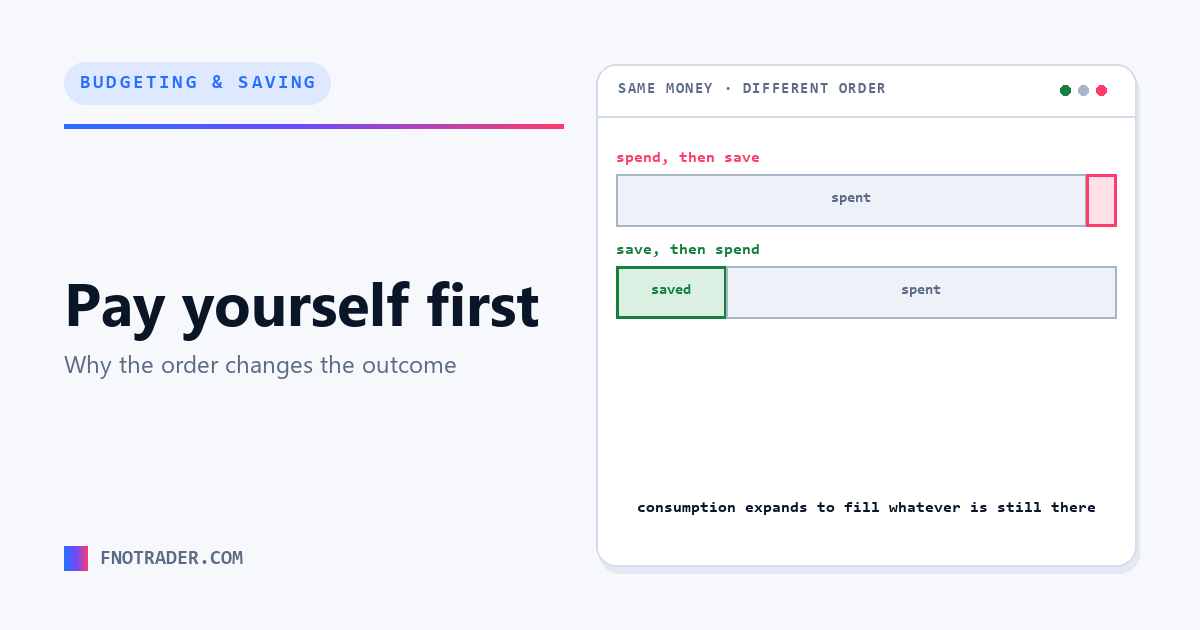
Income minus spending equals savings, and income minus savings equals spending, are the same equation written twice. The order still changes the result, because spending is not a fixed quantity — it adapts to…
Read it →
A subscription is not a purchase you make every month. It is a purchase you made once, possibly years ago, that has been renewing itself ever since without asking. Starting one costs a tap; continuing costs…
Read it →Accounts, deposits, transfers and the safety rules — the plumbing every other financial decision runs through.

A current account pays no interest and a savings account does, which sounds like one is simply worse. It is not. Each is priced for a different pattern of use, and the interest you are not being paid on a…
Read it →
These are usually compared on speed and limits, which explains nothing. The actual difference is how each one settles between banks — one transaction at a time or netted in batches — and once you see that…
Read it →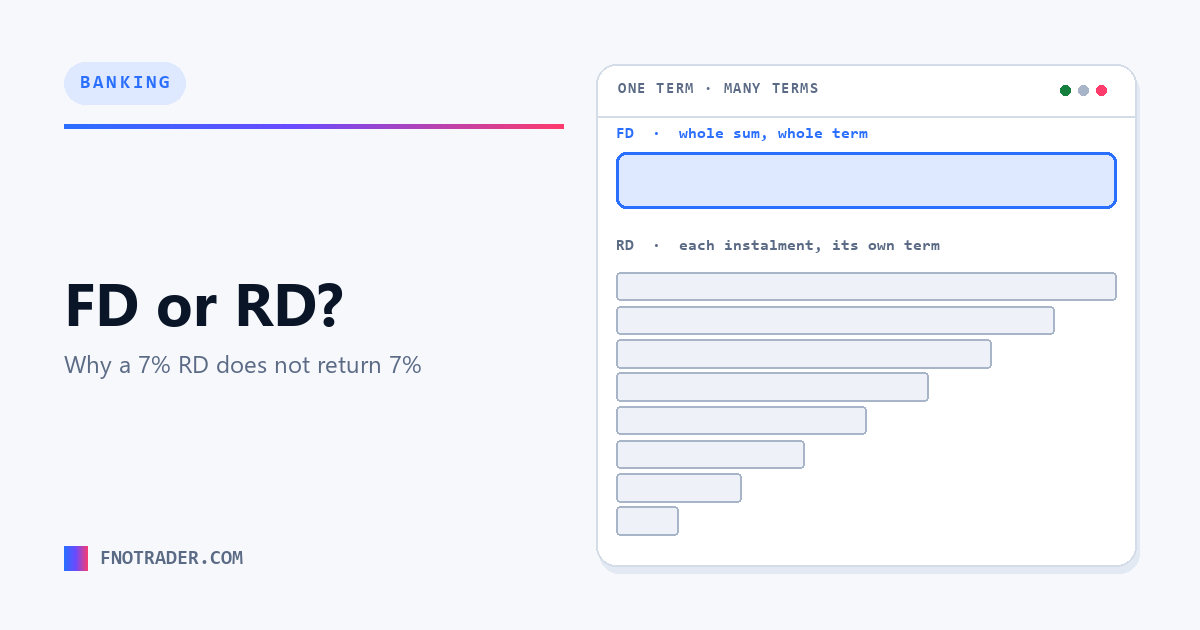
Both quote a rate, and the rates look comparable. They are not measuring the same thing — an RD's headline rate applies to each instalment for however long that instalment has been in, which means the return…
Read it →
Almost every banking fraud in India needs you to do one of three things: reveal a code, approve a request, or install something. None of them can take your money without your participation — which is why a…
Read it →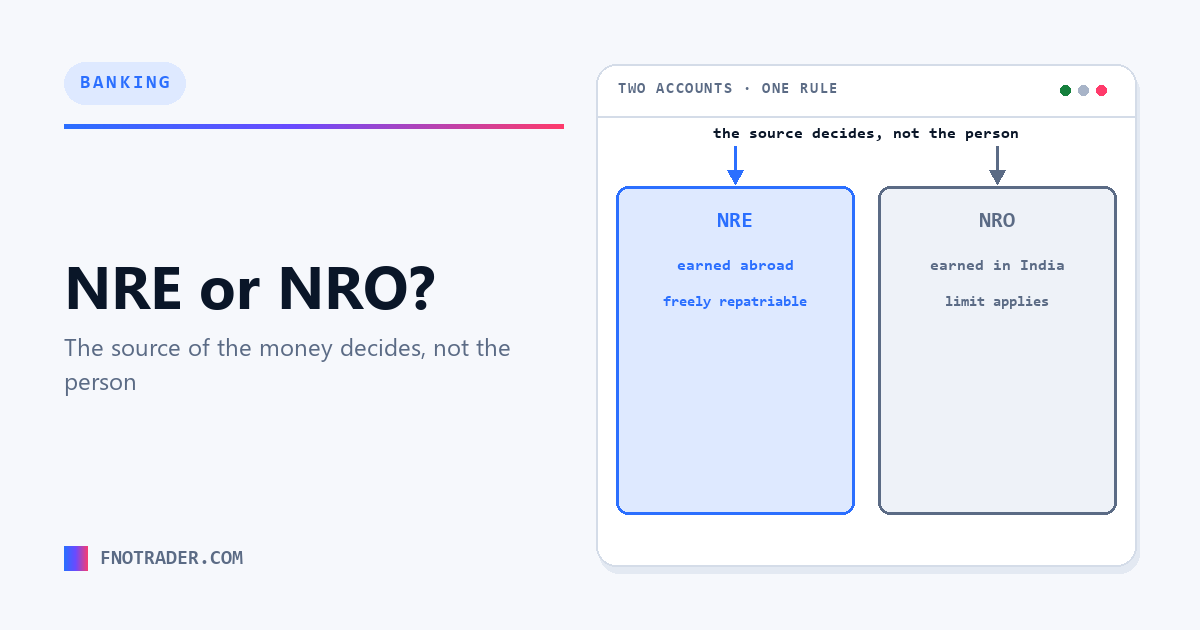
The two accounts are usually explained as a choice an NRI makes. They are not alternatives — they hold different money, and which one a rupee belongs in is decided by where it came from rather than by anything…
Read it →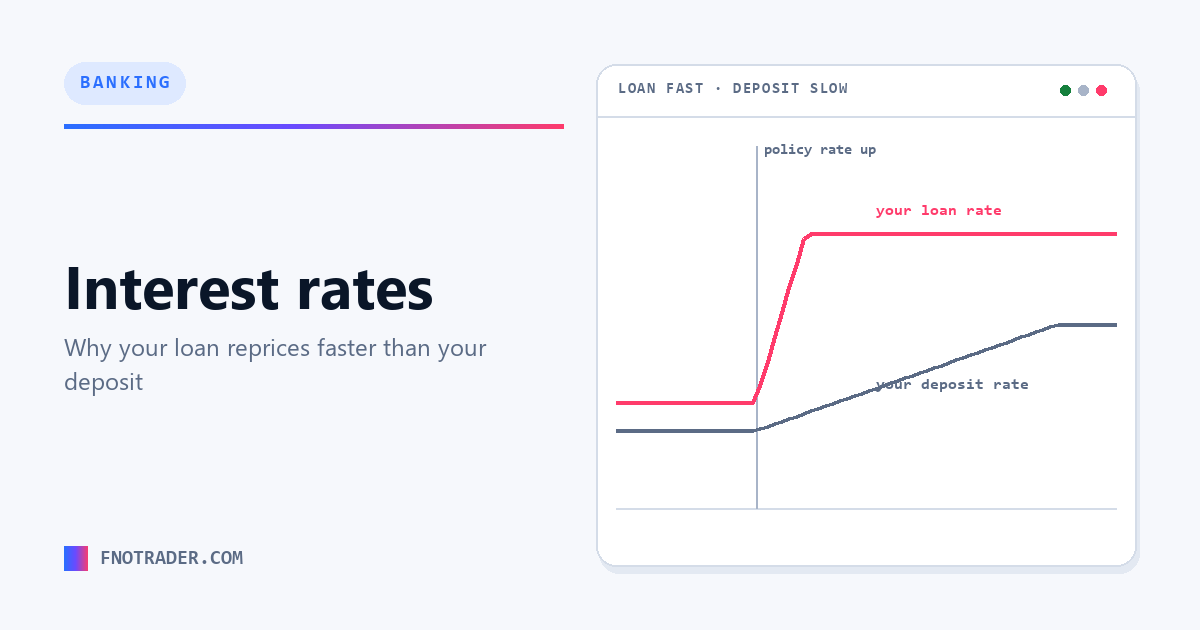
When the policy rate moves, your loan and your deposits do not respond equally or at the same speed. The asymmetry is structural rather than unfair — and once you can see it, several ordinary decisions about…
Read it →
Opening a joint account involves one choice most people make without reading — the operating mode. Pick the wrong one and the account works perfectly until the day one holder dies or falls ill, at which point…
Read it →
A bank locker is one of the safest physical places available to an ordinary household, and it is not a vault the bank stands behind. The bank has no record of what you put in, its liability is capped, and…
Read it →
Bank comparisons lead with the savings interest rate, which is close to the least consequential thing about a bank account. What matters is whether it works on the day you need it — and the most useful thing…
Read it →
Almost everyone reads the deposit insurance ceiling as a per-account number, which is why splitting money across three branches of the same bank feels like it does something. It does not. What genuinely…
Read it →
An account with no customer-induced transaction for {{DATA:inoperative_account_years}} is classified inoperative. At {{DATA:dea_transfer_years}} the balance itself is treated as unclaimed and transferred to a…
Read it →
Nothing is forfeited, and almost every explanation stops there. What follows the transfer is the part that decides whether you get your money back this month or next year: the bank you left it with is still…
Read it →
Two statutes use the same word and mean opposite things by it. A nominee on a bank account is a person the bank is legally safe paying; a parent, spouse or child nominated on a life policy is, by express…
Read it →Borrowing understood properly: what a credit score measures, what each loan actually costs, and how to get out of debt in the right order.

A credit score is not a measure of how wealthy or responsible you are. It is a prediction of one narrow thing — how likely you are to miss a payment — built only from borrowing you have already done. Which…
Read it →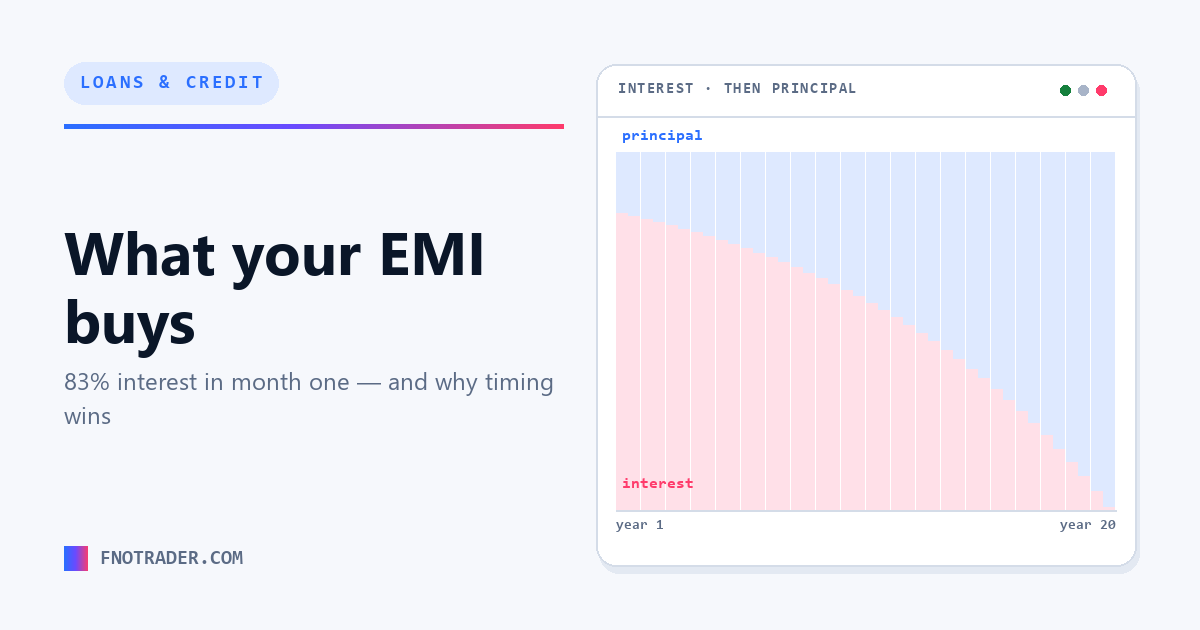
The EMI never changes, so it feels like a steady march towards owning the thing. It is not. On a typical home loan the first payment is 83% interest, and half the principal is still outstanding when you are…
Read it →
A credit card is genuinely free money for up to seven weeks, right until the month you do not clear it in full. At that point the interest-free period does not shrink — it disappears entirely, and even…
Read it →
There is a mathematically optimal order for repaying several debts, and it is not the one most people succeed with. That is not a contradiction — it is the central fact of the decision, and pretending…
Read it →
Borrowers negotiate hard over a quarter-point of interest and accept the tenure without discussion. The tenure is worth several times more. And there is a second number, fixed on the day you sign and never…
Read it →
A gold loan is the fastest and often the cheapest borrowing available to an ordinary household, and it does not care about your credit score. It also carries something almost no other consumer loan does: the…
Read it →
Eligibility is not a judgement about you. It is an arithmetic ceiling derived from your income minus your existing obligations — and one of those obligations may be a credit card you never use, counted against…
Read it →
A personal loan needs no collateral, which means the lender's only protection is their assessment of you. The rate you are quoted is therefore not just a price — it is a summary of how risky they think you…
Read it →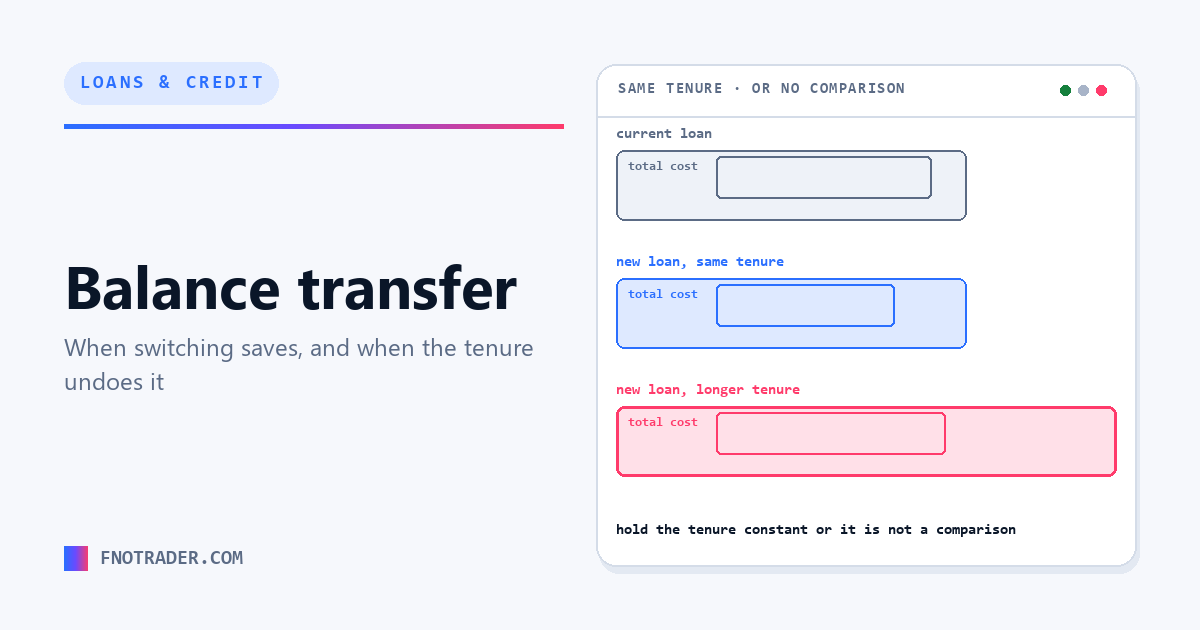
Moving a loan to a cheaper lender sounds unambiguously good, and the arithmetic usually is — right up to the moment the new lender offers a longer tenure to make the EMI look better. At that point a lower rate…
Read it →
A new car loses value fastest in its first years, while a loan repays principal slowest in exactly the same period. For a stretch in the middle you owe more than the car is worth — and that only becomes…
Read it →
An education loan lets you defer repayment until after the course. That is genuinely useful and it is not a payment holiday — interest accrues throughout, and if it is not paid it is added to the principal…
Read it →
A loan against property costs far less than a personal loan for one reason: the lender's downside is covered by an asset you probably live in. That is the entire trade — a lower rate in exchange for a…
Read it →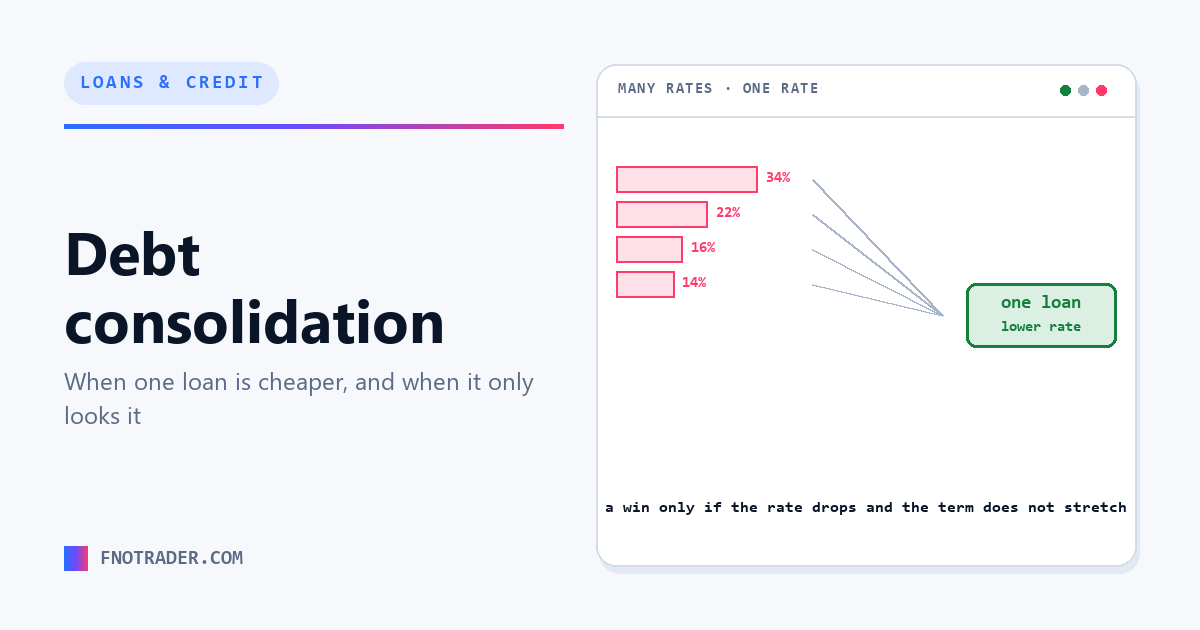
Consolidation is an arithmetic operation. It can lower the rate you pay and shorten the time you pay it, and when it does both it is one of the cleanest wins available in personal finance. What it cannot do is…
Read it →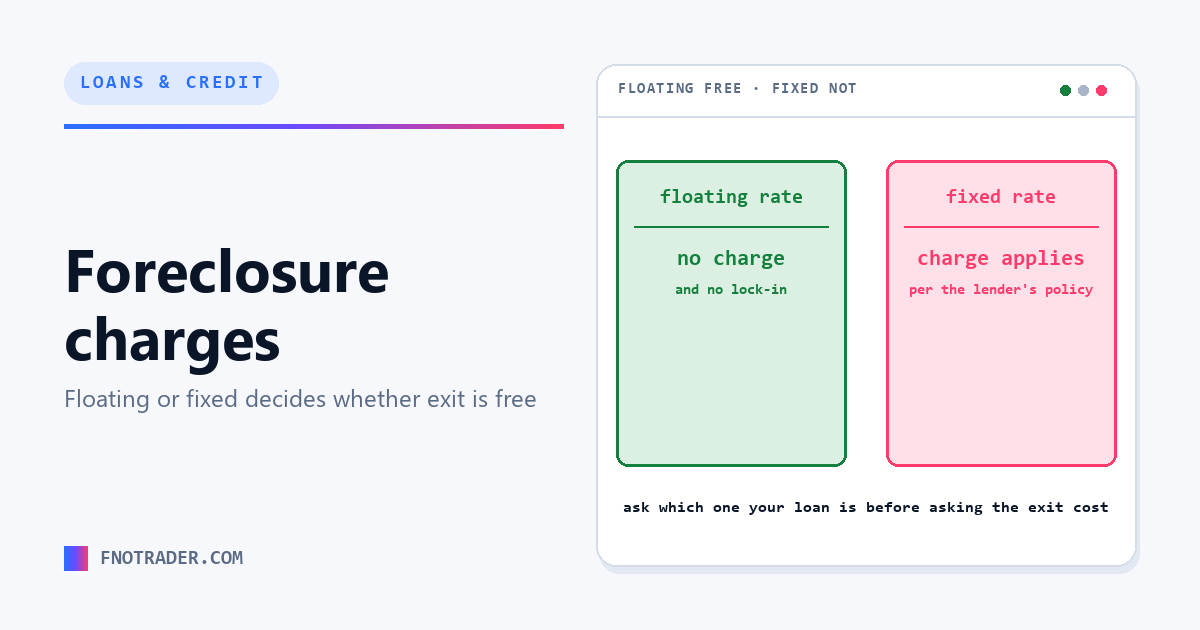
Most writing on this treats it as one question: can the lender charge you for paying early. The rule turns on a word sitting earlier in the sentence than most summaries reach — floating. A floating-rate loan…
Read it →
The scale is now fixed by regulation and the same at every bureau. The weightings are not — they are each bureau's own commercial model, unpublished and different from one another. That gap is why two lenders…
Read it →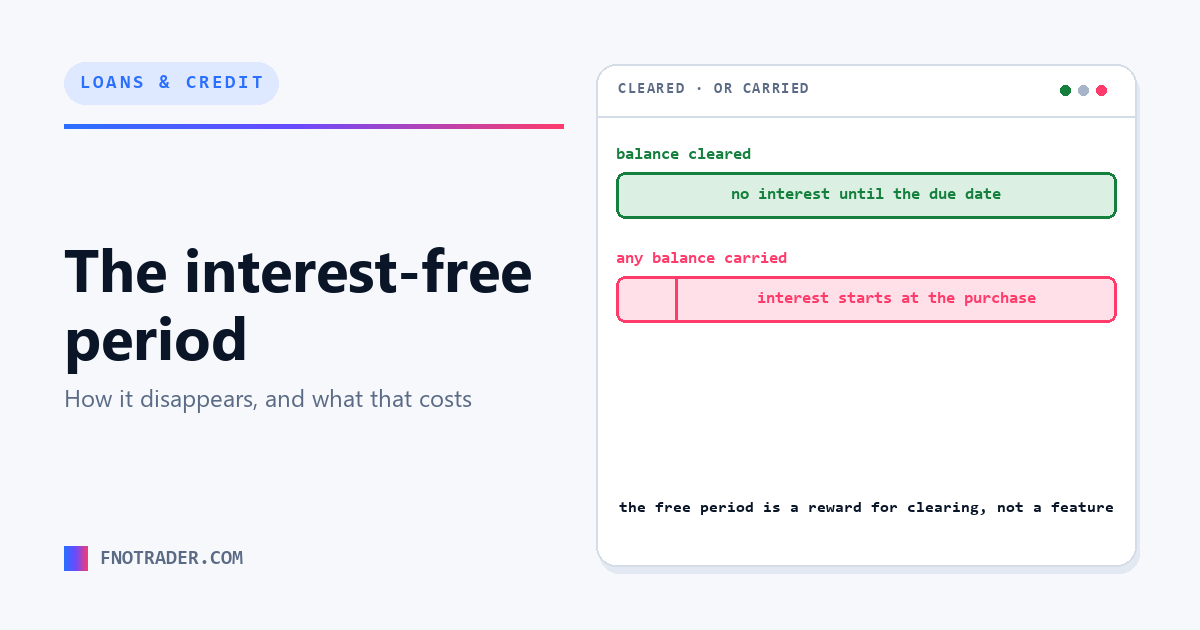
A credit card lends you money at no charge for a few weeks, and the arrangement is worth surprisingly little — a few thousand rupees a year on ordinary spending. What it costs to lose it is not small. Fall one…
Read it →Protection before investment. What each policy really covers, how claims work, and which products bundle things that belong apart.

Insurance is not a way to make money and it is not a savings scheme. It is a transfer of one specific kind of risk — the sort that is unlikely to happen and ruinous if it does. Once that is clear, most…
Read it →
Term insurance is the cheapest and least profitable product an insurer sells you, which is why it is rarely the one being recommended. It pays only if you die during the term — and that single limitation is…
Read it →
Two people with the same illness, the same hospital and the same sum insured can receive very different settlements. The difference is almost never the insurer's goodwill — it is two clauses most policyholders…
Read it →
Almost every motor policy decision in India comes down to one figure you are invited to adjust downwards to save money. Lowering it does reduce the premium — and it lowers, by exactly the same proportion, the…
Read it →
Death stops your income. A disabling illness stops your income and adds a cost at the same time, for as long as you live — which makes it the worse financial event of the two. It is also the one most…
Read it →
An endowment plan will tell you the premium, the sum assured and the maturity amount. It will not tell you the annual rate of return those three numbers imply — and that omission is not an oversight, because…
Read it →
A floater is cheaper because a family rarely claims twice in one year. It is priced on the oldest person covered, and one large claim can consume the sum insured for everybody — so the question is not which is…
Read it →
Personal accident policies are sold on accidental death, which is the part you least need — term insurance already covers death, from any cause, more cheaply per rupee. The reason to hold one is the benefit…
Read it →
Most people stay with a health insurer they are unhappy with for one reason: they believe switching means starting the waiting periods again. It does not. Portability exists precisely to carry those across…
Read it →
Most insurance advice is about choosing between insurers, which is close to the least consequential decision available. The mistakes that actually cost families money are structural, they are made before any…
Read it →
Travel insurance is sold on cancelled trips and lost baggage, which are irritations you could absorb. The reason to hold it is the section nobody reads: medical cover abroad, where a single event can cost more…
Read it →
Regulation gives your insurer a clock measured in hours, not days, to authorise a cashless admission and again to clear the discharge. Neither figure comes from your policy document; both sit in a 2024…
Read it →
A claim settlement ratio is a count: claims settled divided by claims received. That single design choice decides everything it can and cannot tell you — the most numerous claim type owns the number, a claim…
Read it →
Most of what a personal cyber policy pays on stolen money, the bank may already owe you back if you report fast enough. What is genuinely new is not theft at all — it is the legal and clean-up costs. And the…
Read it →
Most Indian home insurance is sold as cover for the building. For a flat owner that is the one part someone else has probably already insured — and the policy pays the society, not you. The exposures that…
Read it →
A rider is a second contract riding on the first — its own premium, its own wording, its own clock. Regulation names the categories; it does not fix what the words inside them mean. So the question that…
Read it →
A ULIP and a term policy plus a mutual fund can hold the same equities and end up in very different places, and the reason is rarely the market. It is that one of them prices insurance and investment…
Read it →How Indian tax treats income, gains and investments — and the planning that follows from understanding it rather than guessing.
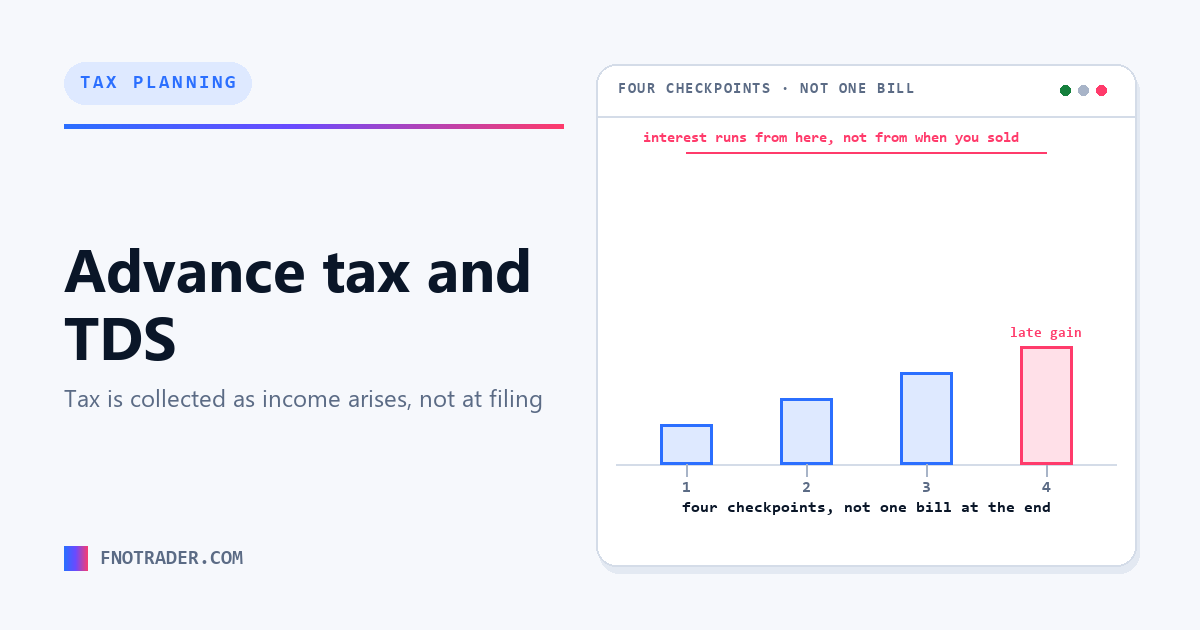
Most people meet the tax system once a year, at filing. The system does not work that way: it collects as income arises, through deductions you never see and instalments nobody bills you for. The gap between…
Read it →
Nearly everything an investor learns about capital gains comes from holding shares, and almost none of it survives the move to a house. The clock runs longer before a gain turns long-term, no slice of the gain…
Read it →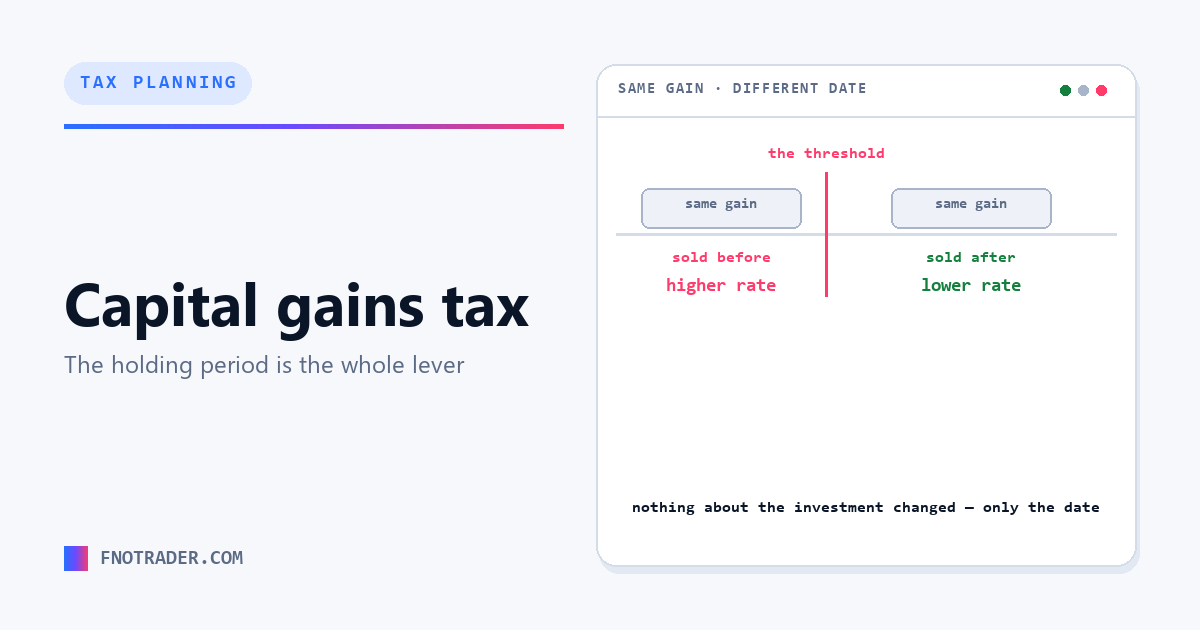
Two investors make the same gain on the same fund and pay different tax, and the only thing separating them is the calendar. That is the whole subject. What makes it worth an article is that the calendar does…
Read it →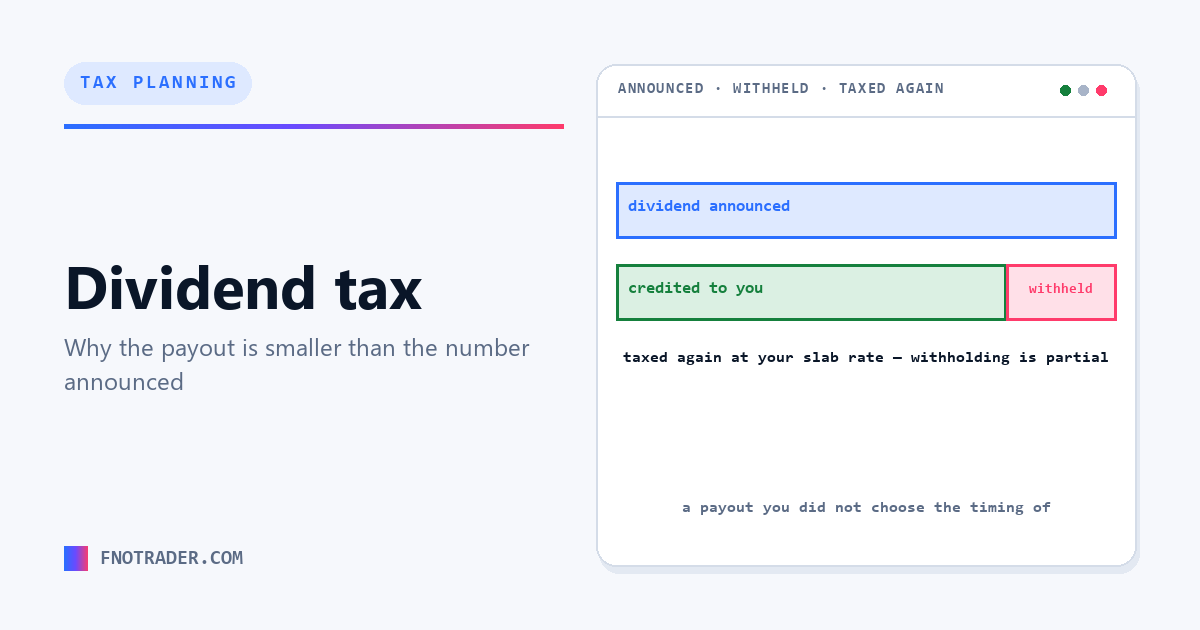
A board announces ₹12 a share and your bank credits less than ₹12 a share, and the difference is not a fee. Dividend income is charged at your own slab rate, and the payer withholds an instalment of that…
Read it →
The {{DATA:elss_lockin_years}}-year lock-in on an equity-linked savings scheme is treated as the price of admission. It is closer to the reason the thing works — a short restriction attached to an equity…
Read it →
Three documents arrive before a return is filed, and most people read them as three copies of the same information. They are not. One is a single employer's certificate, one is a ledger of tax actually…
Read it →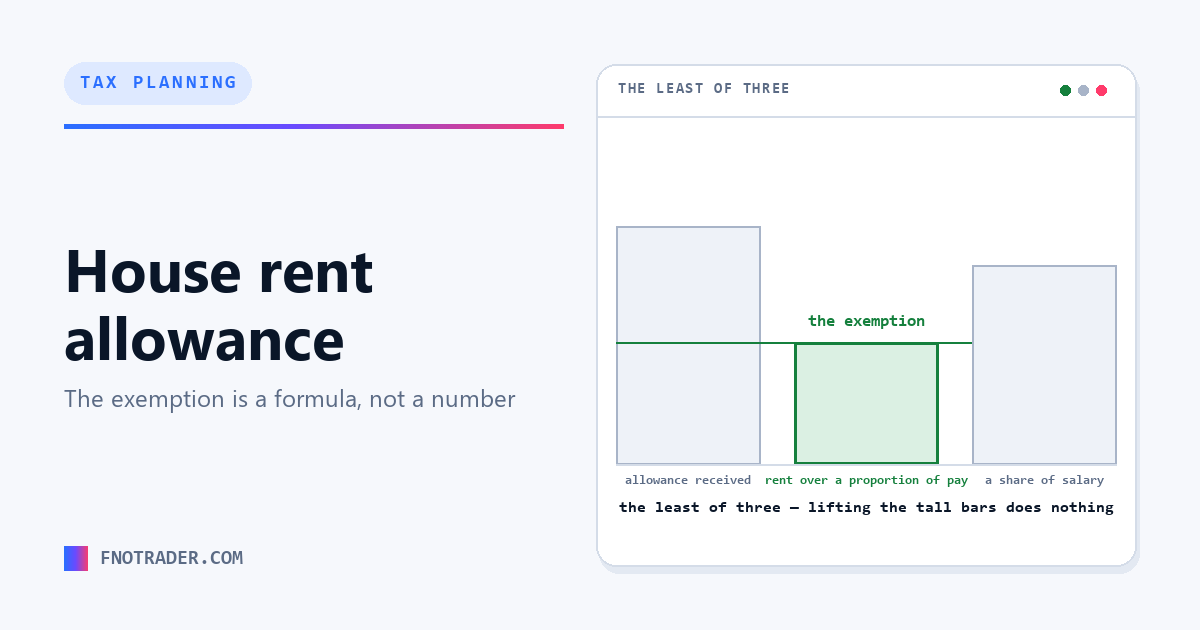
HRA is not a deduction you claim; it is the smallest of three quantities, two of which are fixed by your salary structure rather than by what you hand your landlord. That is why extra rent lifts the exemption…
Read it →
Most people hold the pieces separately — a slab table, a deduction limit, a TDS line on the payslip — and have never seen them arranged in the order the calculation actually runs. The order is…
Read it →
A return is not how tax gets paid — most of it has already gone, deducted by payers and paid in instalments. Filing is the reconciliation, and it asks for three things people rarely separate: the income…
Read it →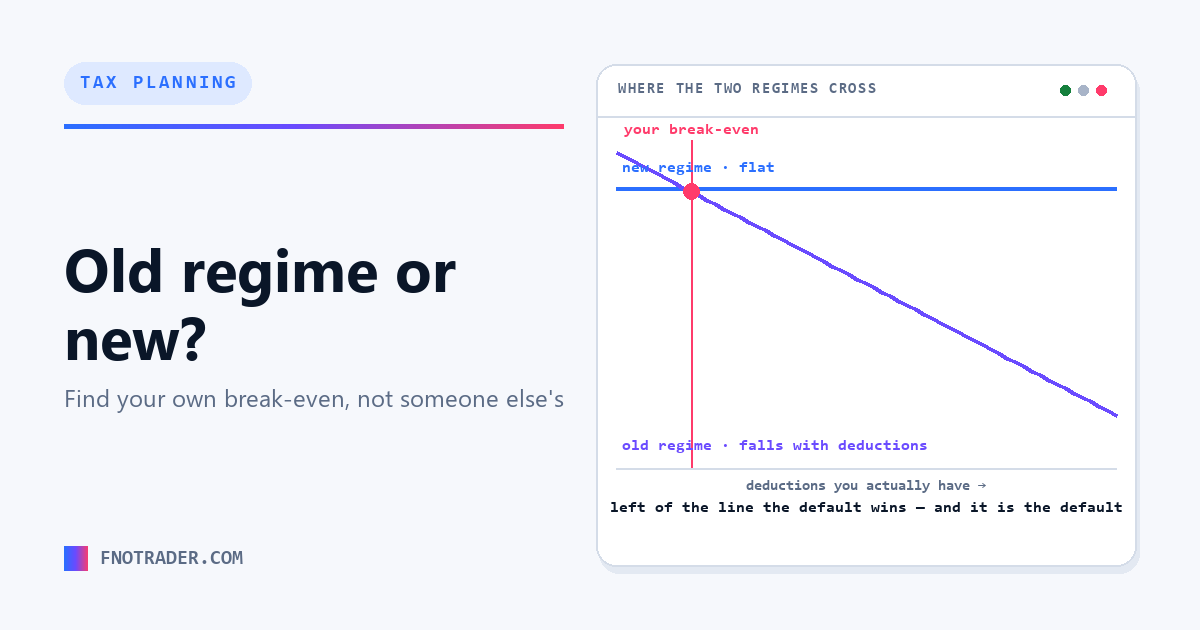
Most people still describe the new regime as the one you switch to. It is the one you are already in unless you actively left. And whether leaving is worth it reduces to a single subtraction that turns on your…
Read it →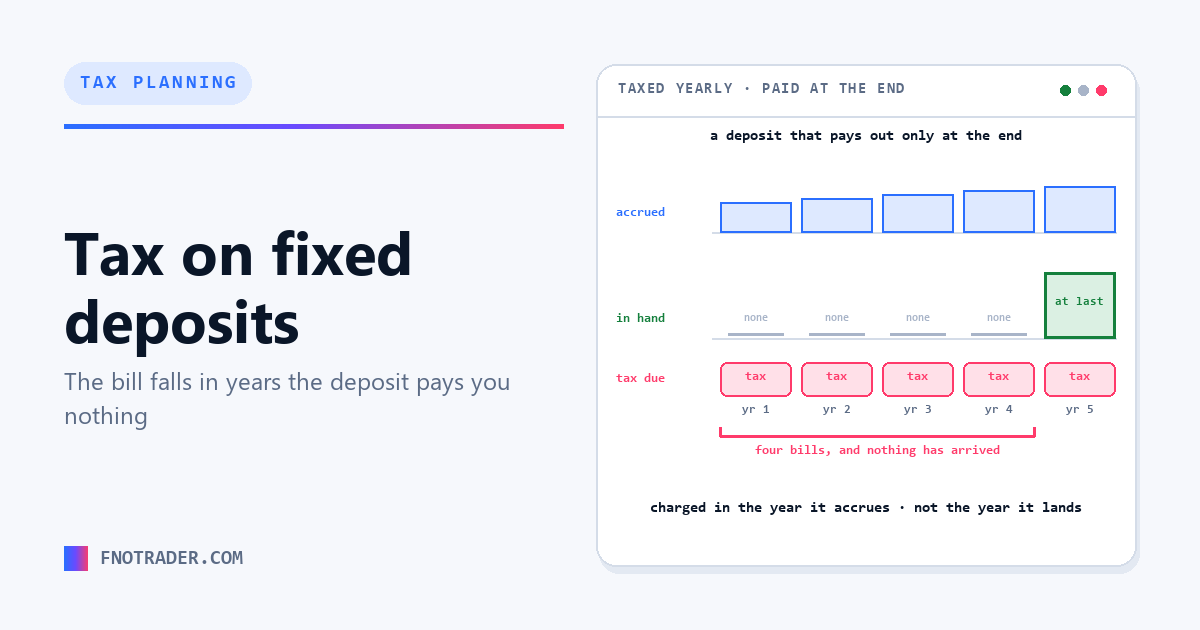
A five-year cumulative deposit pays you nothing until the fifth year and produces a tax bill in each of the five. The interest is charged in the year it accrues, not the year it reaches you, so the money to…
Read it →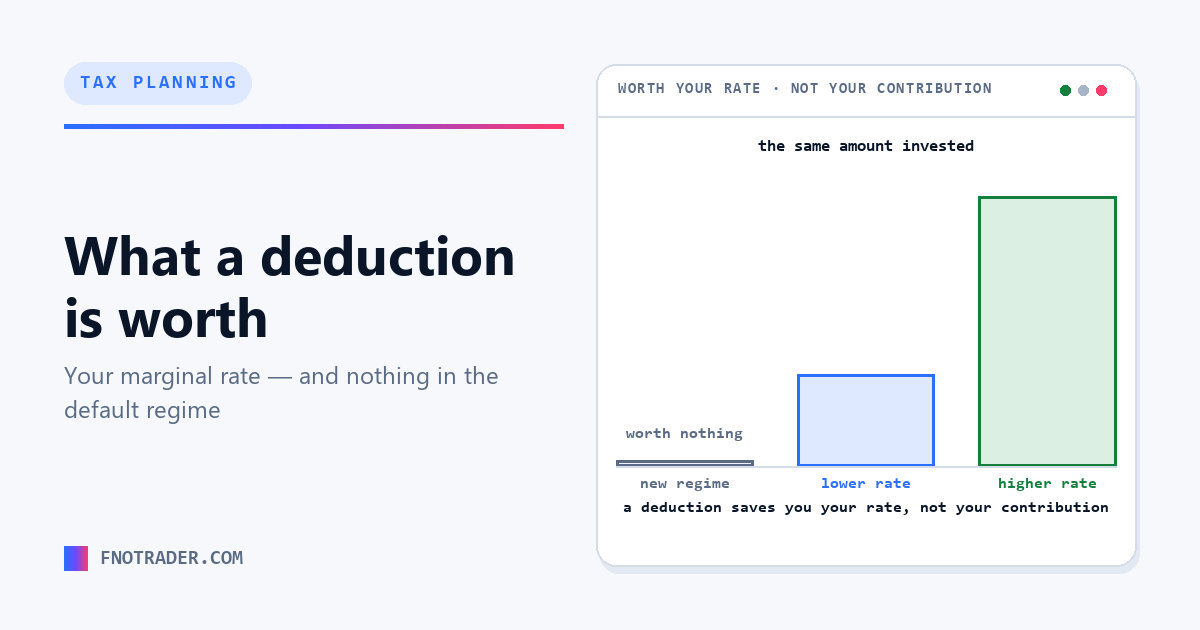
A deduction does not hand back the amount you invested. It hands back that amount multiplied by the rate at which your top slice of income is taxed, which is why the same instrument is worth materially…
Read it →
Crossing into a higher slab does not re-tax the income below it. Only the rupees above the line pay the higher rate, so a raise leaves you with more of it — always. The real cliff sits one step further…
Read it →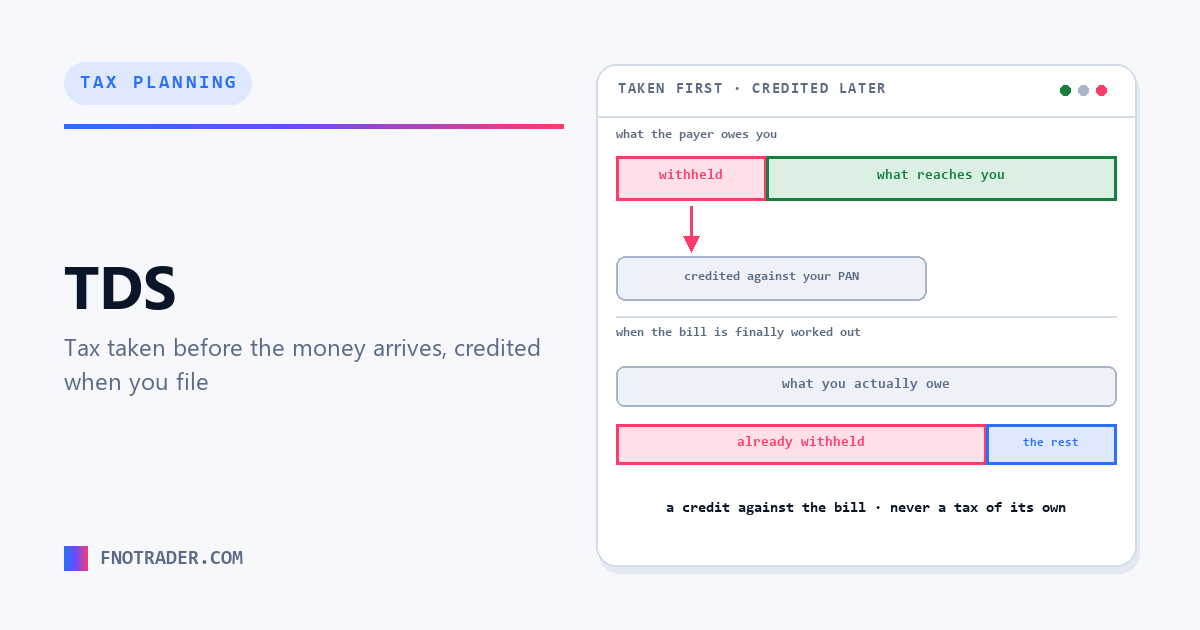
Tax deducted at source is not a tax. It is the government collecting part of a bill it has not yet worked out, from someone who has never seen your finances. Every rupee withheld is a credit against what you…
Read it →What happens when income stops, illness arrives, or someone dies — the preparation nobody wants to do and every family eventually needs.

An emergency fund is the only part of a portfolio whose job is not to earn anything. It exists to stop one bad month from reaching the rest of your money — and judged on returns it will always look like a…
Read it →
Almost everyone believes that naming a nominee decides who inherits. It generally does not. A nominee is the person the institution is authorised to pay — who is entitled to keep the money is a separate…
Read it →
The financial damage from losing a job is rarely done by the lost salary. It is done in the first month, by decisions taken in shock — and by one thing that lapses the day you leave and that almost nobody…
Read it →
A will is not about wealth. It is about whether your intentions or a statute decides what happens — because in the absence of one, a default already exists, it applies automatically, and it may not resemble…
Read it →
Every year, money in Indian banks and fund houses goes unclaimed — not because of disputes, but because nobody knew the account existed. Nomination cannot help with an asset nobody can name, and neither can a…
Read it →
A family that has just lost an earning member is asked to make large, irreversible financial decisions during the worst weeks of their lives, by people who mean well and by some who do not. Almost all of the…
Read it →
A power of attorney lets somebody act for you while you are alive. The uncomfortable question — and the one worth asking before you need the answer — is whether it still operates once you are no longer able to…
Read it →
A forgotten bank account can be traced. A forgotten mutual fund folio can be found against a PAN. There is one category of holding where neither is true — where losing the credentials means the asset is simply…
Read it →
A family with strong health cover can still find itself scrambling for money on the day of an admission. Cover pays the hospital — eventually, partly, and against conditions. What the first forty-eight hours…
Read it →
Almost every household that believes its affairs are in order has completed one of the four things required and assumed it covered the rest. They do not overlap — each answers a different question, at a…
Read it →Building a corpus, and the harder problem of drawing it down without running out.

Retirement planning is almost always presented as a single question: how large a corpus do you need? That is the easy part. The harder problem starts on the day the salary stops, and it is governed by rules…
Read it →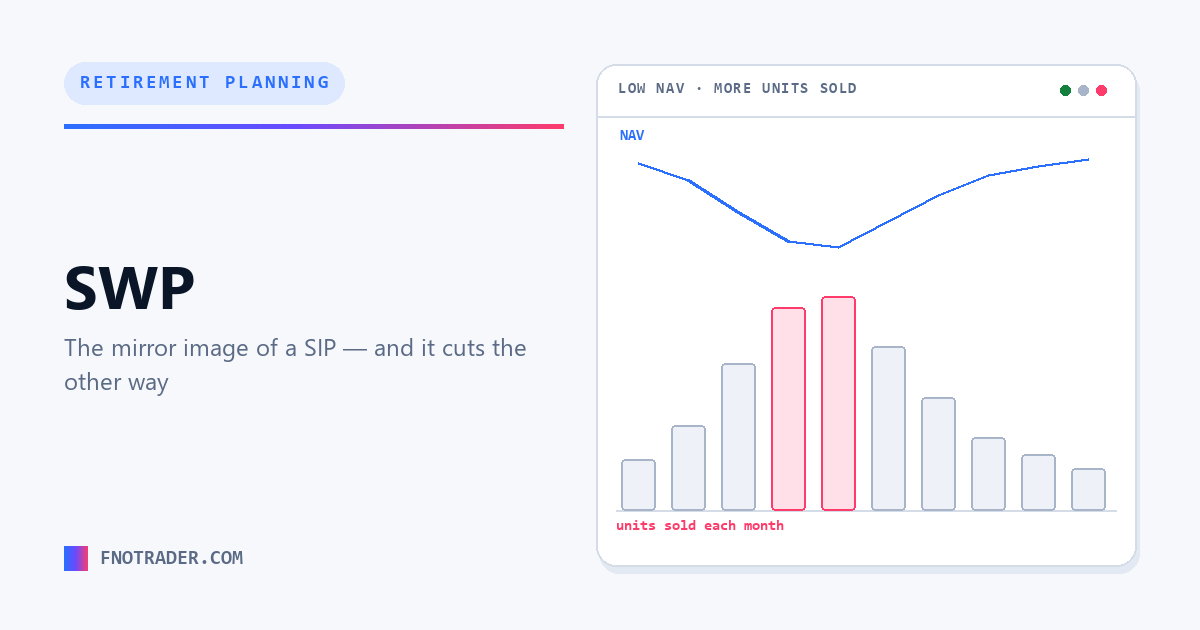
A SIP is praised for buying more units when prices are low. An SWP does exactly the same thing in reverse — it sells more units when prices are low — and almost nobody mentions it, even though the mechanism is…
Read it →
Splitting a retirement corpus into short, medium and long buckets is presented as an asset allocation technique. It is not really one — the allocation it produces could be arrived at directly. What it actually…
Read it →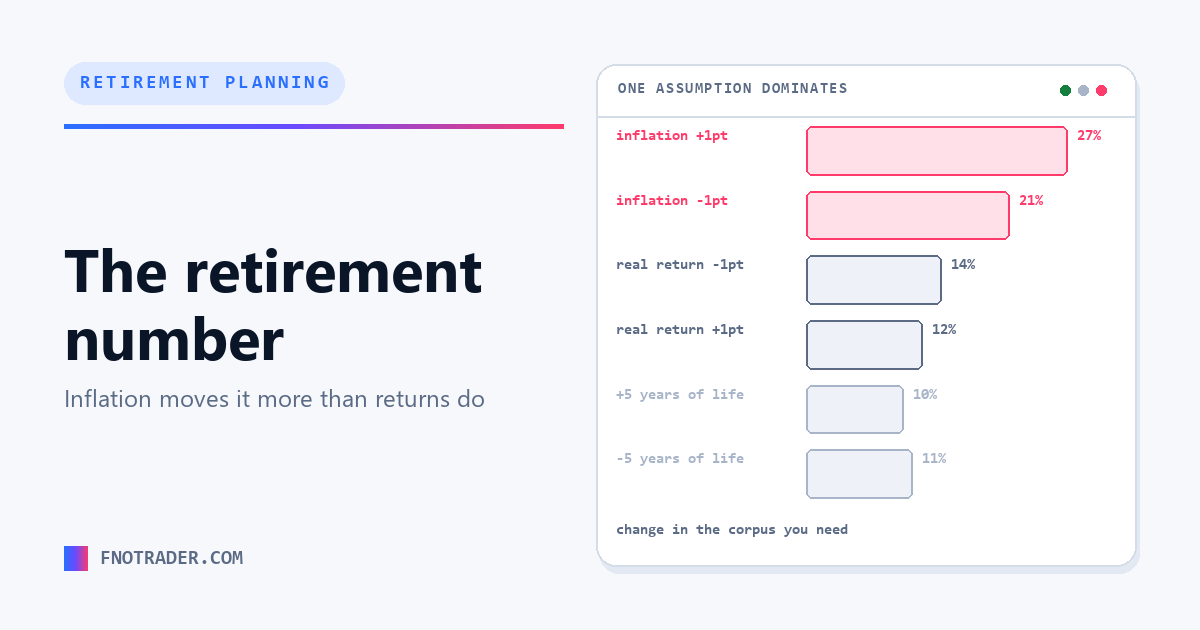
The arithmetic of a retirement corpus takes five minutes. The answer depends entirely on three assumptions you cannot verify — and they are not equally important. One of them moves the required corpus more…
Read it →
Every comparison of annuities leads with the return, concludes it is poor, and stops there. The return is poor because return is not what you are buying — an annuity is the only instrument that pays you for as…
Read it →
Retirement planning spends almost all its attention on building a corpus and almost none on the structure that turns it into an income. The organising principle is simple and rarely stated: match how certain…
Read it →
Retirement errors are usually listed by how common they are. Ranking them by how hard they are to undo is more useful, because it puts the one input you cannot buy back at the top — and it is the one people…
Read it →
Most writing about early retirement is about reaching the number. The Indian problems start after you reach it — and the largest is that you have just taken on decades of self-funded healthcare in the years…
Read it →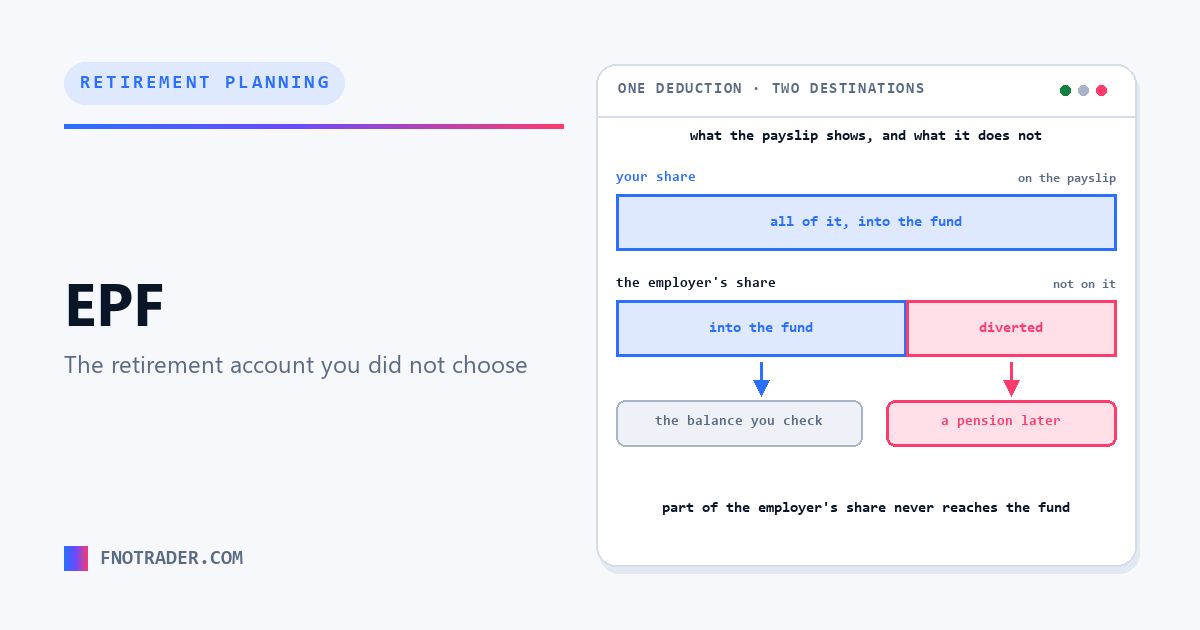
For a salaried employee who has never opened anything else, the provident fund is the entire retirement plan, and it is the one account nobody chose. The deduction happens before the salary arrives, the…
Read it →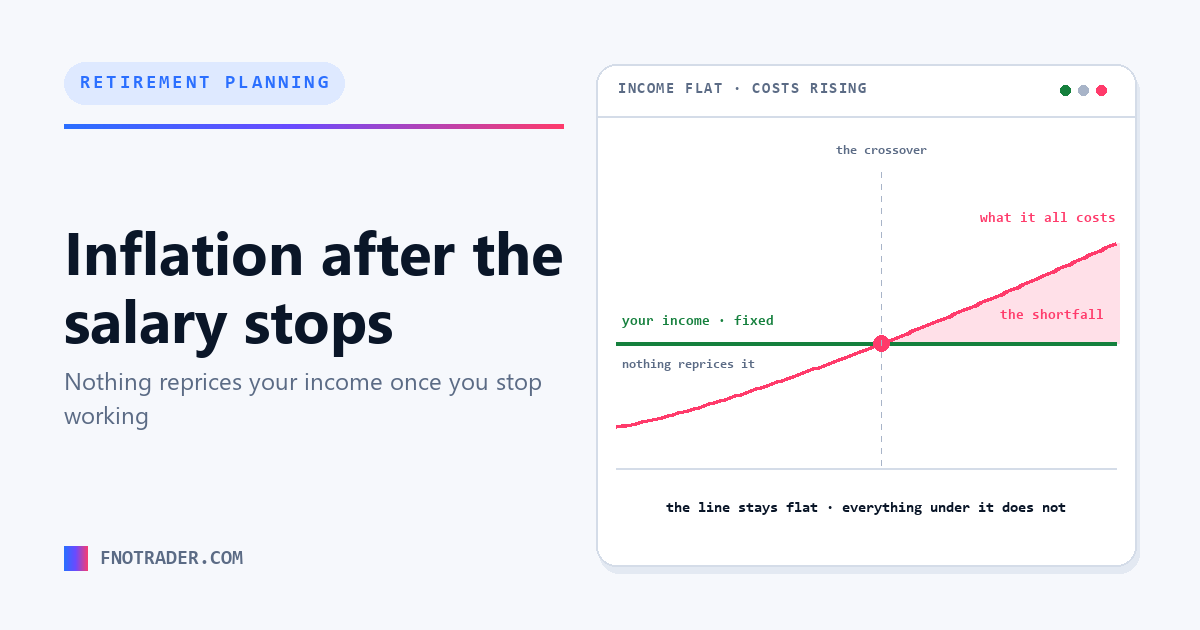
While you are working, a price rise is an inconvenience your next raise absorbs. After you stop, nothing reprices your income for you — so the same rise stops being an annoyance and becomes a permanent cut in…
Read it →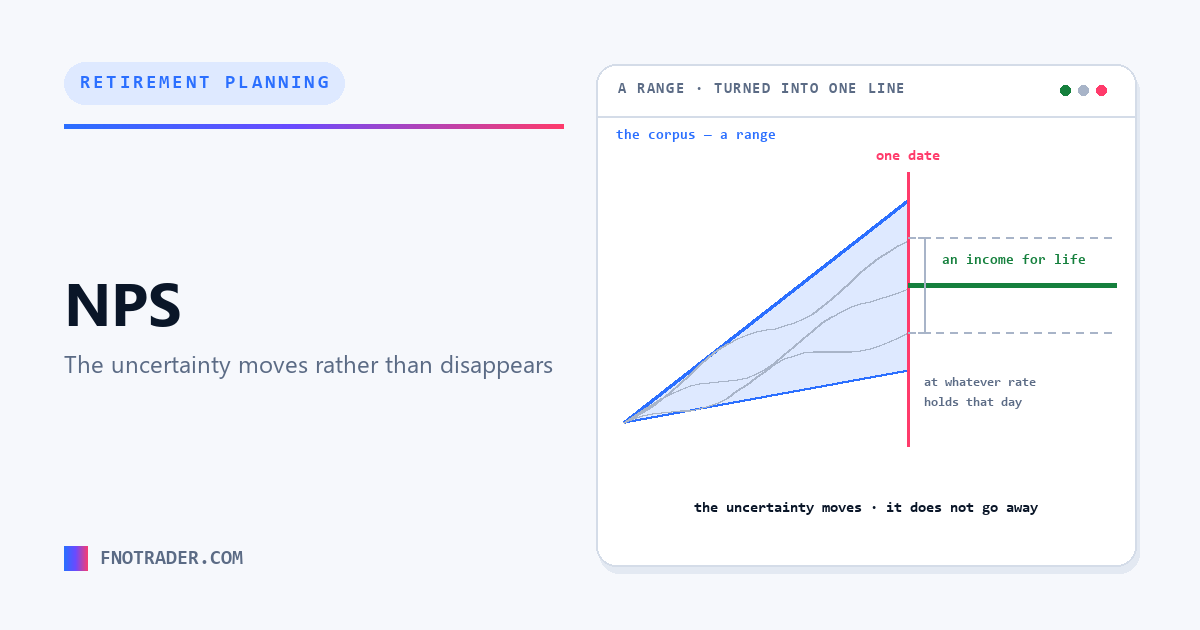
EPF and PPF tell you the rate and leave the corpus to follow. NPS tells you the allocation and leaves the corpus to the market — then, at exit, converts part of that corpus into a lifetime income at whatever…
Read it →
An annuity converts a lumpsum into an income that stops only when you do. What you buy is certainty and protection against a long life, not a return — and the price has three parts: the interest rates of one…
Read it →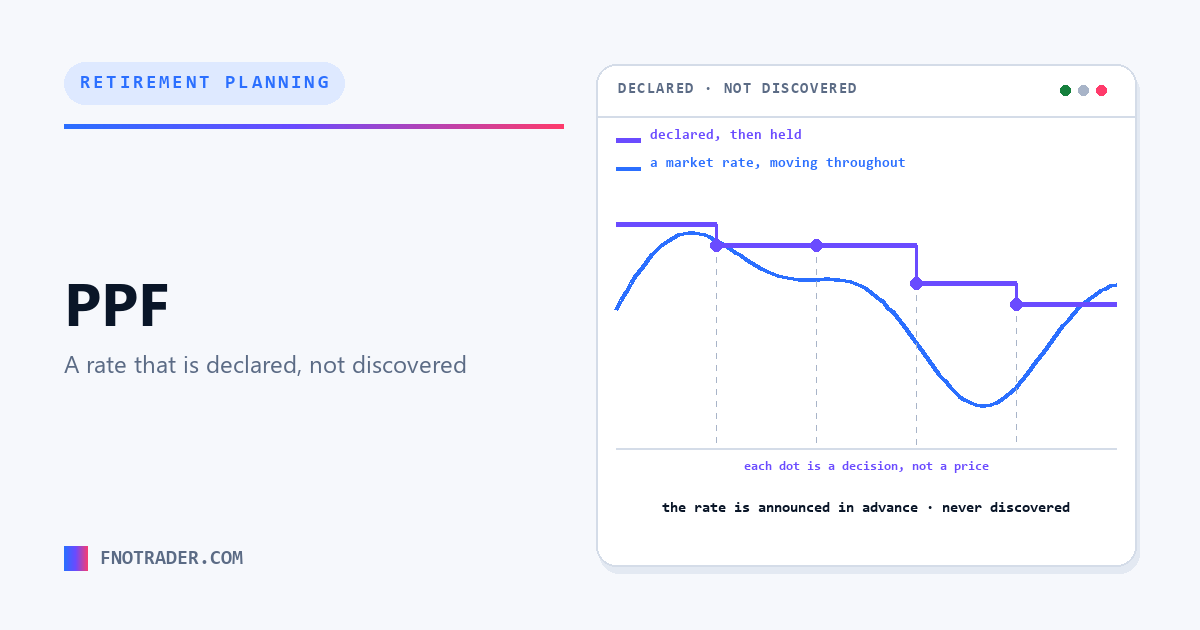
The lock-in is usually written up as the cost of admission — the thing you put up with in exchange for the rate. Read it the other way and it is closer to the product itself. A committed term is what lets the…
Read it →
Most retirement numbers are wrong in the same way: they inflate spending to the retirement date and then discount it at a nominal return, which quietly assumes prices stop rising the day you stop working. Fix…
Read it →
A withdrawal rate is not a return assumption and not a promise. It is the answer to a single historical question — what was the largest first-year withdrawal that would have survived the worst start date on…
Read it →The same principles meet different constraints at twenty-five, at forty and at sixty — and for a freelancer, a new parent or someone drawing a pension. What changes, and what does not.

Once another person's outcomes ride on decisions they cannot make, the arithmetic does not change but the tolerance for being wrong does. Protection stops being a preference, because the downside is now borne…
Read it →
The principles of saving do not change with the reader's sex; three structural facts change the inputs. A longer average retirement needs a larger multiple of annual spending, and a gap in contributions is…
Read it →
Nothing about who owns what changes on the day two people marry. What changes immediately is who depends on whom, and that dependence arrives with no document behind it. Fully joint, fully separate and hybrid…
Read it →
Almost no income and almost no obligations sounds like nothing to manage. It is really the only stretch of life where the cost of getting money wrong is capped at a few thousand rupees, and where several…
Read it →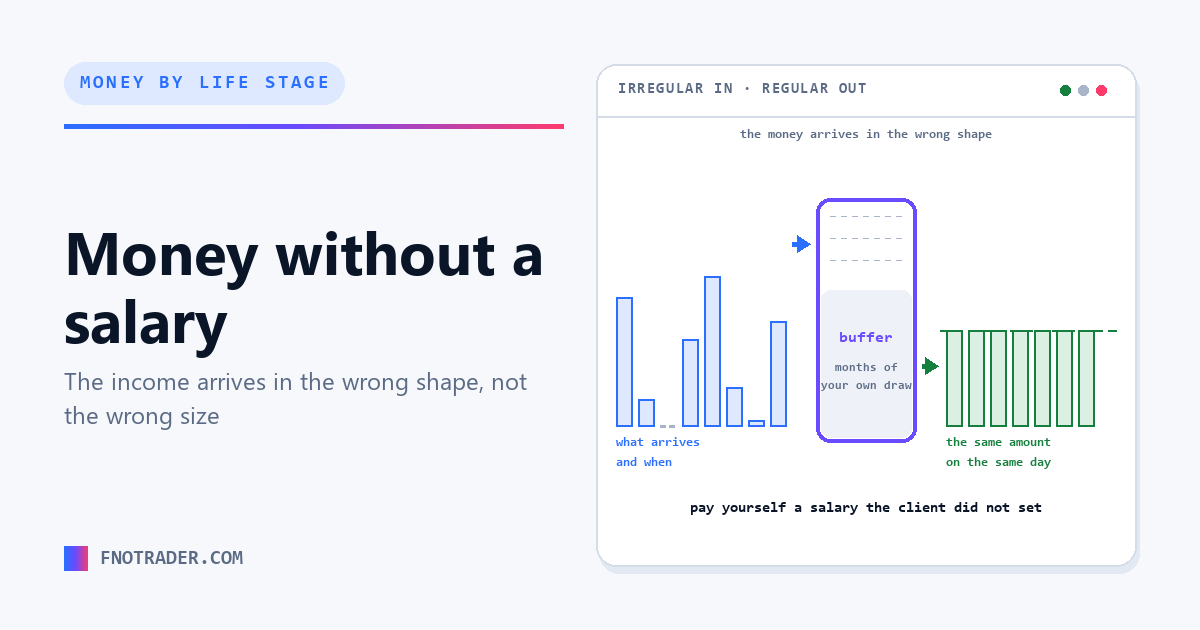
Working without a salary is not mainly a problem of earning less. The money arrives in the wrong shape — in lumps, on somebody else’s schedule, with nothing withheld and nothing contributed on the…
Read it →
India does not have one definition of a non-resident. It has two — one written for tax, one written for foreign exchange — and they measure different things, so the same person can be non-resident…
Read it →
The defining constraint of the decade is not inexperience but a small balance. Compounding cannot act on money that is not there yet, so until the portfolio's own return catches the year's contribution — later…
Read it →
Nothing about the principles changes at thirty. What changes is that several claims now arrive on the same surplus at once, most of them with dates attached, and the surplus is finally large enough that each…
Read it →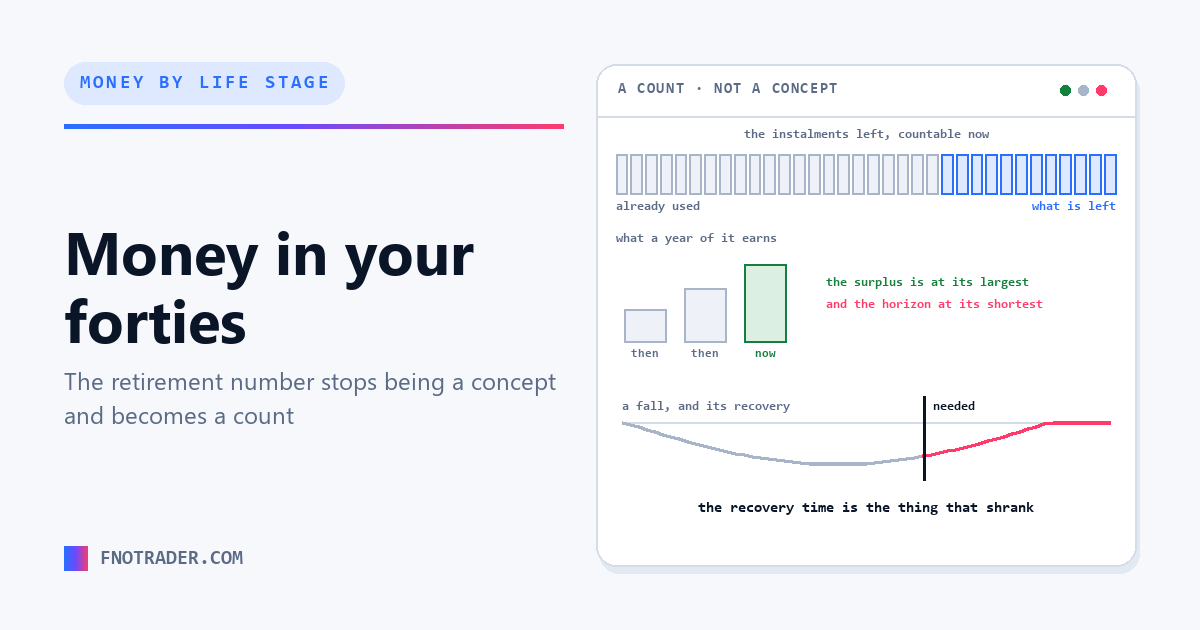
By forty the retirement number stops being a concept and becomes a count — a specific number of instalments left, against spending you can already observe. What changes is not the principles but the recovery…
Read it →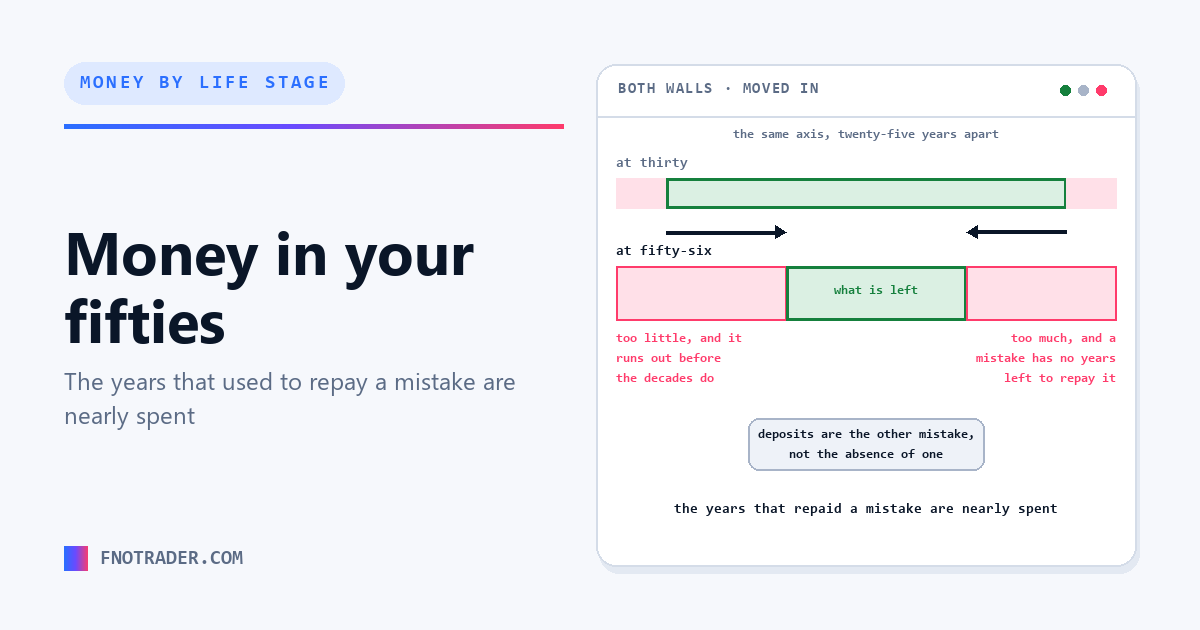
For most of a working life a mistake is repaid out of the years still ahead of it. By the mid-fifties that repayment mechanism is nearly spent, which changes the character of every large decision — without…
Read it →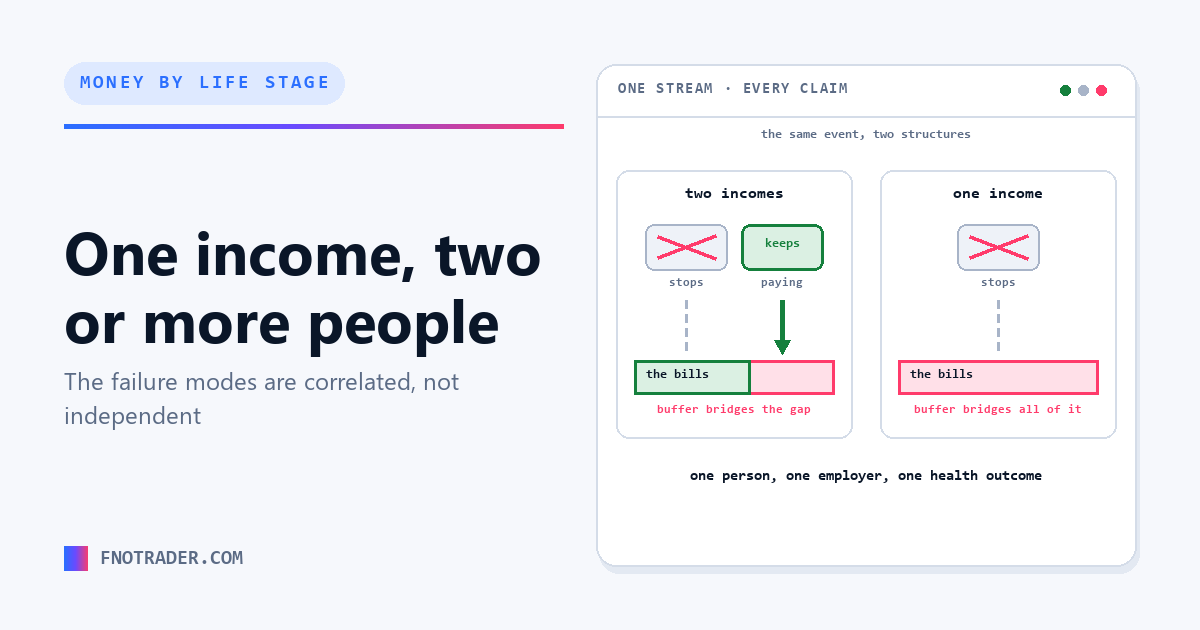
A household with one income is not simply a household with less money. Its risks are stacked on one person, one employer and one health outcome, so the events that could stop the money are often the same…
Read it →
Every earlier stage assumes a repair mechanism it never names: next month's income. After you stop earning, that channel closes, and the portfolio's job changes from earning a long-run return to producing a…
Read it →How the market itself works — exchanges, accounts, listings and corporate actions. The plumbing everyone is assumed to already know.
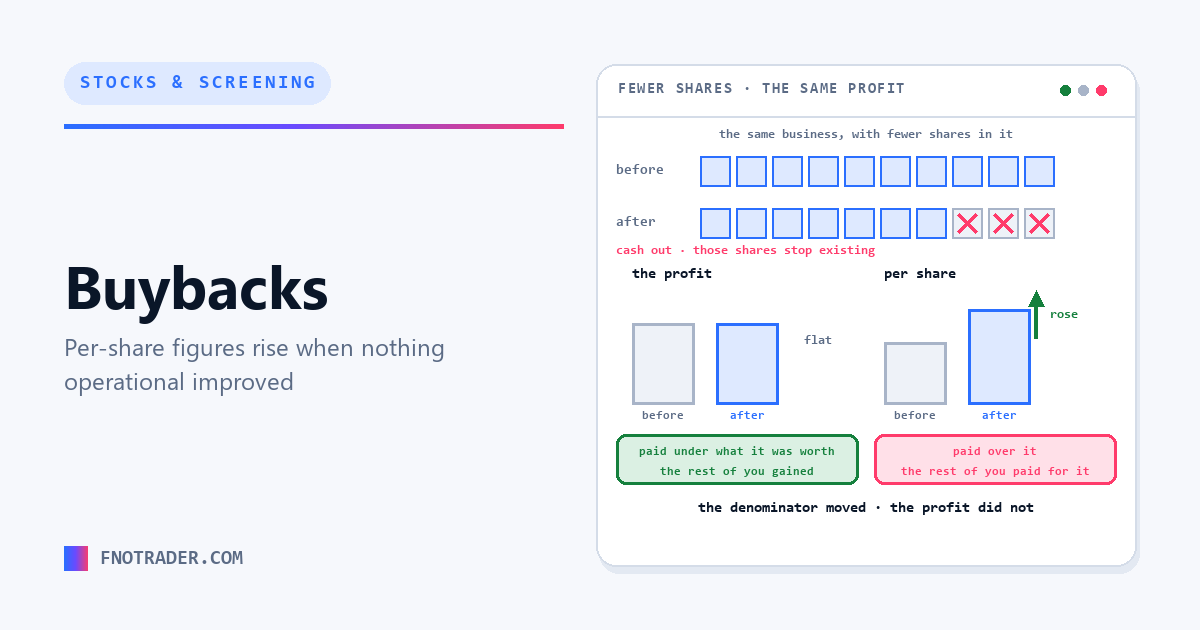
A buyback spends the company's cash to extinguish its own shares, so each share left over stands for a larger fraction of a smaller business. That is why earnings per share rise when nothing operational has…
Read it →
A price band caps how far a security can move in one session. Reach the cap and the quoted price stops moving, and so does your ability to sell, because a limit on prices is not a supply of buyers. The pause…
Read it →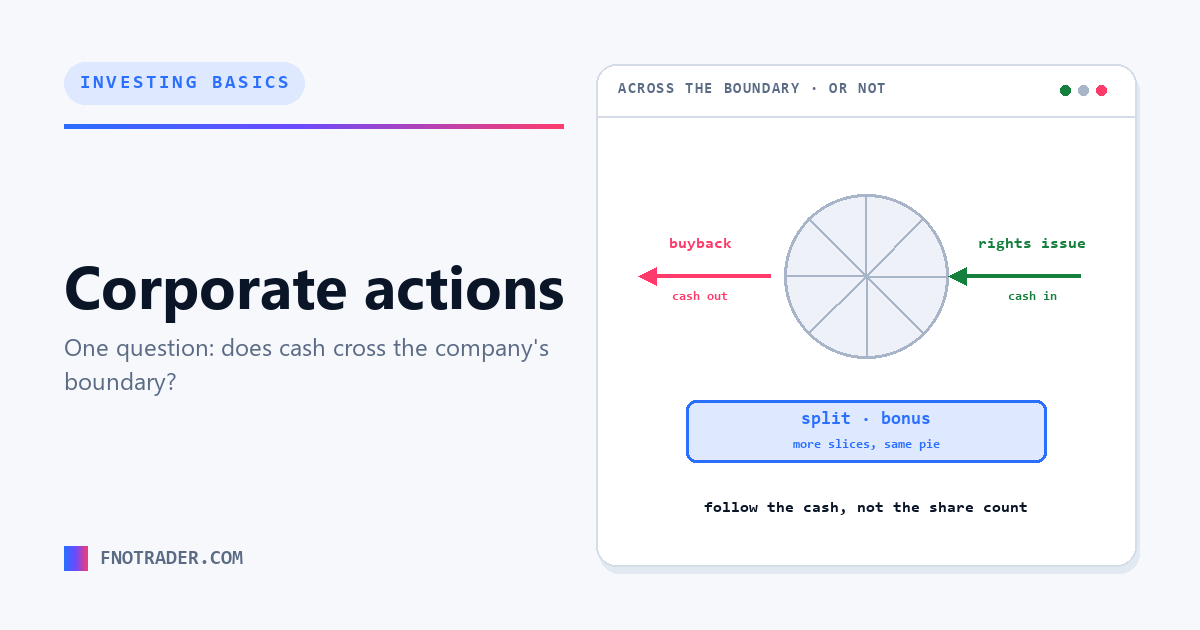
Four events, one question: does this change what the company is worth, or only how it is divided? A split and a bonus cut the same pie into more slices, which is why the price adjusts and nothing is gained. A…
Read it →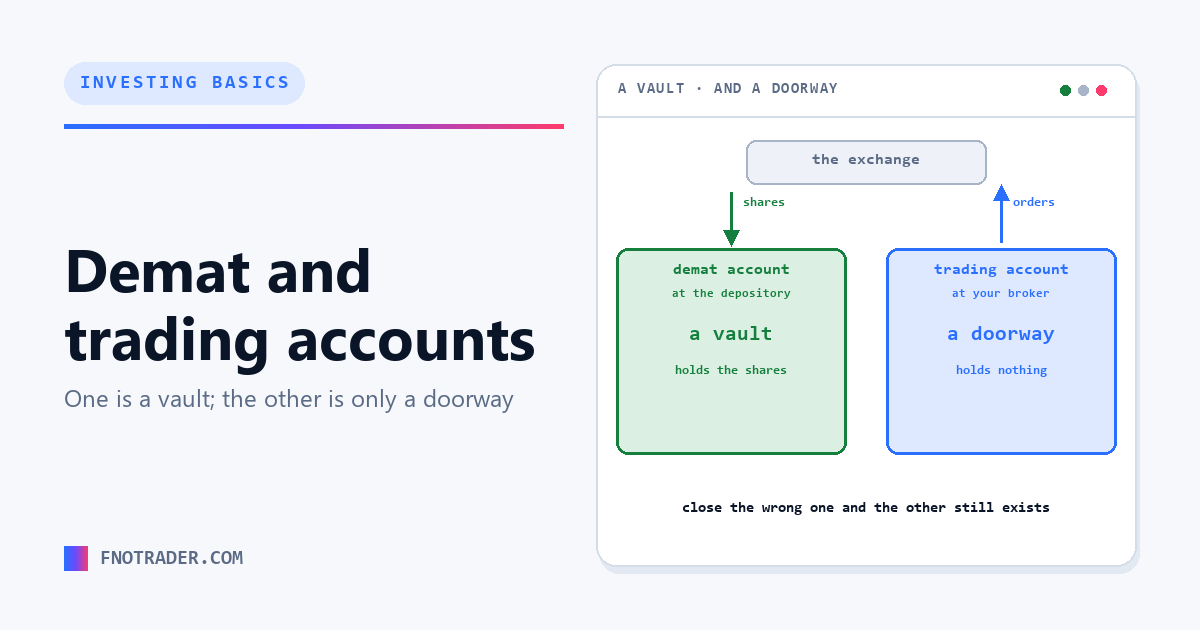
One is a vault and the other is a doorway. Your shares sit in a demat account at a depository, in your name; the trading account is only the permission your broker uses to send orders to an exchange. Confuse…
Read it →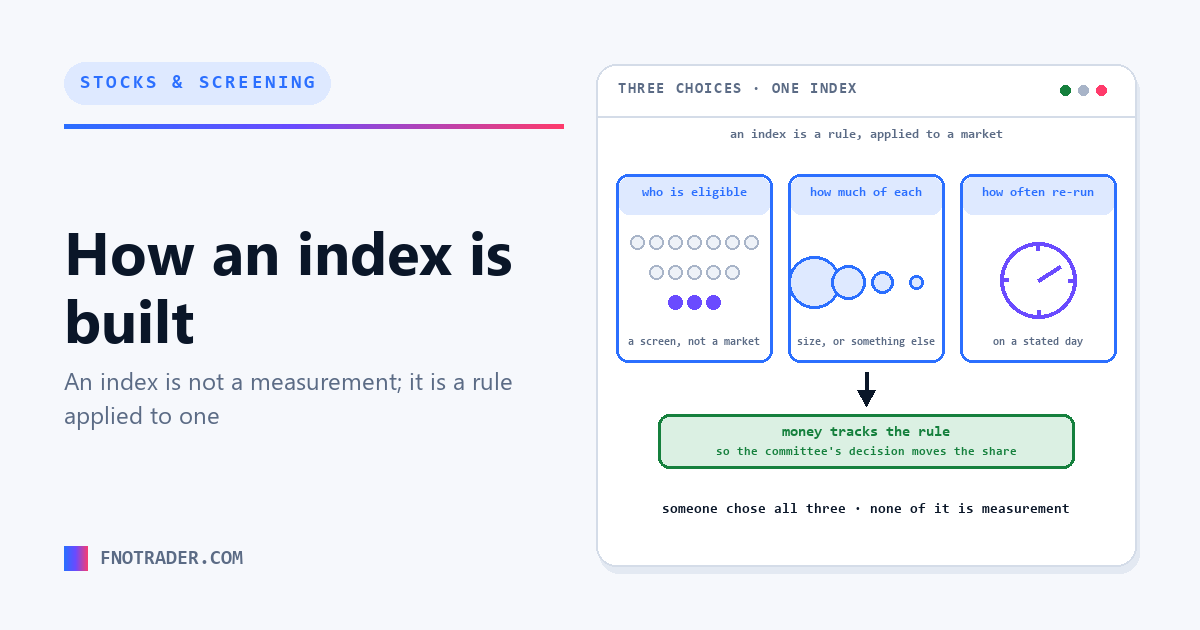
An index is not a measurement of the market but a rule applied to it: someone chose which companies qualify, what decides their proportions, and how often to redo the sums. Because a great deal of money is…
Read it →
A company selling shares to the public for the first time is two different transactions wearing one name. In a fresh issue the money reaches the company's bank account; in an offer for sale it reaches the…
Read it →
Multiply the share price by the number of shares and you have market capitalisation — the market's price for the equity, not a valuation of the business and not what buying it would cost. The gap to the second…
Read it →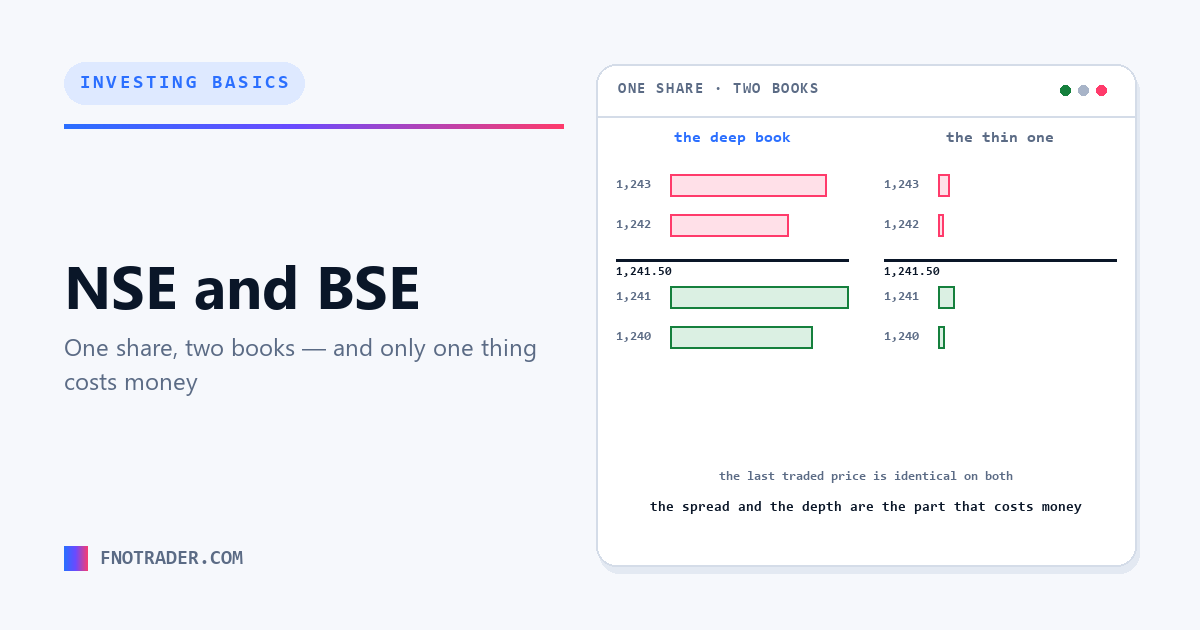
Both are recognised exchanges, running the same session on largely the same companies, and shares bought on either land in the same demat account. The choice matters far less than the comparisons suggest…
Read it →
A company asks the people who already own it for more money, in proportion to what they hold, at a price it sets and usually below the market. Take it up and nothing changes. Sell the entitlement and nothing…
Read it →
A trade executes in an instant and becomes yours later, and almost everything confusing about a broker screen lives in that gap. Between the two moments sits a clearing corporation that neither buyer nor…
Read it →
Both events hand you more shares and leave you as rich as you were, because the price adjusts in the same ratio the count rose. Where they differ is on the balance sheet: a split divides the face value of each…
Read it →
A share is a claim on a business, not a ticket in a game, and the market exists so that claim can change hands without the business being disturbed. Which is why the money you pay for a share almost never…
Read it →Reading a business from its own statements: the balance sheet, the profit and loss account, and the ratios that summarise them without hiding what they leave out.
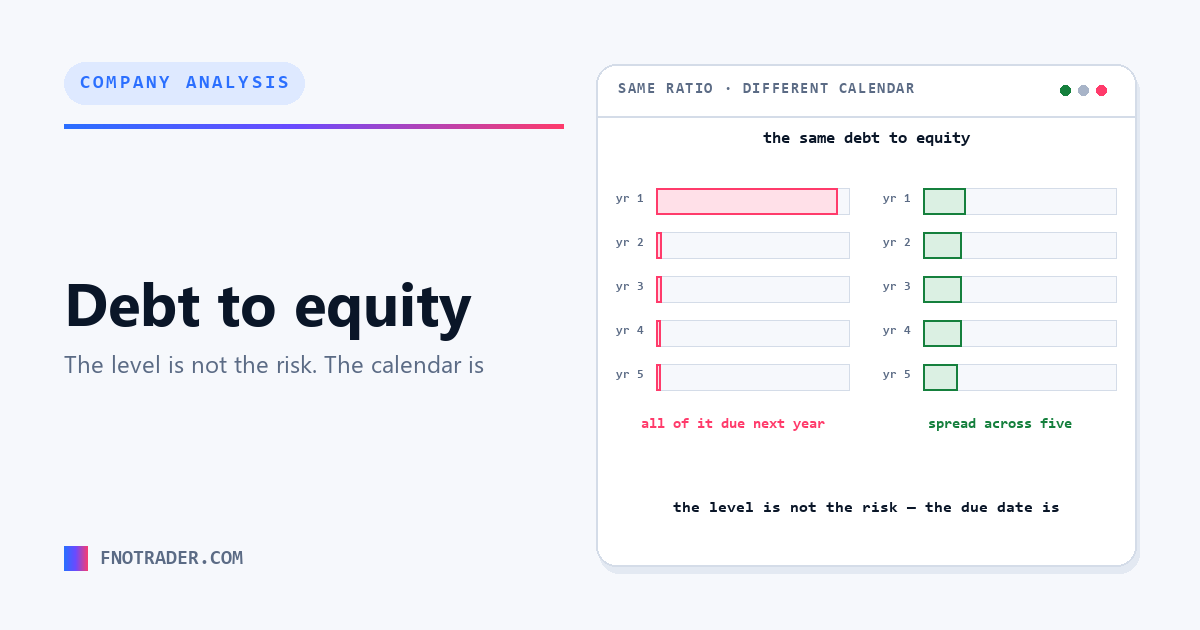
Debt to equity divides one accounting number by another, and the denominator is the softer of the two — a buyback can lift the ratio without a rupee being borrowed. What decides whether borrowings actually…
Read it →
Profit is an estimate that follows rules; cash is a fact that either arrived or did not. Free cash flow — what operations produced, less what had to be spent on assets — is the harder of the two to dress up…
Read it →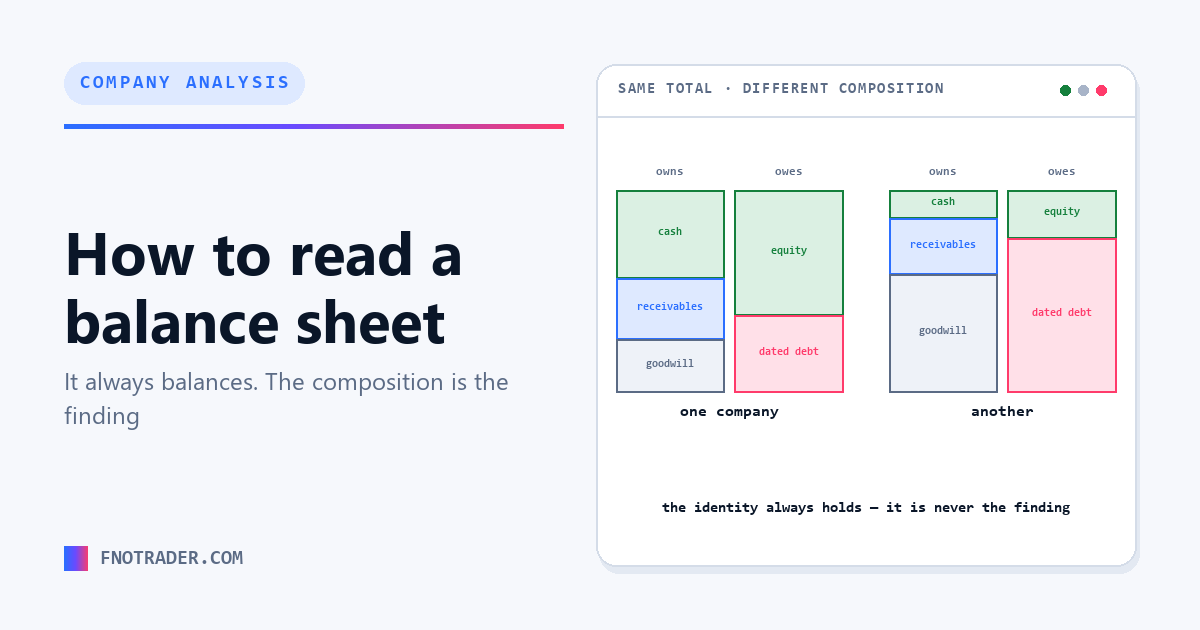
Assets equal liabilities plus equity in every balance sheet ever published, because it is an identity rather than a finding. Nothing about a company's health is in the total. It is in the composition — how…
Read it →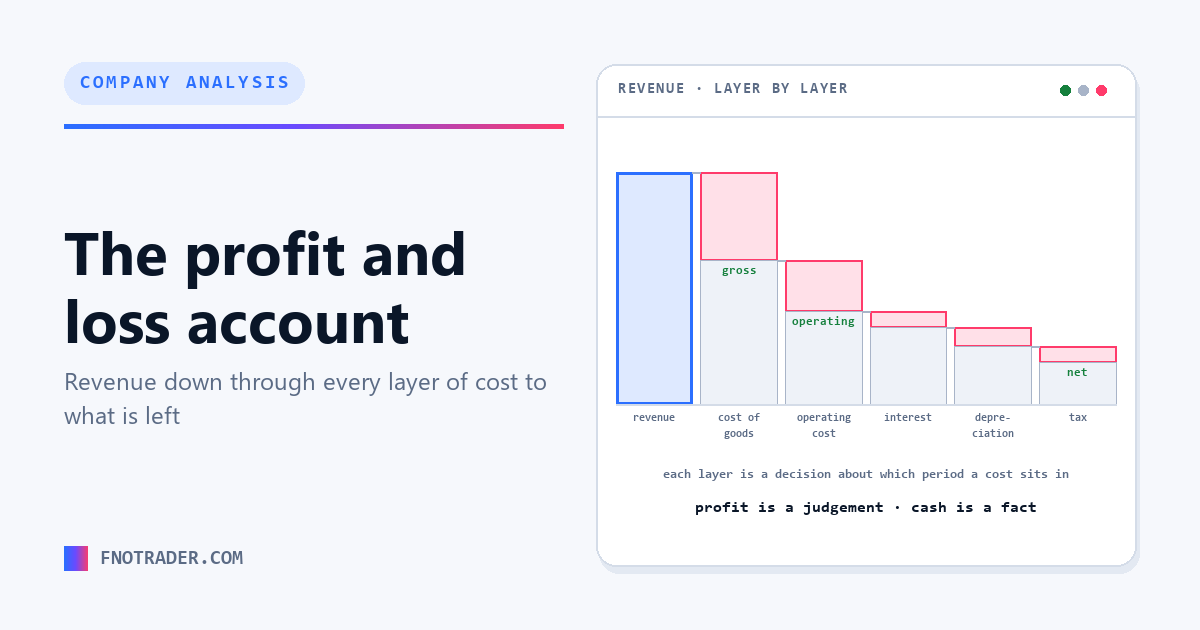
A balance sheet is a photograph and a profit and loss account is the film: it covers a period, and covering a period means deciding which period each cost belongs to. Those decisions are made by the company…
Read it →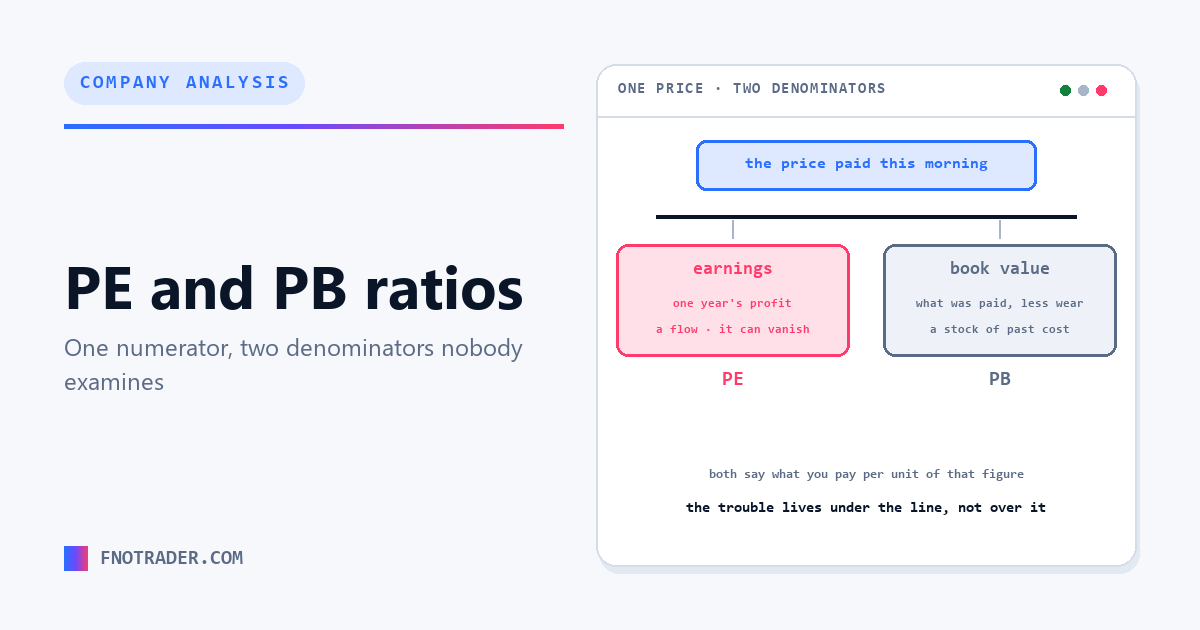
Both ratios divide the same numerator — the price someone paid this morning — by a number the company's accountants produced. So both answer one question: what the market is paying per unit of that figure…
Read it →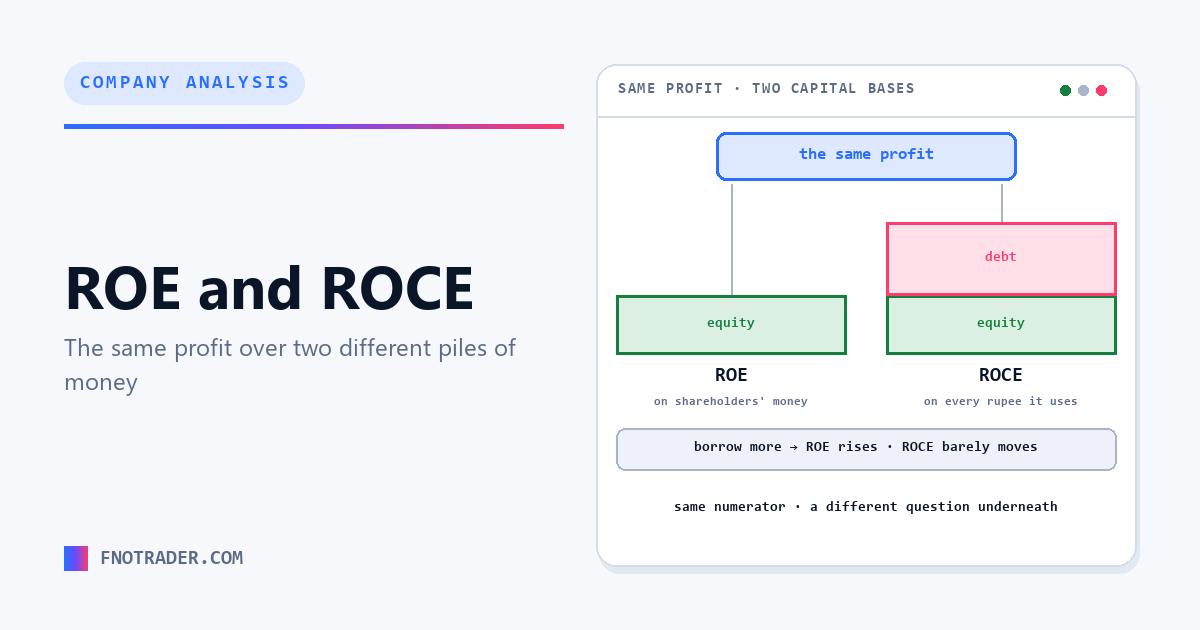
Both ratios divide a profit figure by a pile of money, and the pile is the whole argument. Shareholders' funds sit in one denominator; every rupee the business uses, borrowed included, sits in the other. Which…
Read it →The predictable ways people misjudge money — named, explained by mechanism, and made recognisable in your own decisions rather than someone else's.
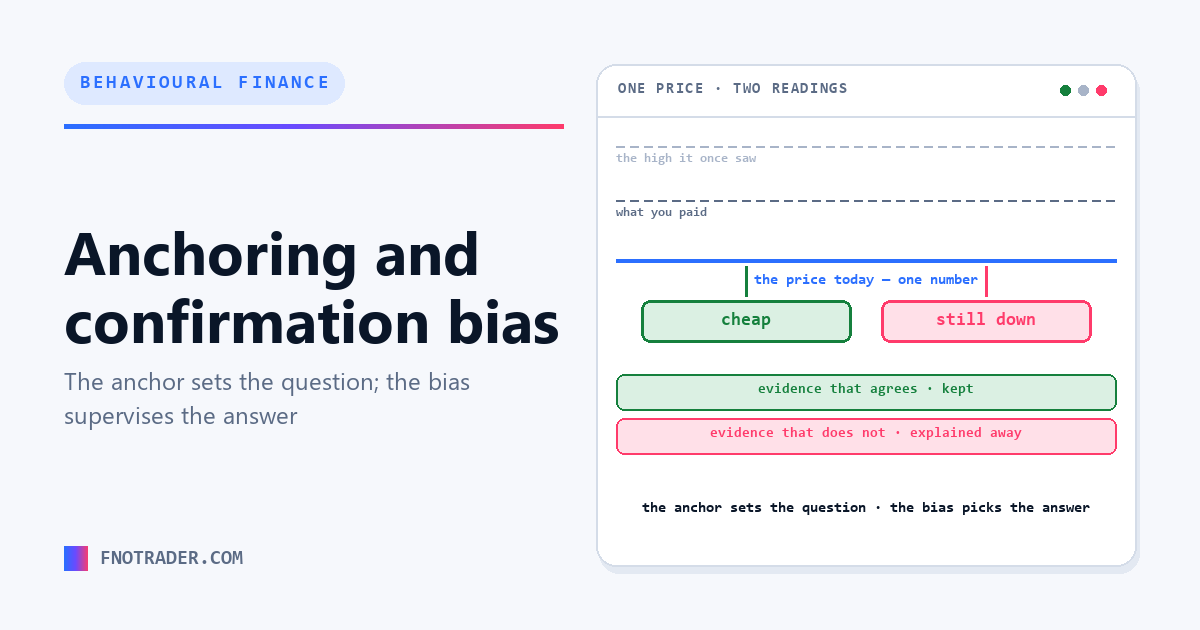
The price you paid is a fact about your past, not about the asset — and yet it decides whether ₹840 reads as cheap or as a loss still to be recovered. An anchor sets the question; confirmation bias…
Read it →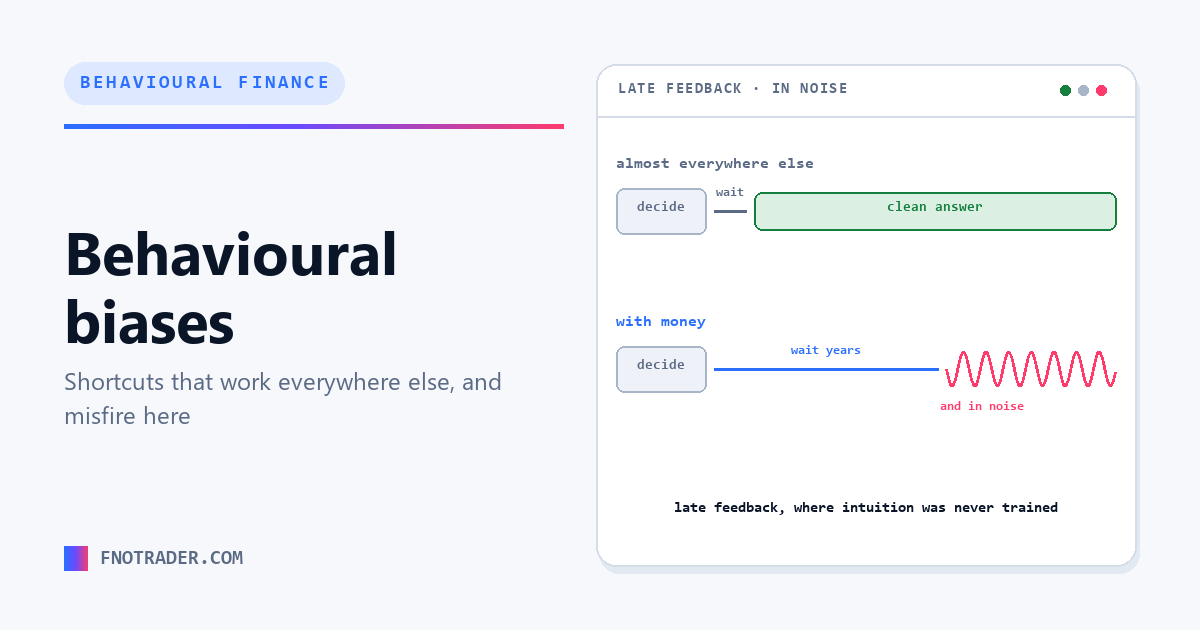
These are not failures of intelligence. They are shortcuts that work well almost everywhere else and misfire specifically where money is concerned, because investing delivers its feedback late, in noise, and…
Read it →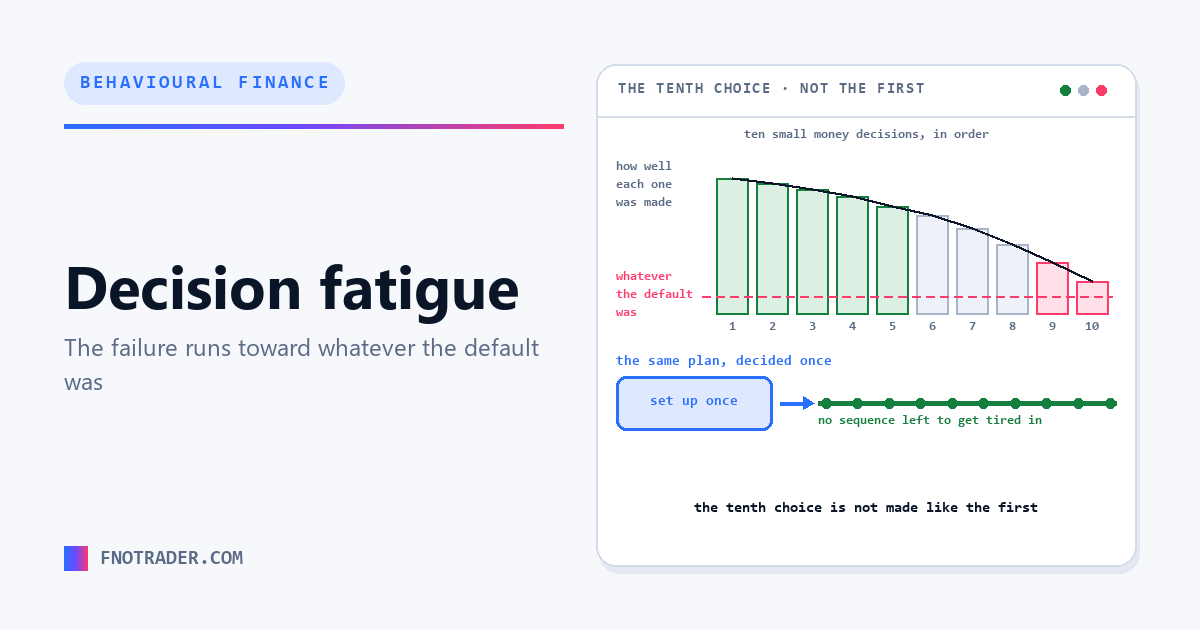
Deciding is work, and the tenth decision of a sequence is not made the same way as the first. How much it degrades is genuinely disputed, and some of the best-known evidence has not held up. The direction is…
Read it →
When a plan made for next year comes apart next month, the reason is structural rather than moral: the weight attached to a reward drops far more steeply over the first stretch of waiting than over any later…
Read it →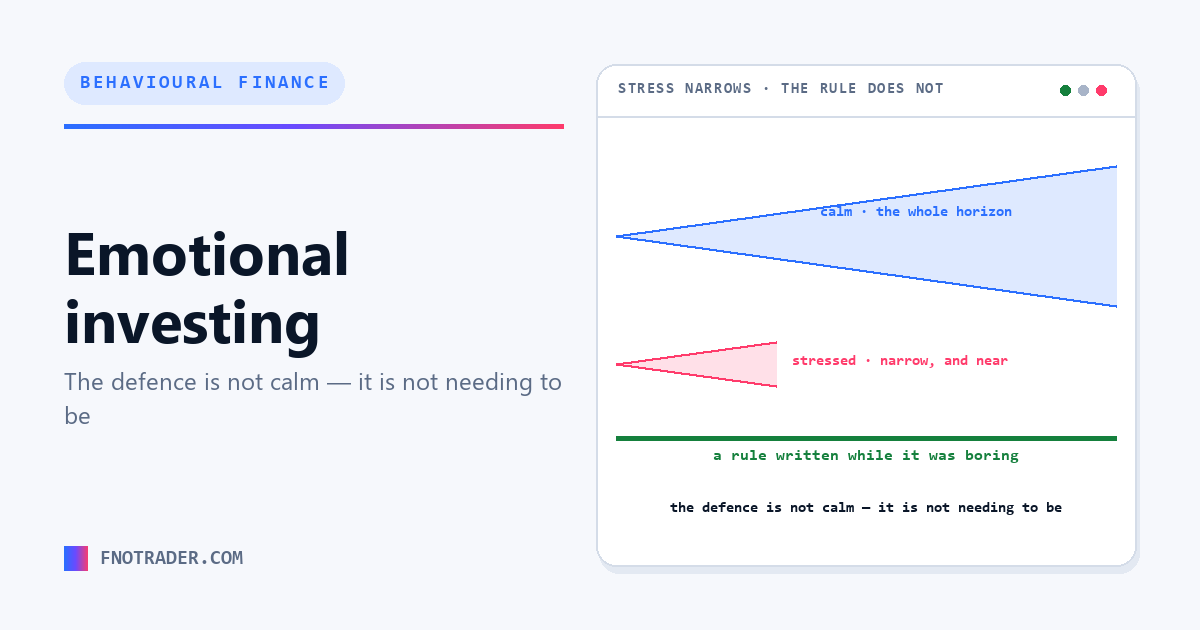
Stress does something specific to a decision: it narrows what you attend to and shortens the horizon you weigh, which is exactly the wrong adjustment for money with a twenty-year job, and it arrives precisely…
Read it →
Copying other people is usually sensible. They often know something you do not, and reading it off their behaviour costs less than working it out yourself. The difficulty is that the same habit produces a…
Read it →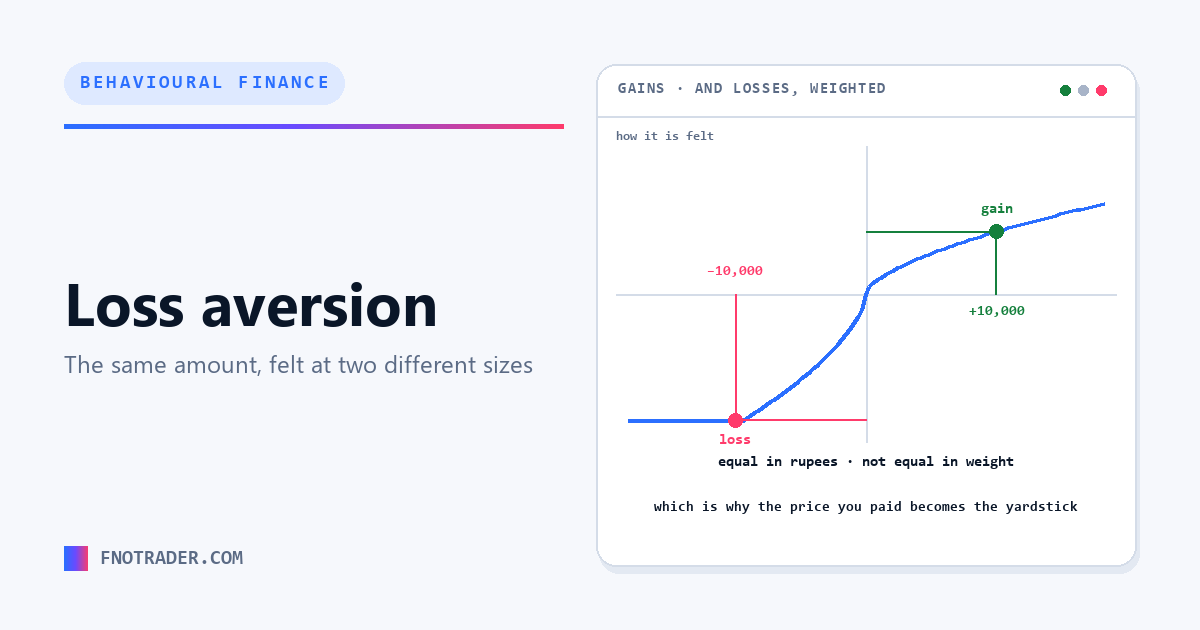
A loss of ₹10,000 and a gain of ₹10,000 are the same size and do not register as the same size. That asymmetry is a claim about how the number is felt, not about what anyone should do with it — and its most…
Read it →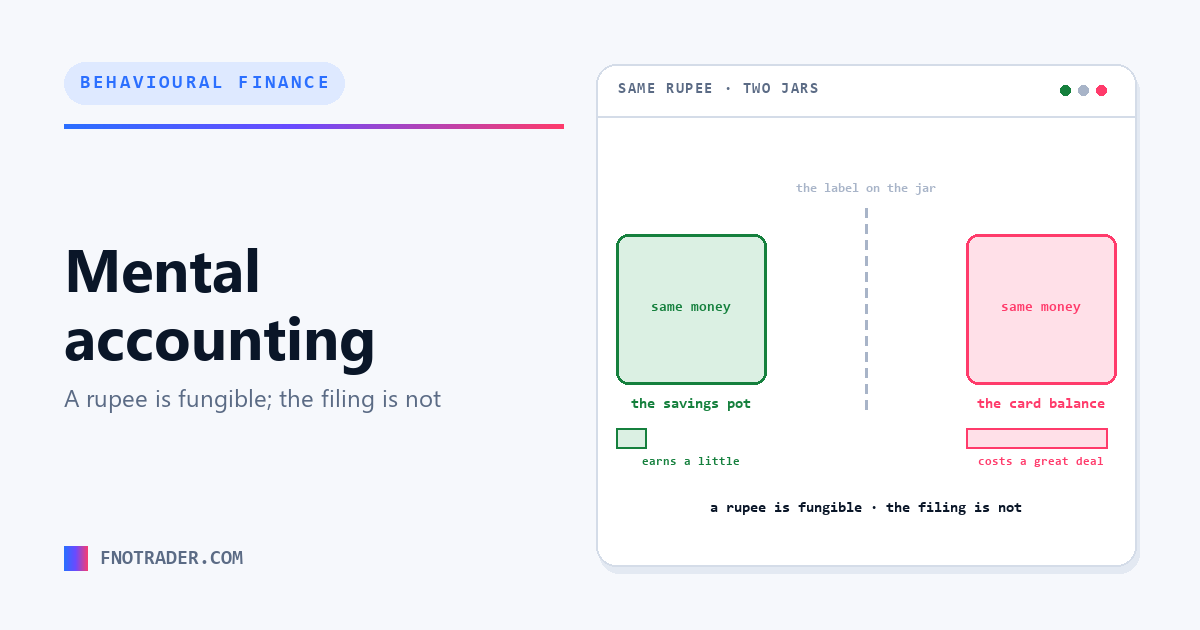
A rupee from a bonus buys exactly what a rupee from salary buys. Almost nobody treats the two the same, because the mind files money into separate accounts by source, location and purpose, and each account…
Read it →
Overconfidence is not a mood. It is a gap that can be measured — the range a person gives is narrower than their accuracy warrants — and it is hardest to notice where feedback is slow and noisy…
Read it →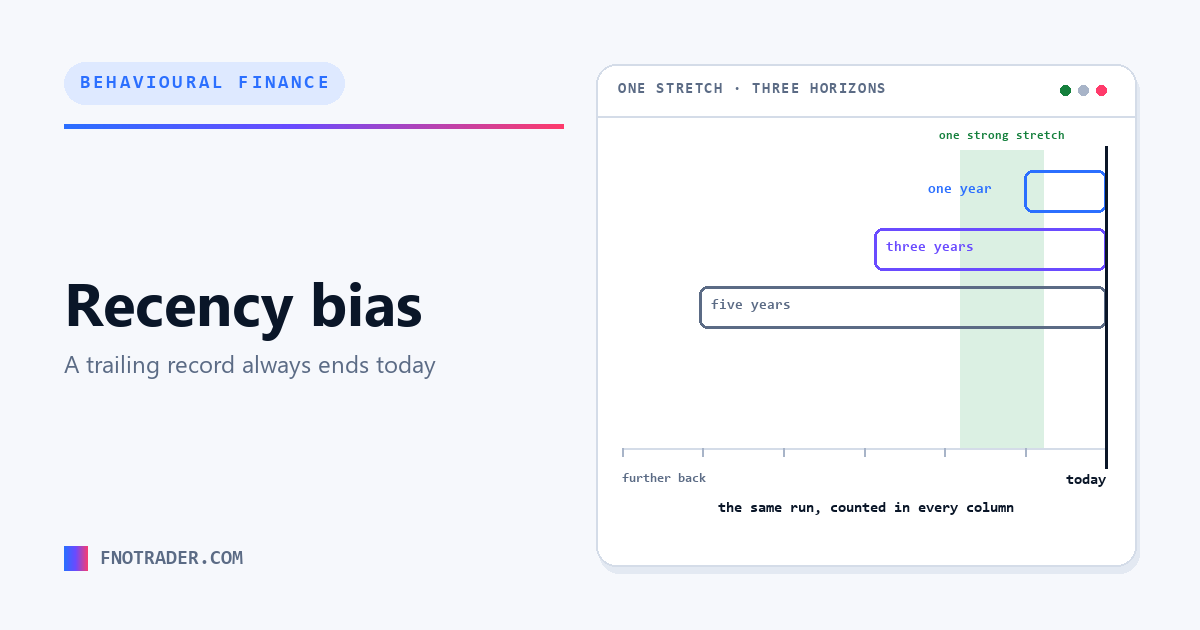
The last twelve months are easier to remember than the four years before them, and ease of recall is not a measure of evidence. That gap is where the cost sits: a category's record looks most complete at the…
Read it →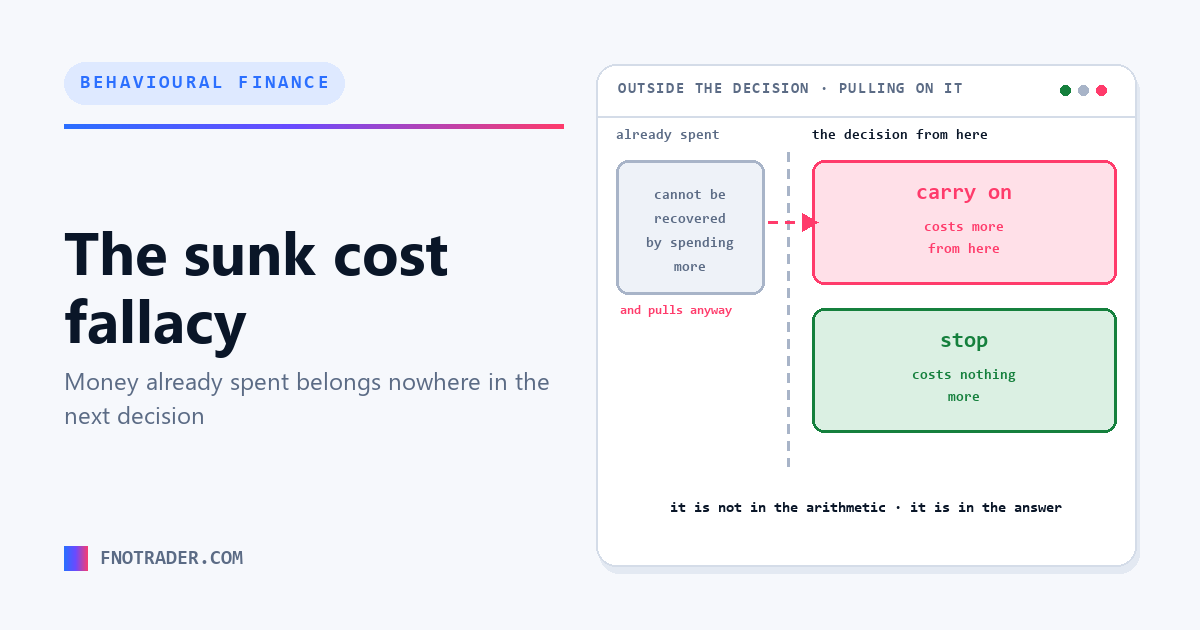
Money already spent cannot be recovered by spending more, so it belongs nowhere in the decision about what to do next. Almost everyone accepts that stated abstractly and almost nobody applies it &mdash…
Read it →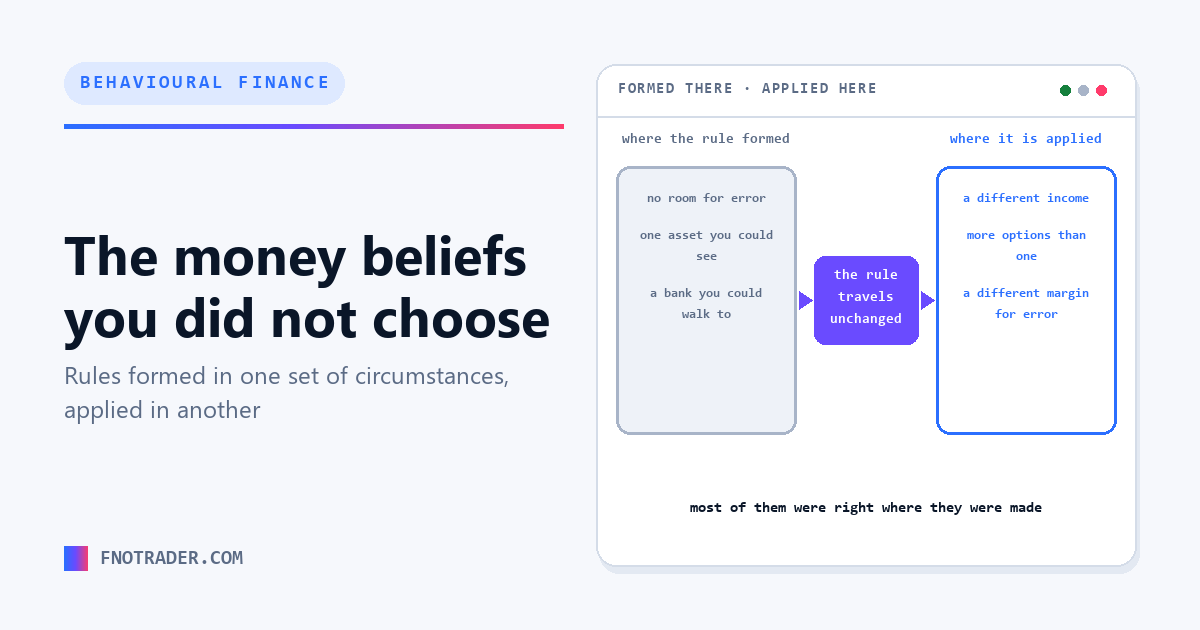
Nobody sits down at twenty-two and decides what money means. The rules arrive earlier than that — from a household, from the prices of one particular decade, from how much room for error there was — and they…
Read it →Portfolio construction and the instruments beyond funds and shares — risk measures, factor approaches, REITs, InvITs and gold in its several forms.
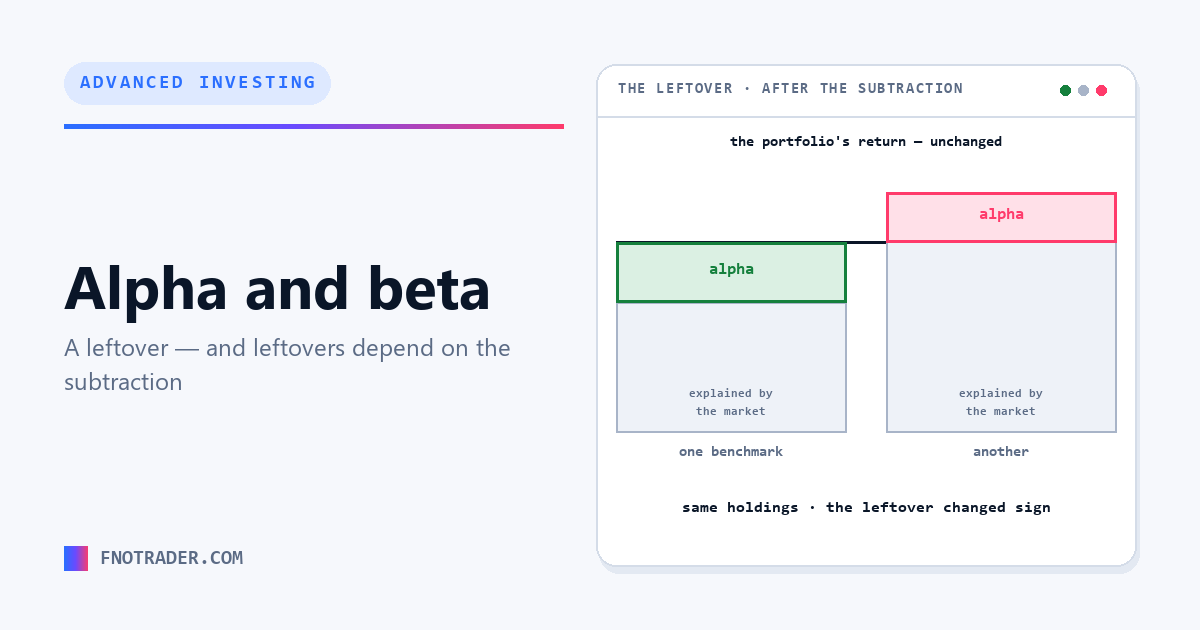
Beta tells you how much of a portfolio's movement was simply the market moving. Alpha is what is left after that subtraction, which means alpha is not a property of the portfolio at all. Change the benchmark…
Read it →
The diversification you measured is not the diversification you get, and the reason is mechanical rather than mysterious. In ordinary conditions two holdings are linked by their businesses; under stress they…
Read it →
A factor is nothing more exotic than a characteristic a rule can sort on: small, cheap, recently rising, profitable, calm. The rule is reproducible in a way a manager's judgement is not, and that is the honest…
Read it →
The same metal comes in four wrappers, and the wrapper decides most of what you actually pay. A making charge is spent on day one and the gold price has to recover it before you are level; an expense ratio is…
Read it →
Holding foreign assets buys two things at once: companies that never listed in India, and a currency position the size of the whole holding that nobody asked for. The second is the part the coverage skips…
Read it →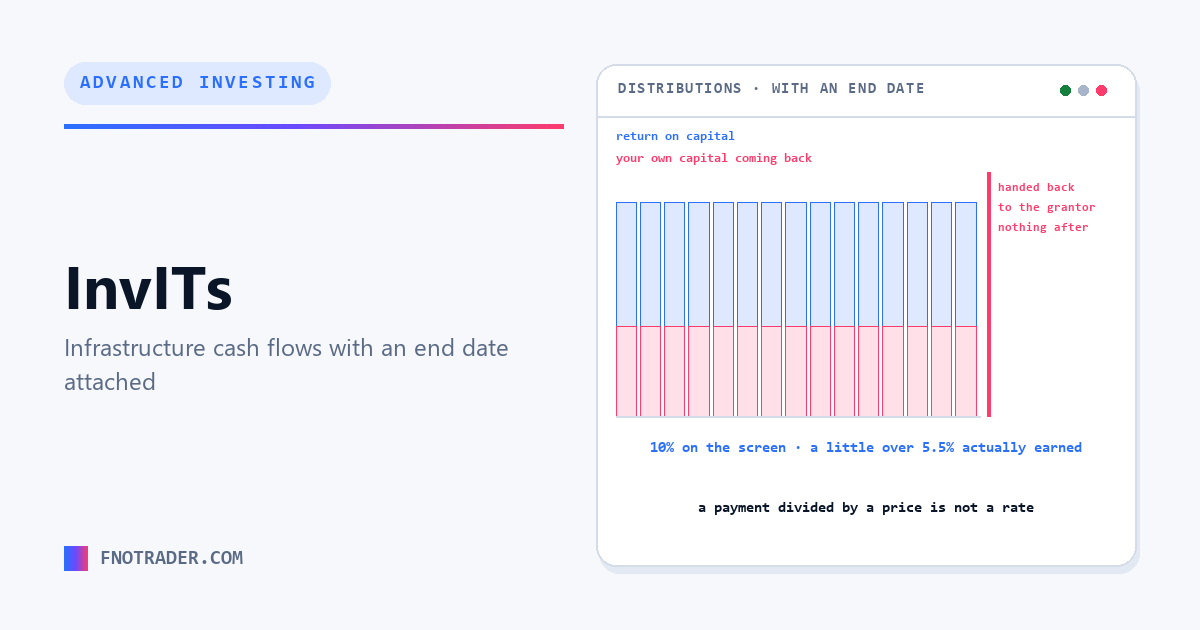
An InvIT pays like a bond and is screened like one. But a road concession ends, and an asset handed back to the authority that granted it has returned your capital rather than earned on it. A distribution that…
Read it →
Combining assets that do not move together produces a portfolio less variable than the average of its parts, and that result is arithmetic rather than opinion. What the arithmetic needs is three estimated…
Read it →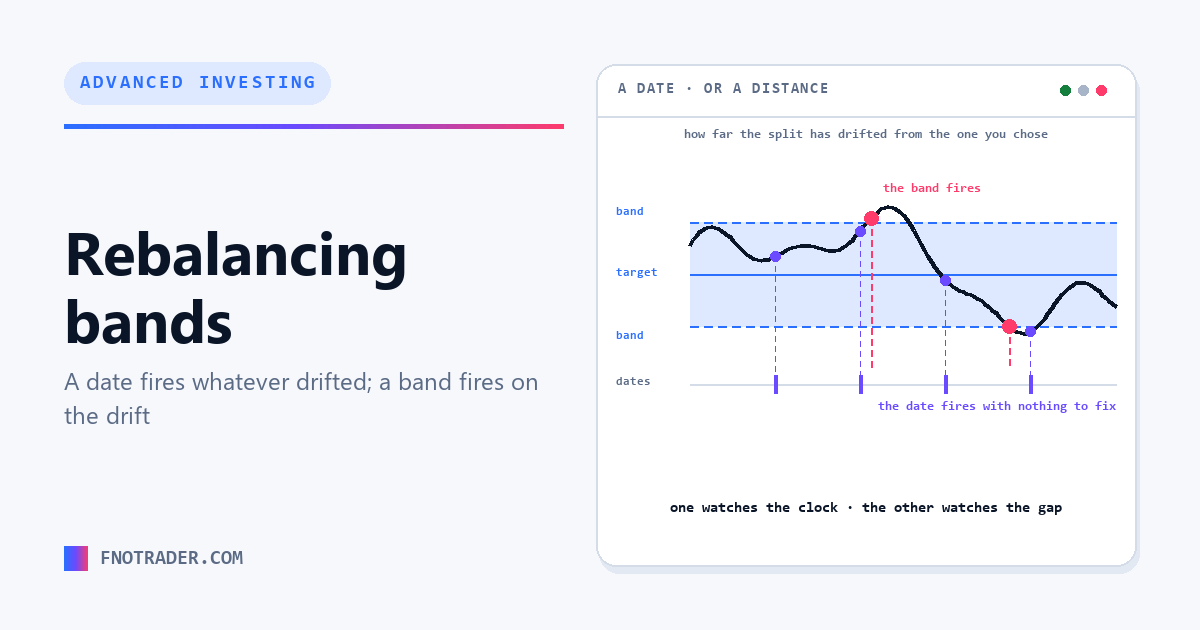
A calendar rebalance acts on a date whether or not anything drifted; a band acts on drift whether or not the date has come. Each misses what the other watches. And because every correction has a cost that is…
Read it →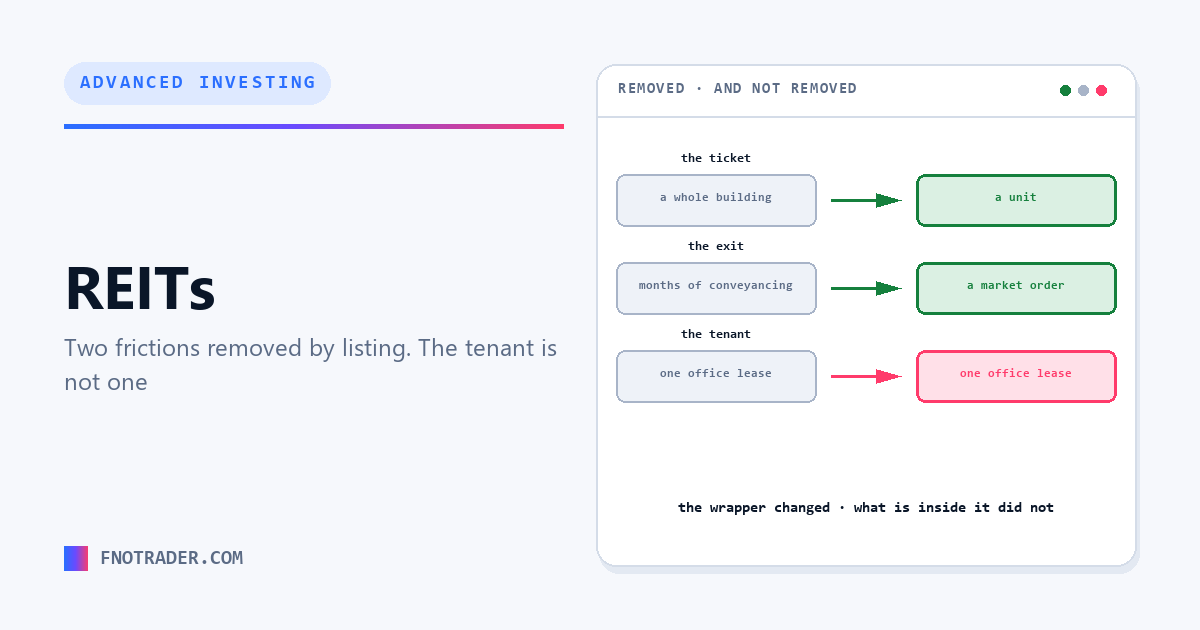
Direct property is hard for two reasons that have nothing to do with property: the ticket is enormous and the exit is slow. A REIT removes both by holding the buildings inside a listed trust and selling you a…
Read it →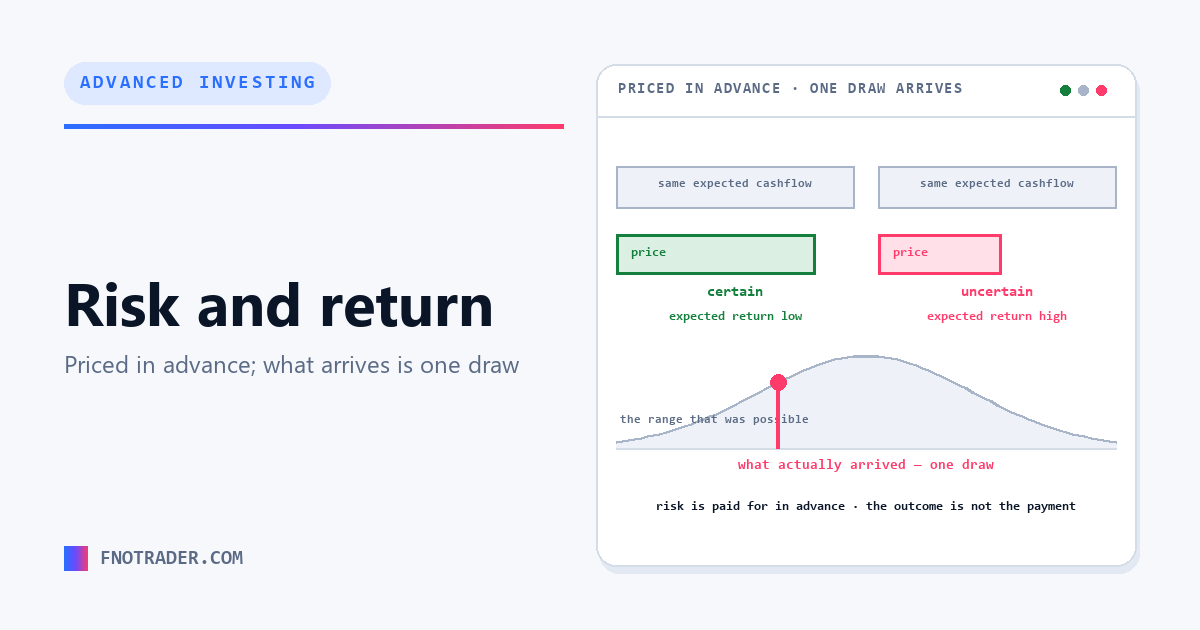
More risk does not pay more. What is true is narrower and stranger: an asset whose outcome is uncertain has to be priced low enough that someone will hold it, and a lower price for the same expected cashflow…
Read it →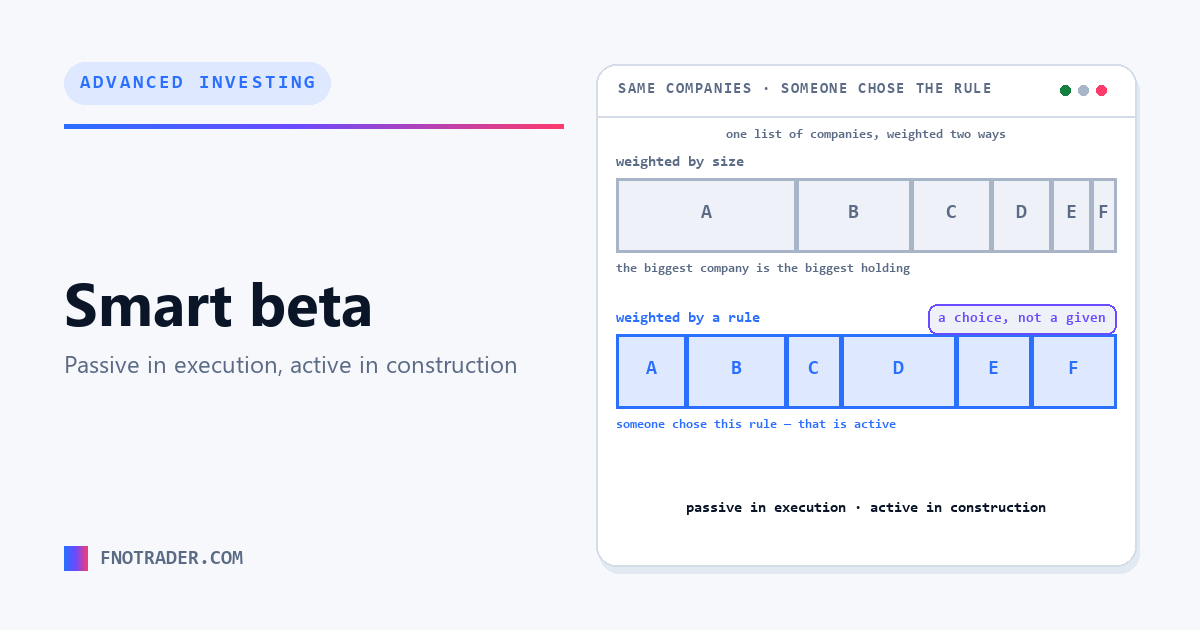
A smart beta fund follows a published rule rather than a manager's judgement, which makes it feel like indexing. But someone chose that rule, and choosing the rule is exactly the decision an active manager is…
Read it →
Gold sits in a locker and earns nothing — that is the whole problem with owning it. A sovereign gold bond is the government's answer: a security denominated in grams, redeemed in cash at the gold price…
Read it →The dollar, yields, crude, credit and flows — what each one does to Indian equities, and how they move together rather than one at a time.

A barrel, a tonne of palm oil and a kilo of copper all start at a world price, and very little of that price reaches an Indian shelf intact. Between them stand an exchange rate, a duty schedule, a subsidy line…
Read it →
Copper earns its nickname honestly — it is wired into buildings, motors and grids, so the quantity consumed does track industrial activity. The price is a different object. It is set by supply as much as…
Read it →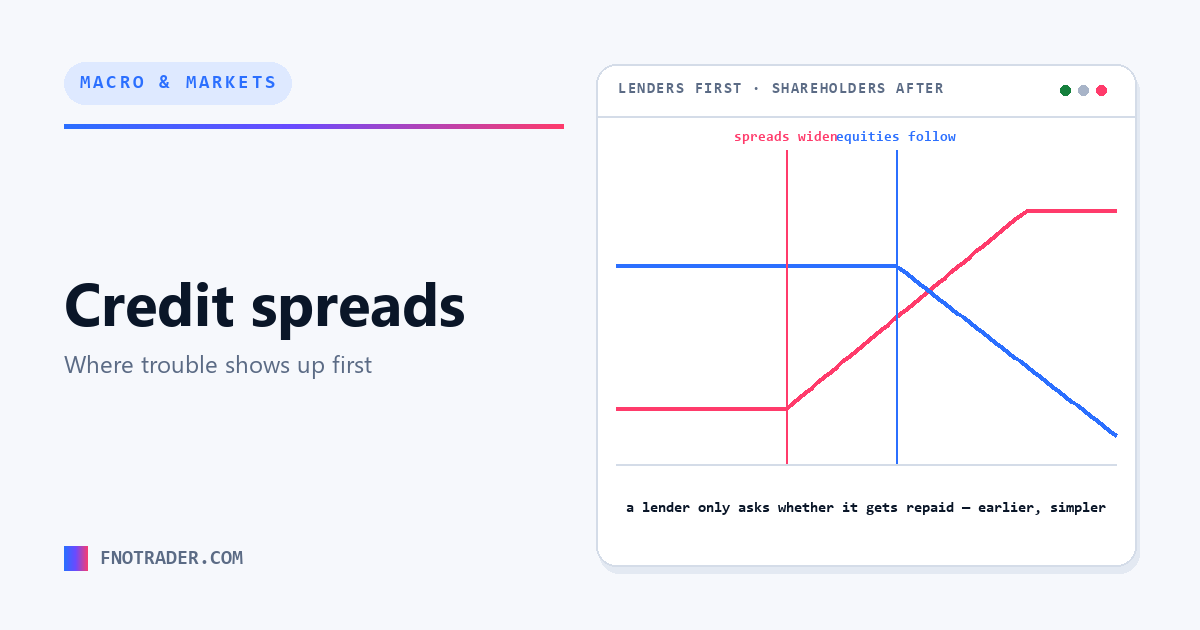
A credit spread is the extra yield a lender demands for lending to a company rather than to the government, which makes it a live price on the chance of not being repaid. Lenders reprice that chance on…
Read it →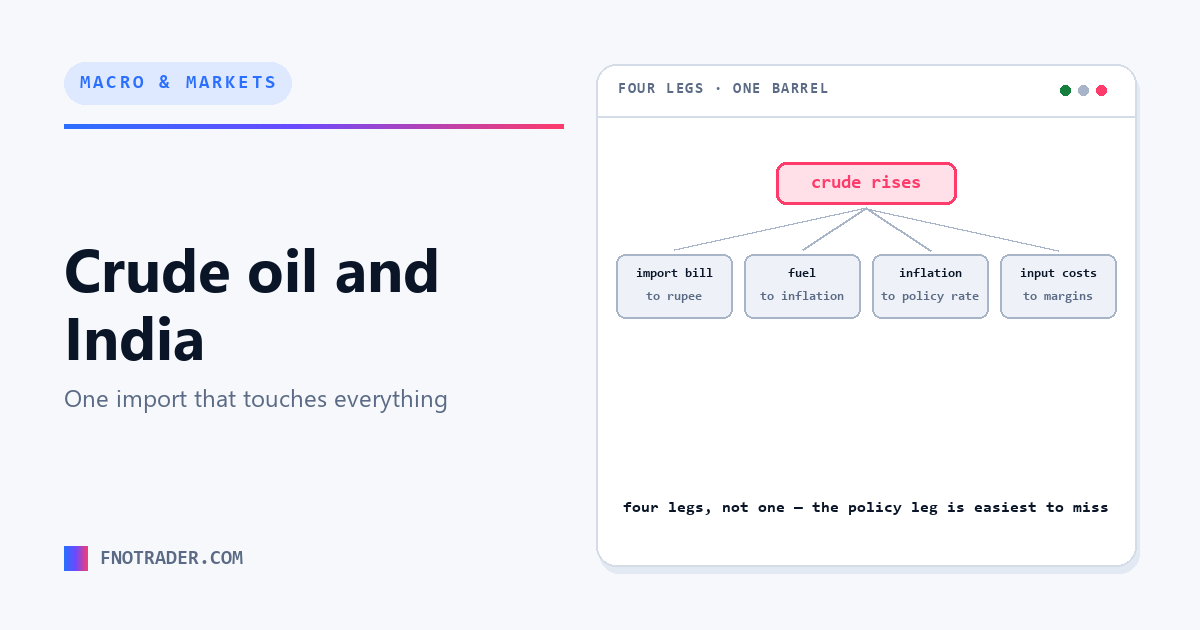
Crude is not a market India watches; it is a price India pays. That makes it a term of trade rather than a quote — and the same barrel shows up four times over, in the current account, in the price…
Read it →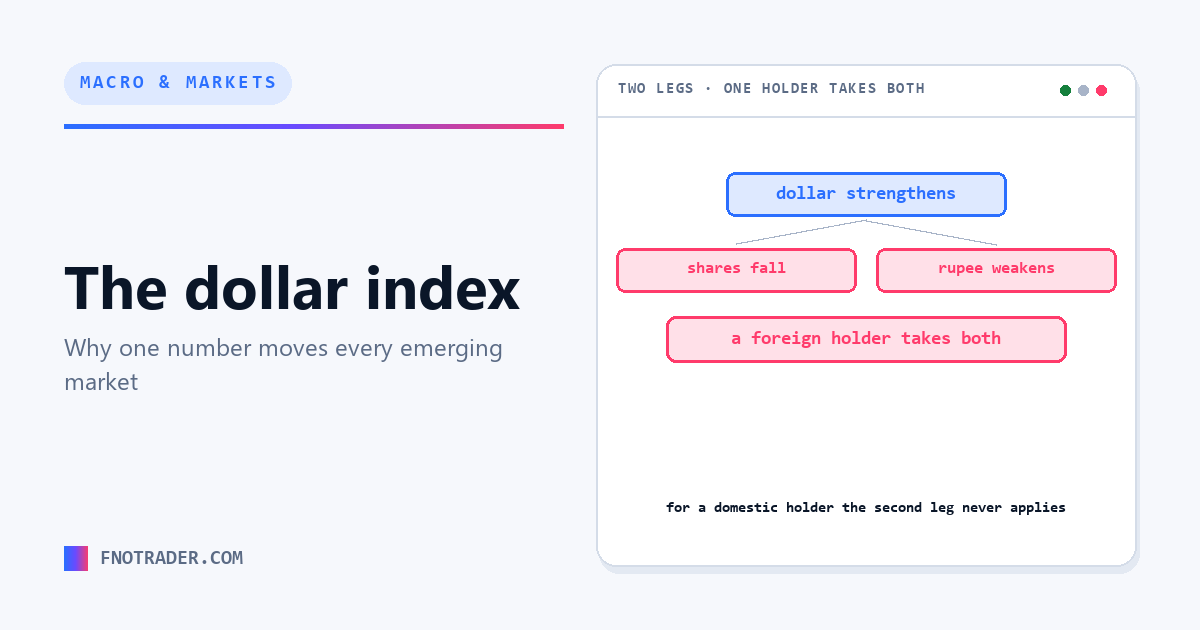
A stronger dollar reaches Indian equities through four separate channels, and then compounds in a way most explanations leave out: for a foreign investor the rupee's fall and the market's fall multiply…
Read it →
Foreign institutions sold, domestic institutions bought, and the index barely moved — the daily flow print invites a story about two sides arguing. Much of the time it is recording two unrelated…
Read it →
Gold earns nothing — no coupon, no dividend, no rent — so the cost of holding it is whatever a safe asset yields after inflation. That one number explains more of gold's behaviour than any story…
Read it →
A single macro number is easier to argue with than thirty tiles, which is the point of it. Built the way ours is, it measures one thing: how many independent channels agree today. It cannot tell you how severe…
Read it →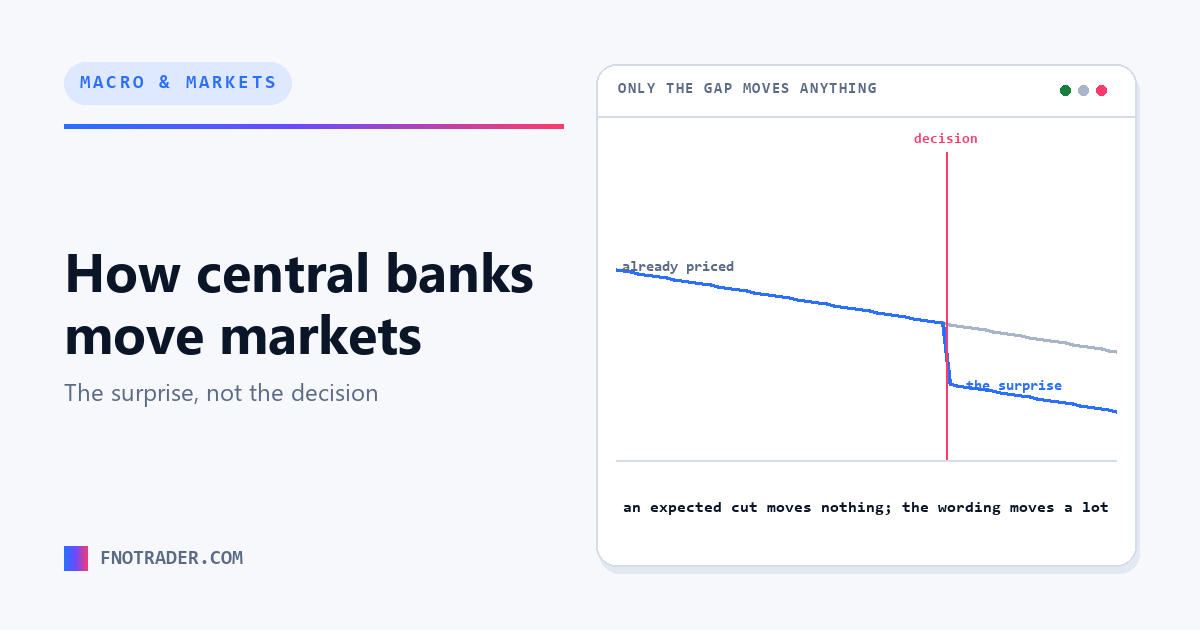
A central bank's decision is rarely the news. Markets price the expected path of the overnight rate continuously, so a widely expected cut can pass without a flicker while an unchanged rate delivered in…
Read it →
The Indian cash market is open for six hours and fifteen minutes and shut for the other seventeen and three-quarters. Everything the world does in that gap arrives at one price, at one moment. That is what an…
Read it →
A macro dashboard hands you thirty numbers and no way to rank them. Almost all of them are answering the same two questions — is money getting cheaper or dearer, and is capital moving toward risk or away…
Read it →
A macro calendar lists dates. It cannot tell you which of them will matter, because what moves a price is not the number released but the distance between that number and the one already inside prices. A…
Read it →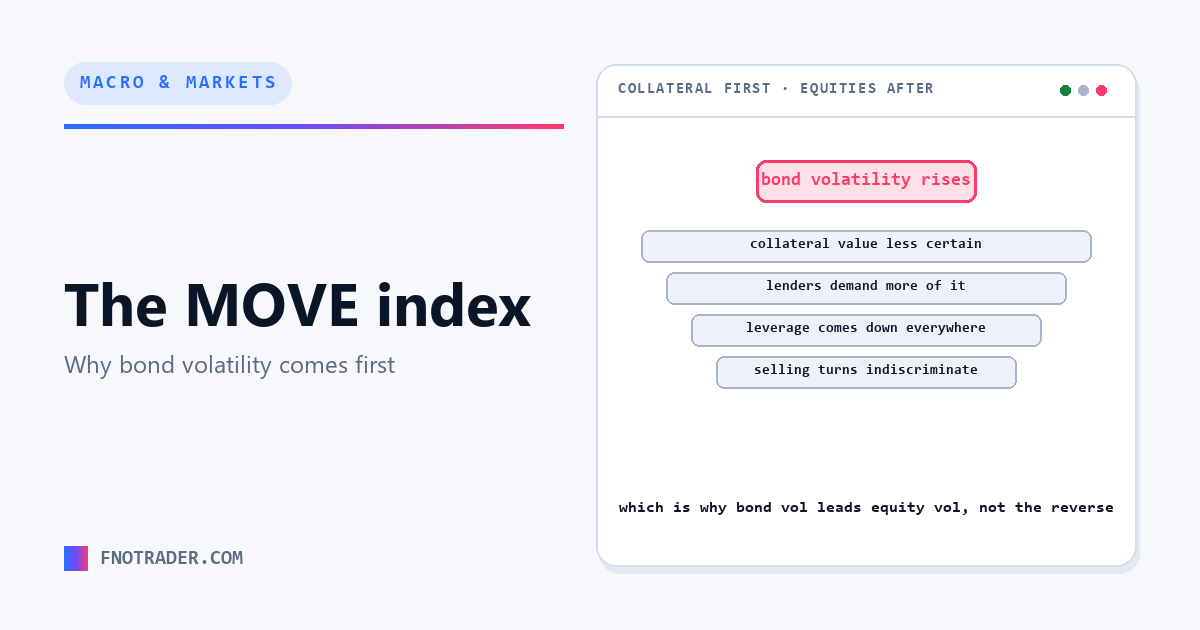
Bond volatility is the least-watched tile on a macro page and has the strongest claim to arriving early. US Treasuries are the collateral the financial system borrows against, so when their price becomes…
Read it →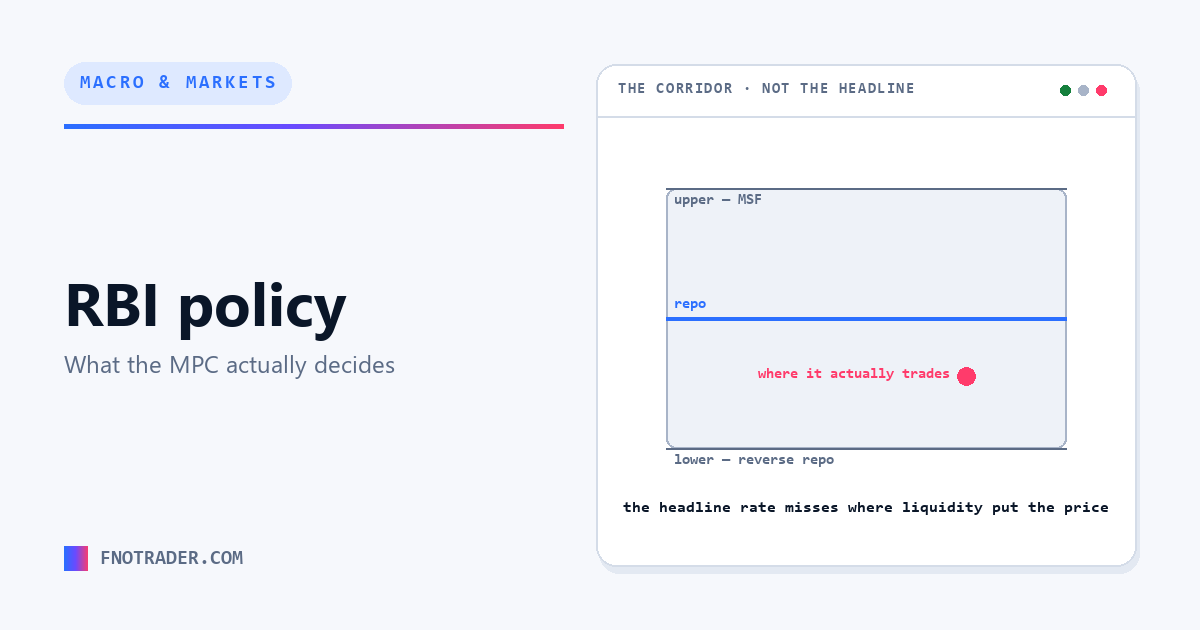
The committee votes on two things: a rate, and a sentence about the direction of travel. Neither is the rate banks actually pay each other overnight. That one is decided by how much spare cash the banking…
Read it →
A coefficient is not a relationship. It measures how tightly two sets of daily returns moved together over a fixed count of sessions — one shape, one window, nothing else. Almost all the damage done with…
Read it →
Capital moves along one axis, between assets that pay you for bearing outcomes and assets that pay you for avoiding them, and a single number — the price of safety — reprices both ends at once…
Read it →
A rate decision in Washington reaches an Indian share price by four separate routes that do not all point the same way. The discount-rate chain is arithmetic and reprices in the session; the dollar and foreign…
Read it →
A government bond yield is the price of safety, and everything else in the world is priced against it. When the yield on US government debt rises, an Indian share does not become a worse business — it…
Read it →
A weaker rupee is not a scoreboard for the country. It is a transfer, and both sides of it usually sit inside the same Indian portfolio: the importer's higher cost is the exporter's higher revenue. The part…
Read it →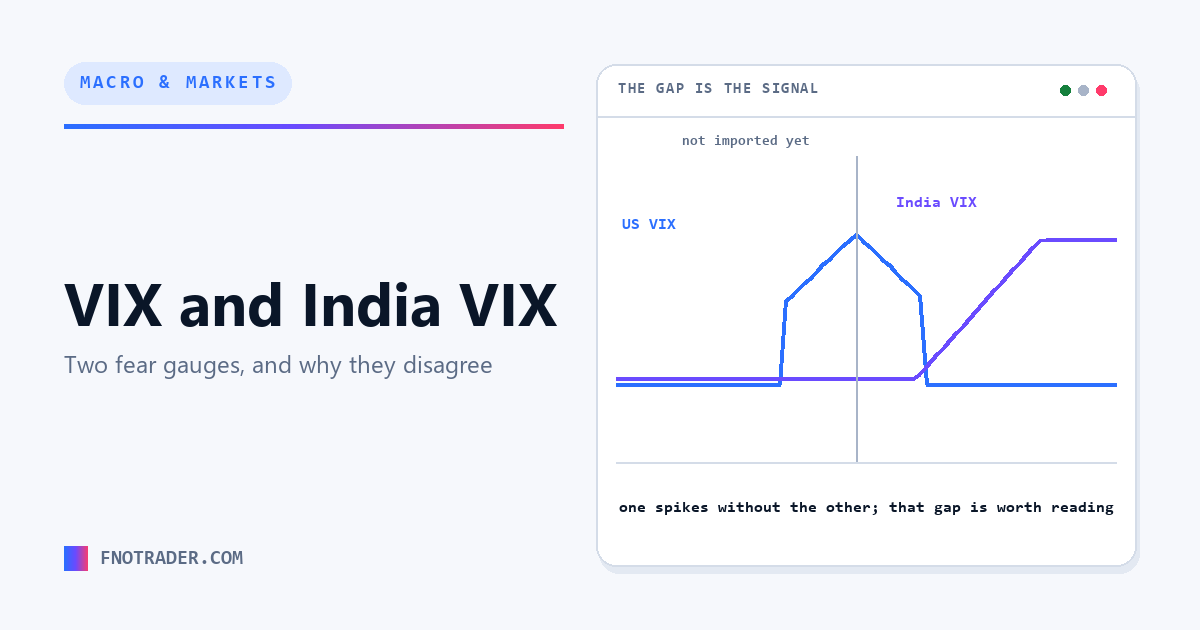
A high volatility reading says insurance has become expensive. It does not say prices will fall — the number is computed from option prices, and an option price carries no direction. What makes the pair…
Read it →
On a genuine risk-off day the moves rhyme: the dollar strengthens while the yen strengthens against it, US Treasury yields fall, gold rises, crude falls, volatility jumps, equities drop across time zones, and…
Read it →
A foreign fund buying Indian shares is buying two things at once — the company's return and the rupee's — and only one of them is about India. That is why a dollar move can shrink the India allocation before…
Read it →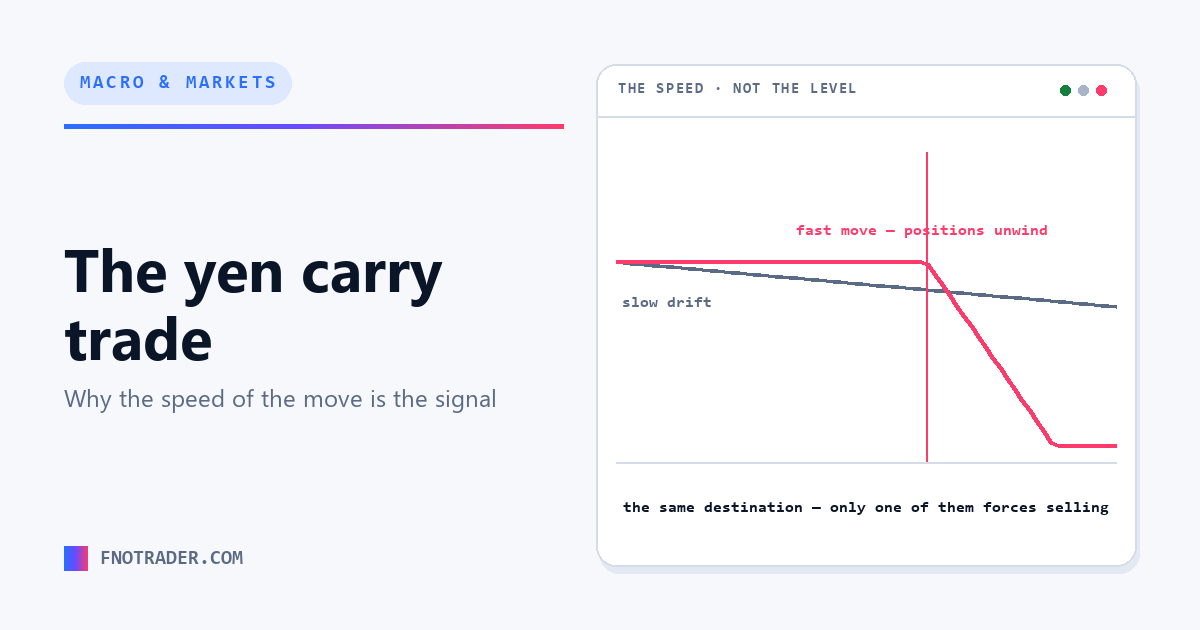
Money borrowed in Japan funds positions all over the world, including in markets that have never given Japan a thought. The arrangement works while the yen stays weak or calm. When the yen strengthens fast…
Read it →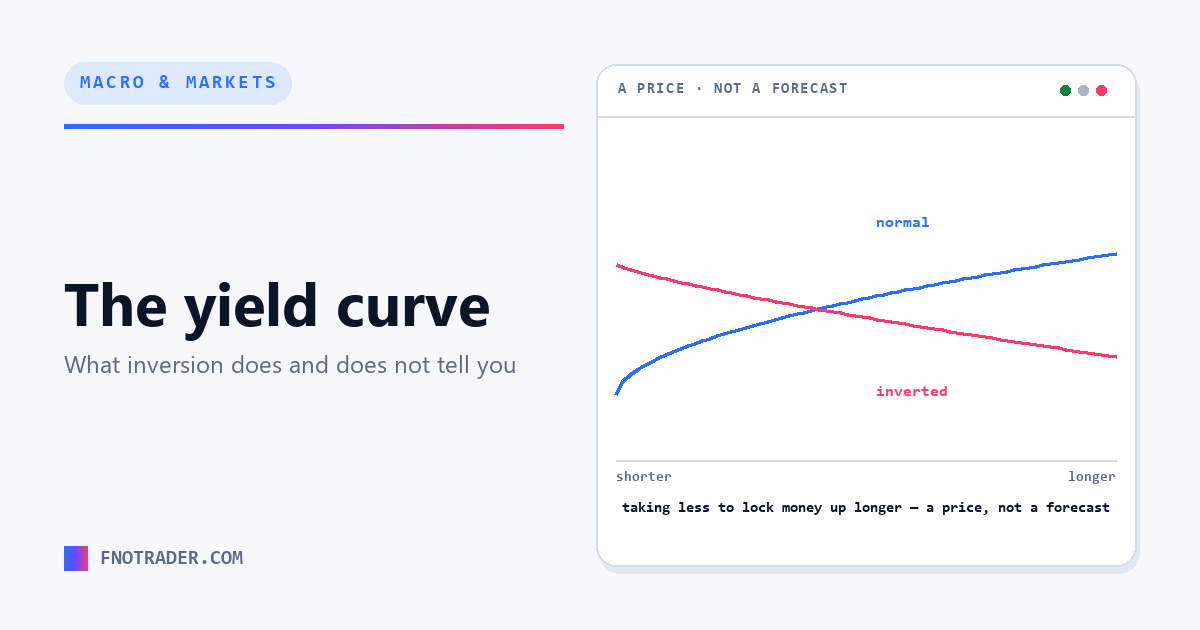
A yield curve is the price of time: normally, lending for longer pays more. When it stops doing that, lenders are accepting less to be locked up for longer — which only makes sense if they expect short…
Read it →
China sits inside the same emerging-market allocation as India, so a yuan move can sell Indian shares without any investor forming a view about India. That is one of two channels; the other runs through…
Read it →Chains, margins, Greeks and structures — the mechanics behind every F&O position, and how each one fails.

The chain is telling you everything. Most people just can't read it fast enough — and two habits, both close to universal, quietly poison the answer before they even start. Here's what every column is really…
Read it →
A candle tells you where price finished. It never tells you who was left buying at the top — which is exactly why the breakout you took at the close died ten minutes later. That information exists. It's inside…
Read it →
Every backtest looks good. That's what they're for. The real question is what the result had to survive before it reached you — and most of the ones you'll be shown have survived nothing at all.
Read it →
Two traders sell the same NIFTY call. One blocks ₹1.4 lakh, the other ₹28,000. Nothing about the call is different — the second one bought a wing. That gap is SPAN, and misunderstanding it is why most people…
Read it →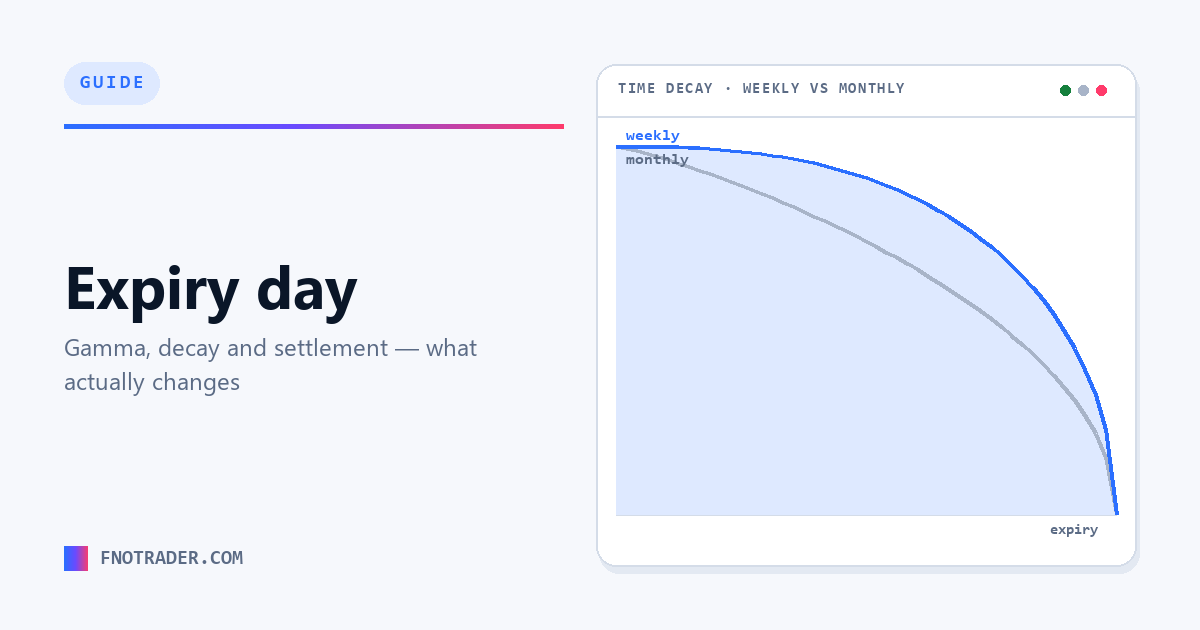
Expiry day is not the rest of the week with less time on it. The arithmetic of an option changes shape in the final hours, and strategies that behave one way for four days behave differently on the fifth.
Read it →
Both sell volatility. One collects more and gives you less room; the other gives you room and collects less. Choosing between them is not a preference — it is a function of where implied volatility is sitting…
Read it →
A short straddle makes money if the market stays still and loses if it trends. Delta hedging is the attempt to remove the trend risk and keep the stillness bet — and the reason it is harder than it sounds has…
Read it →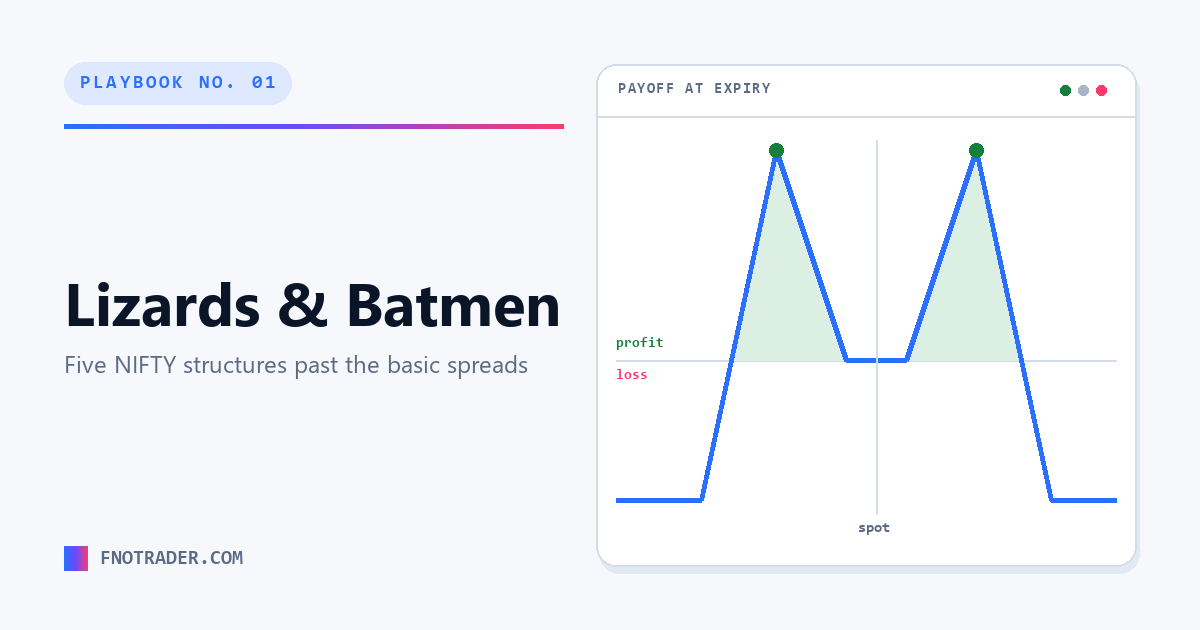
Jade lizard, big lizard, reverse jade and both Batman variants, built on the real NIFTY 25-Aug chain. Why the short strike goes beyond a level for a lizard and on it for a Batman — plus the margin fact that a…
Read it →
The same five structures rebuilt on SENSEX weeklies, measured per day of capital blocked against the NIFTY monthly. At-the-money premium decays with the square root of time; tail premium decays far faster…
Read it →Finding and filtering Indian equities with a method: stage analysis, relative strength, breadth and honest backtesting.
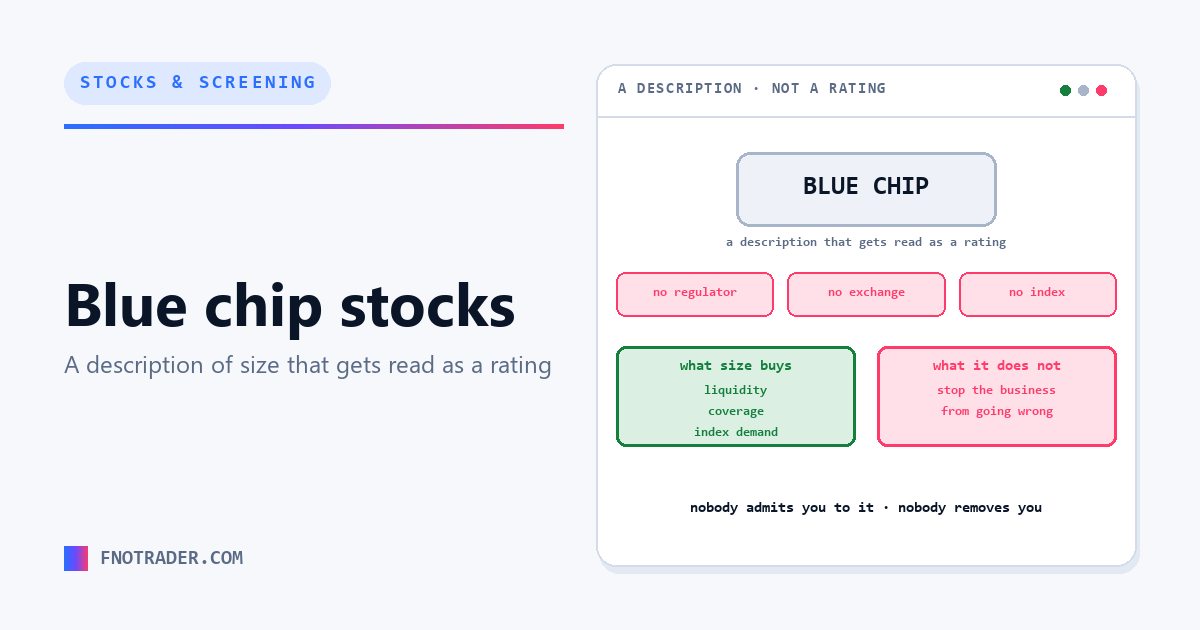
No regulator, exchange or index provider certifies a company as blue chip. There is no list to be admitted to and none to be thrown off. The term is a description of size and longevity that gets read as a…
Read it →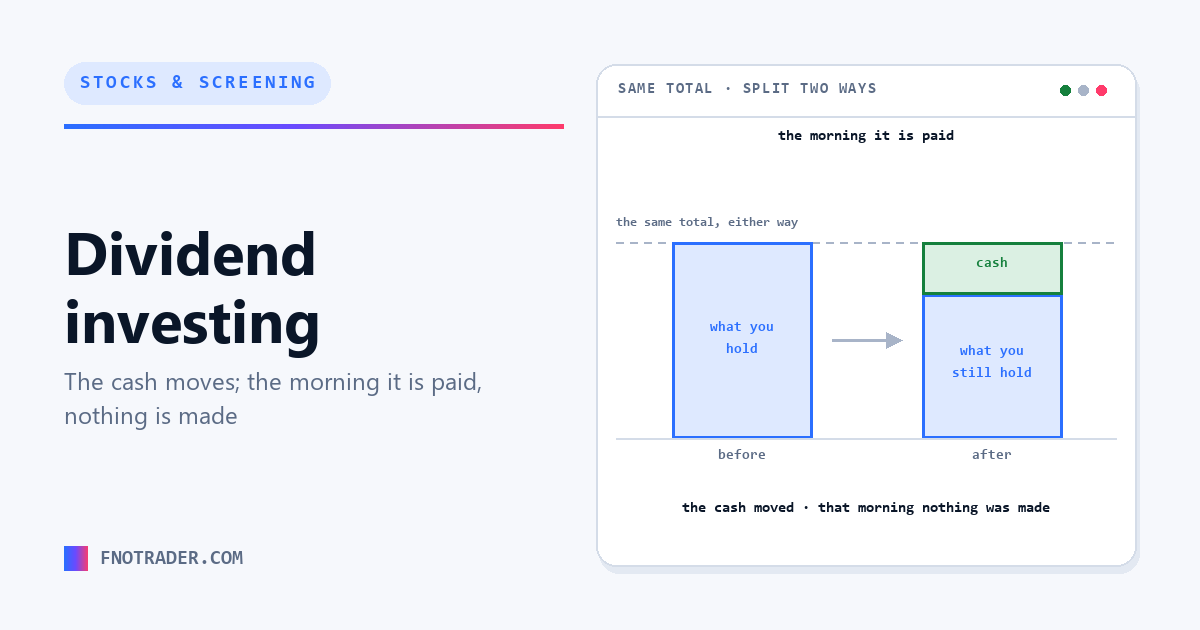
Cash leaves the company's account and arrives in yours, and what you hold is worth that much less the same morning — so the payment itself creates nothing. Something does survive that arithmetic. A company…
Read it →
They are treated as rival answers, which is a category error: they ask different questions. One estimates what a business is worth and compares that with the price. The other reads what the price has already…
Read it →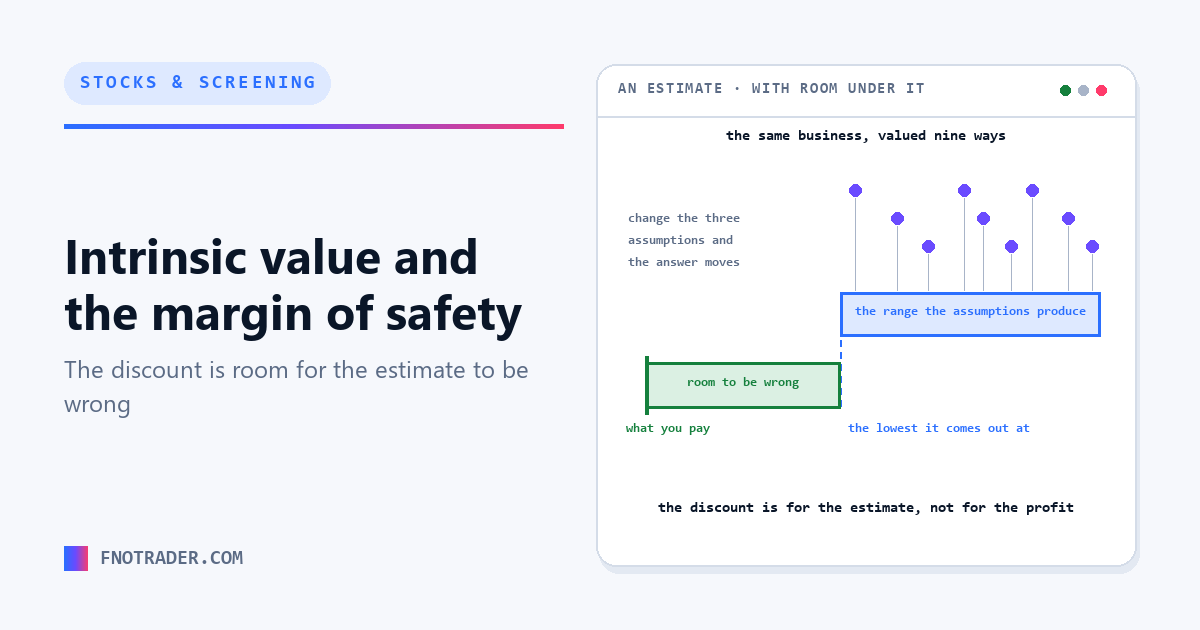
Intrinsic value is what a business is worth on the cash it will produce, and it cannot be looked up, because nobody has that cash yet. What a valuation model returns is an estimate assembled from assumptions…
Read it →
Diversification removes one kind of risk completely and another kind not at all, and the line between them is arithmetic rather than judgement. The part that cancels is whatever is specific to one company; the…
Read it →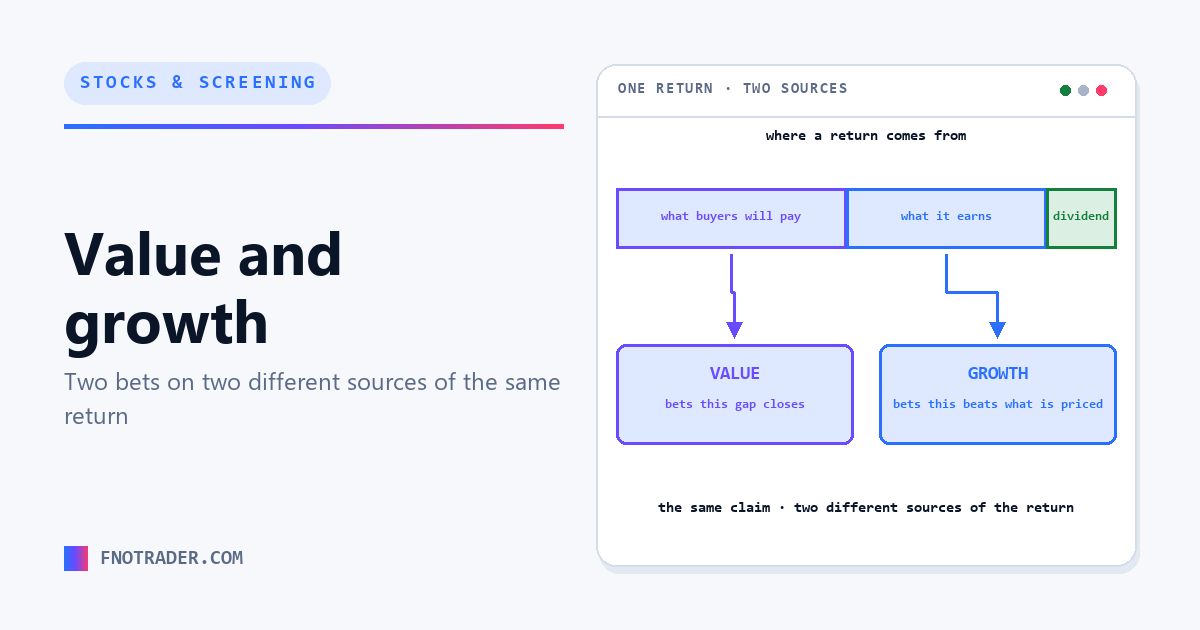
Both styles buy the same thing — a claim on a business — and differ only in where they expect the return to come from. Value expects a gap between price and worth to close. Growth expects earnings…
Read it →
You weren't wrong about the stock. You were wrong about the tide. A screen that hands back two hundred names hasn't narrowed anything — the ones that work run in an order, and the order starts with the market…
Read it →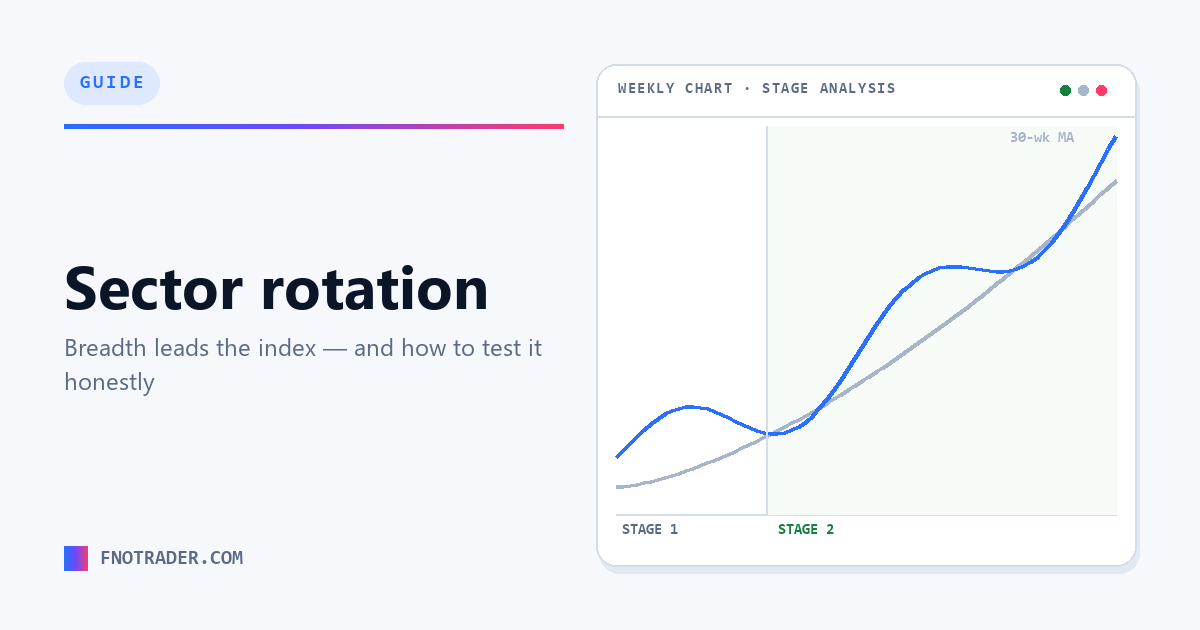
Money moves between sectors long before the index says anything. That much is observable. Whether you can systematically be early is a separate question — and most attempts to answer it are answered wrong…
Read it →What every screen does, how the numbers are calculated, and where the settings live.

Your broker account connects. It shows your positions. It streams live prices. And every single order comes back refused. Nothing is wrong with your credentials — the orders are arriving from an address your…
Read it →
Mid-lunch, the stomach drop: did I actually put a stop on that? Nobody blows up from a bad pick. They blow up from an unsized, unprotected one. This is the terminal built around that problem — and what each…
Read it →The help documentation for each app — what every screen does, how the numbers are calculated and where the settings live. The structures in the articles above are built in these: the chain and payoff in Options, the levels in Footprint, the backtests in Algo.
Every guide above opens without a login. The two marked otherwise do not have a standalone help page yet — those links go to the product overview instead. Pricing for every app lives under Pricing.